
Utah Rental Property Insurance: What Landlords Should Know
Owning rental property in Utah comes with real financial exposure. Tenant damage, liability claims, and weather events can quickly drain your profits if you’re not protected.
At Direct Insurance Services, we’ve helped countless Utah landlords understand what coverage actually matters. This guide walks you through the types of protection you need, the risks specific to our state, and how to choose the right policy for your situation.
What Coverage Do You Actually Need for a Utah Rental Property
Dwelling Coverage Protects Your Building
Dwelling coverage protects the structure itself-the walls, roof, foundation, and permanent fixtures like built-in appliances. For Utah rental properties, DP-3 Special Form coverage is the standard and what you should expect from any reputable policy. This covers a broad range of perils including fire, wind, hail, theft, and vandalism. Avoid settling for DP-2 or DP-1 unless your property’s age, location, or claims history specifically requires it.
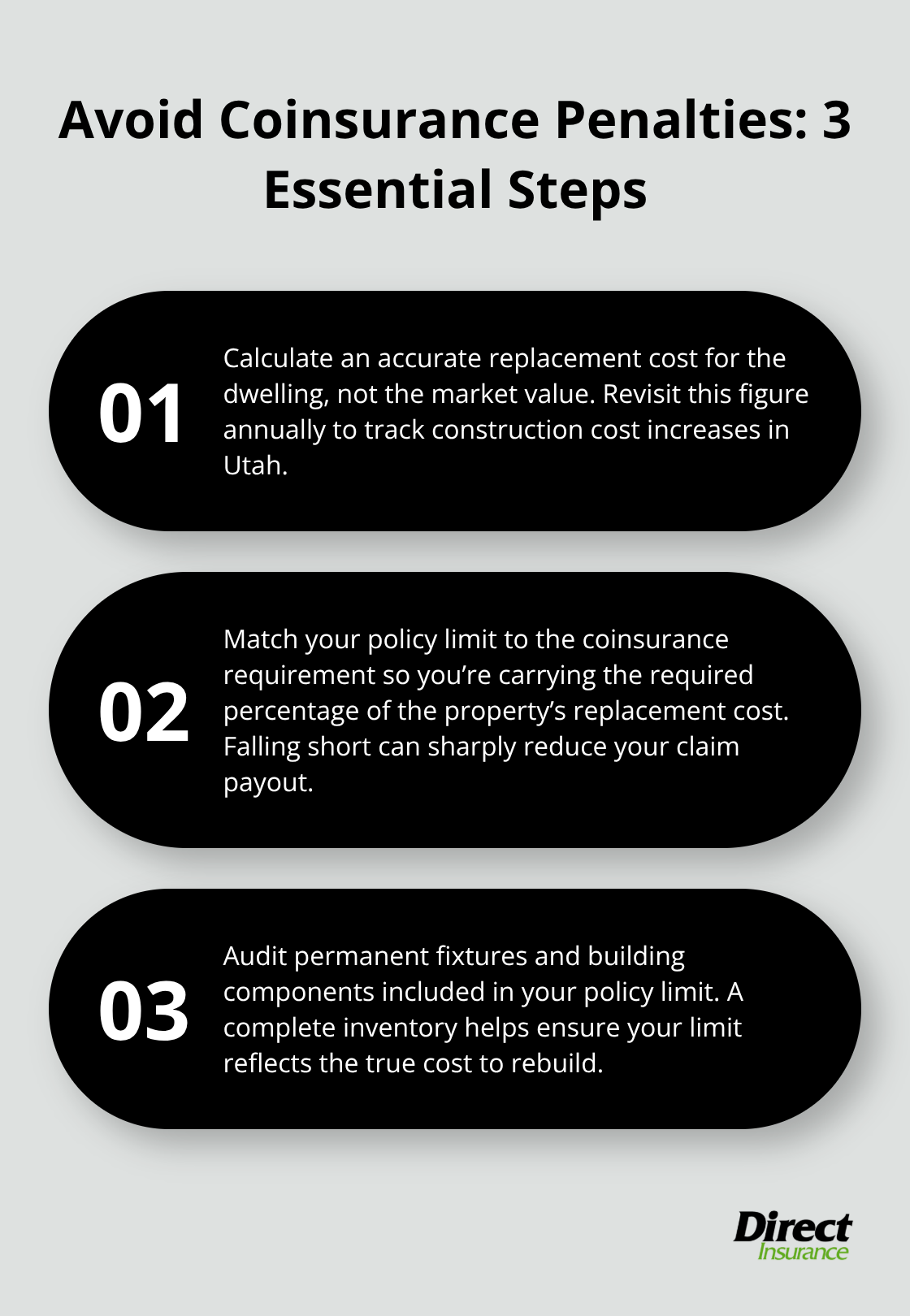
Many landlords make a costly mistake by underinsuring the dwelling value. Coinsurance penalties can devastate your payout after a loss. A coinsurance clause requires you to carry a certain percentage of insurance relative to the replacement cost of your property. Calculate replacement cost accurately, not just the current market value, and update it annually as construction costs change.
Utah landlords should also add Ordinance and Law coverage, which pays to bring a damaged property up to current code after a covered loss. This matters more for older buildings where code upgrades can cost tens of thousands of dollars during reconstruction.
Liability Protection Against Real Claims
Liability coverage pays medical bills and legal defense costs if a tenant or visitor is injured on your property and you’re found legally responsible. The base limit on most policies is $100,000, but this is dangerously low. A single serious injury claim can easily exceed this amount.
Increasing your liability limit from $100,000 to $300,000 or $500,000 costs roughly $20 per year and is worth every penny. Requiring tenants to carry renters insurance adds another layer of protection-their policy covers their personal belongings and their liability if they cause damage. When tenants carry renters insurance, list yourself as a certificate holder so you’re notified of any policy changes.
Utah law requires rental units to maintain safe conditions with functioning electrical, heating, plumbing, and hot and cold water systems. Keep properties up to code, maintain clear documentation of safety measures, and implement written rules that reduce injury risk. These steps reduce both actual incidents and the likelihood of successful liability claims against you.
Loss of Rents Coverage Replaces Your Income
Loss of Rents coverage reimburses you for lost rental income when a covered event makes the property uninhabitable. This is essential because reconstruction timelines are lengthy-18 months is commonly cited for major rebuilds. To calculate how much coverage you need, multiply your monthly rent by the expected rebuild period. If you charge $2,000 monthly rent and anticipate 18 months to rebuild, you need $36,000 in loss of rents coverage.
Many landlords overlook this coverage entirely, then face months without income while repairs happen. Some policies also cover loss of rent during vacancy if the property becomes uninhabitable due to a covered loss, which protects you further. The right loss of rents limit can mean the difference between weathering a disaster and facing financial hardship.
Understanding these three coverage types sets the foundation for protecting your investment. The next step is recognizing which specific risks threaten Utah rental properties most-and how weather, tenant behavior, and liability exposure shape your coverage needs.
What Risks Threaten Utah Rental Properties Most
Weather Creates Constant Property Damage
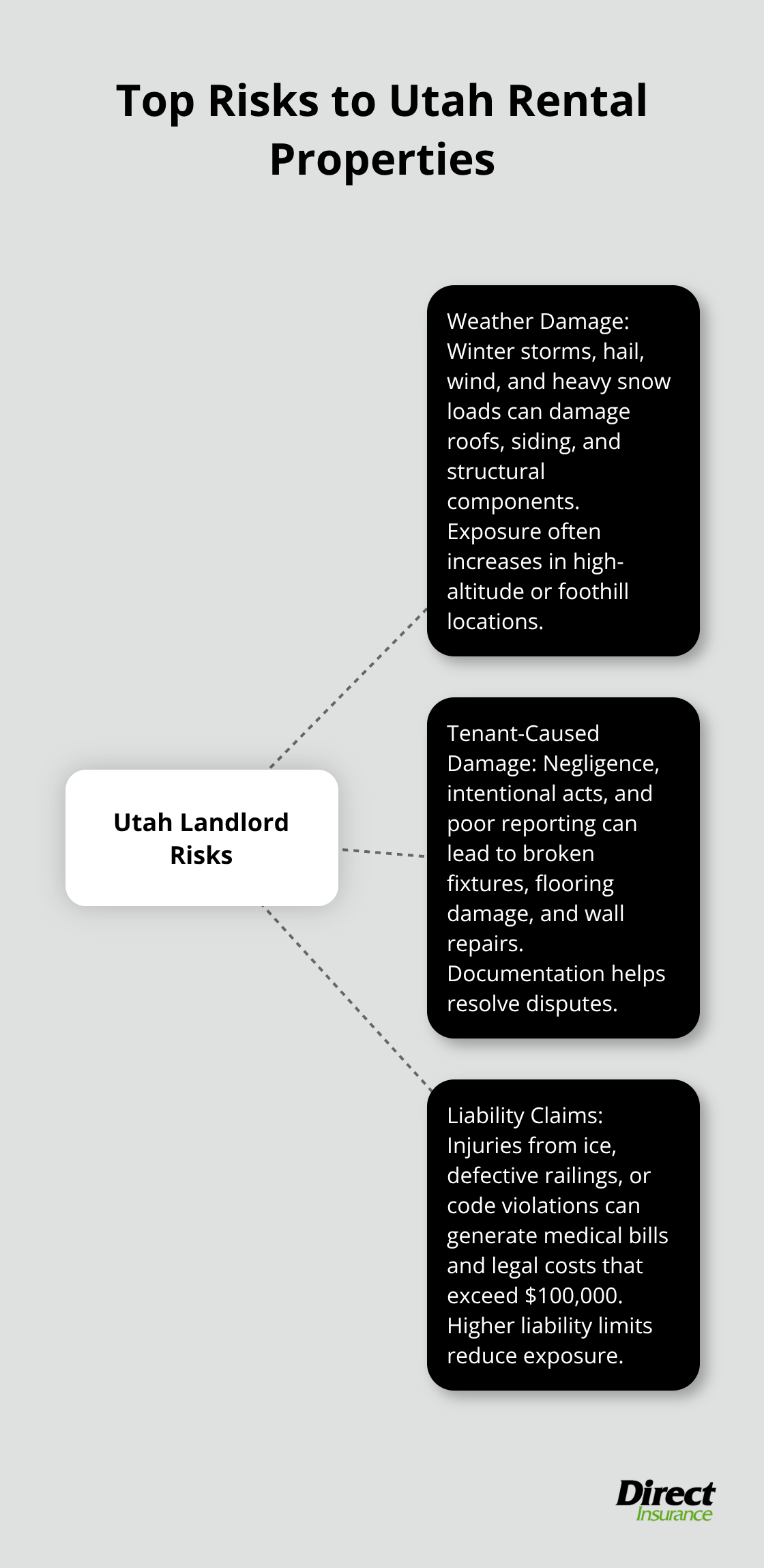
Utah’s geography and climate create specific hazards for rental property owners. The state experiences significant winter weather, occasional hail storms, and wildfire risk in certain areas. The National Severe Storms Laboratory reports lightning strikes per year across the contiguous United States, and Utah receives its share of these strikes along with hail damage during spring and early summer. Wind events tear roofing and siding, while heavy snow loads damage structures not built to handle the weight. Properties in high-altitude areas or near foothills face substantially higher weather exposure.
Tenants Cause Damage Through Negligence and Neglect
Tenants create damage through negligence or intentional acts. Broken windows, damaged flooring, holes in walls, and destroyed fixtures happen regularly in rental units. Unlike owner-occupied homes where you control maintenance, rental properties depend on tenants to report problems and avoid causing them. Property disputes arise when tenants claim damage existed before move-in or when you deduct from security deposits for repairs.
Utah law requires landlords to return security deposits within 30 days with an itemized list of deductions. Disputes over what constitutes damage versus normal wear-and-tear generate frequent conflicts. Tenants often challenge legitimate deductions, forcing you to document conditions at move-in and move-out with photos and written records.
Liability Claims Pose Your Biggest Financial Risk
Liability exposure presents the most serious financial risk for Utah landlords. A visitor slips on ice near your rental unit, a tenant’s guest suffers injury from a defective railing, or someone claims discrimination in your rental practices. Medical bills, legal defense costs, and settlement amounts quickly exceed $100,000. Utah law mandates rental units maintain safe conditions with functioning electrical, heating, plumbing, and hot and cold water systems. If an injury occurs and your property fails to meet code, liability claims become much stronger.
Certain dog breeds trigger exclusions on many landlord policies because animal-related injuries rank among the costliest liability claims. Requiring tenants to carry renters insurance and listing yourself as a certificate holder transfers some liability risk to their policy. Additionally, personal injury coverage protects against discrimination claims or wrongful eviction allegations and costs very little to add.
How Coverage Limits Connect to Real Risks
The combination of Utah’s weather patterns, tenant-related damage, and liability exposure means choosing adequate coverage limits matters far more than saving a few dollars on premiums. Your property’s specific location, age, and tenant profile determine which risks demand the most protection. Understanding these threats allows you to select coverage that actually matches your exposure rather than settling for generic limits that leave gaps.
Choosing the Right Policy for Your Utah Rental Property
Calculate Your Property’s True Replacement Cost
Start with your property’s exact replacement cost, not its market value. Many landlords guess or use outdated estimates, then face coinsurance penalties that slash claim payouts. Contact local Utah contractors and request replacement cost estimates for your specific building type, age, and square footage. Update this figure annually since construction costs in Utah have risen significantly in recent years.
Next, list every permanent fixture and built-in item the policy should cover-furnaces, water heaters, flooring, cabinets. This inventory prevents gaps in coverage and ensures your replacement cost estimate reflects what you actually need to rebuild.
Assess Your Tenant Profile and Property Location
Your tenant situation shapes coverage needs more than most landlords realize. Properties with multiple units or a history of tenant disputes need stronger coverage than single-family rentals with stable, long-term residents. High-risk dog breeds on your property warrant higher liability limits since animal-related injuries generate some of the costliest claims.
Location matters equally. Properties near flood zones or in areas with documented hail damage require more aggressive coverage than those in lower-risk locations. Utah’s weather patterns vary dramatically by region, so your specific address determines exposure level.
Determine Loss of Rents Coverage Based on Rebuild Time
Calculate your loss of rents need by multiplying monthly rent by your expected rebuild timeline. Most major Utah rebuilds take 12 to 18 months, so a $2,000 monthly rental needs $24,000 to $36,000 in loss of rents coverage to survive the gap. This calculation prevents financial hardship when reconstruction extends longer than expected.
Compare Multiple Carriers and Negotiate Discounts
Comparing quotes across multiple carriers reveals dramatic differences in pricing and coverage terms. One insurer might offer DP-3 Special Form coverage at $1,200 annually while another charges $1,500 for the same protection.
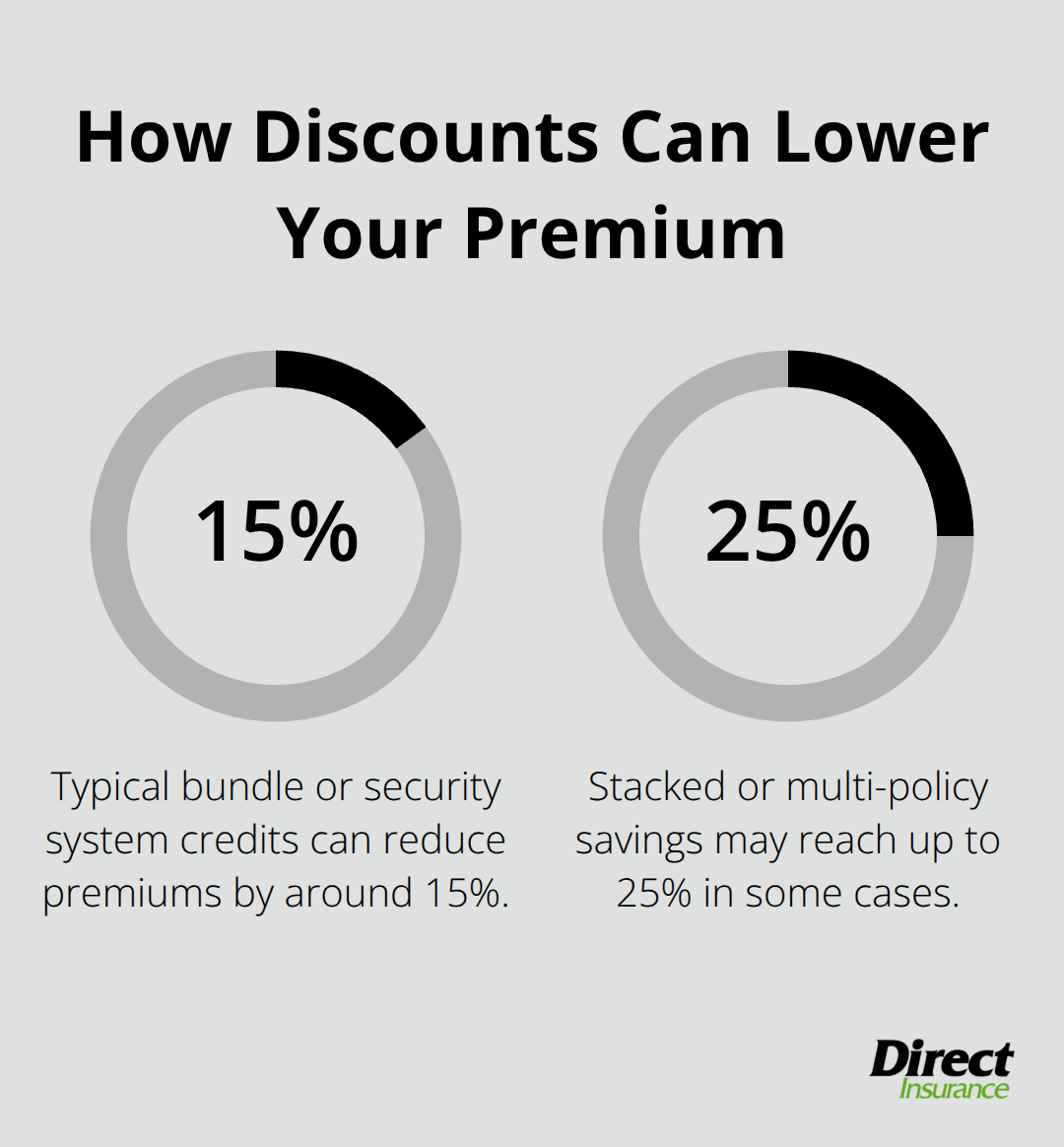
Bundle discounts, security system credits, and multi-policy savings can reduce premiums by 15 to 25 percent, so always ask about available discounts before accepting a quote.
Avoid online-only quotes that skip detailed property questions, as these often leave you underinsured or missing critical coverage like Ordinance and Law protection. The difference between adequate coverage and inadequate coverage often costs less than $30 per month but determines whether you recover fully after a loss or face years of financial hardship.
Work with an Agent Who Understands Utah’s Market
Work with an agency that understands Utah’s specific rental market, knows which carriers handle claims fairly in our state, and can explain why one policy structure outperforms another for your situation. Your agent should spend time understanding your property’s age, condition, location, and tenant situation before recommending coverage limits. If an agent rushes through the process or seems unfamiliar with Utah landlord requirements, find someone else.
Final Thoughts
Utah rental property insurance protects your investment against the specific threats your state presents. Dwelling coverage with DP-3 Special Form protection, adequate liability limits, and loss of rents coverage form the foundation of a solid policy. These three elements address the real risks Utah landlords face: weather damage, tenant-caused destruction, and injury claims that can cost far more than your annual rent income.
The mistakes landlords make rarely involve selecting the wrong coverage type. Instead, they underestimate replacement costs, set liability limits too low, or skip loss of rents coverage entirely. These gaps cost thousands when claims happen, and a $20 annual increase in liability limits or an accurate loss of rents calculation takes minutes but determines whether you recover fully or face years of financial strain. Your property’s specific situation demands coverage tailored to its actual exposure, not generic policies sold online that leave you either overinsured or dangerously underprotected.
We at Direct Insurance Services shop multiple top-rated insurance companies to find you the best Utah rental property insurance at competitive rates. Contact Direct Insurance Services today for a free quote, and our local agents will spend time understanding your property’s age, location, condition, and tenant profile before recommending coverage.
Disclaimer: The information provided in this blog is for general informational purposes only and does not constitute legal, financial, or insurance advice. Coverage options, terms, and availability may vary. Please consult with a licensed professional for advice specific to your situation

