

Landlord Insurance in Utah A Comprehensive Guide
Utah rental property owners face unique risks that standard homeowners insurance won’t cover. From tenant-related damages to loss of rental income, the financial exposure can be significant.
We at Direct Insurance Services understand that landlord insurance in Utah provides essential protection for your investment property. This comprehensive guide covers everything you need to know about securing the right coverage for your rental business.
What Makes Utah Landlord Insurance Different from Homeowners Coverage
Standard homeowners insurance stops the moment you rent out your property. Utah landlords face tenant-caused damages, vandalism, and liability exposures that homeowners policies explicitly exclude.
Property Damage Protection Beyond Standard Coverage
Property damage protection extends beyond typical homeowner risks to include tenant vandalism, malicious damage, and theft by renters. Loss of rental income coverage becomes your financial lifeline when tenants damage your property so severely that it becomes uninhabitable. Standard policies won’t cover these tenant-specific risks that rental properties face daily.
Utah-Specific Property Risks
Utah’s seismic activity along the Wasatch Fault creates earthquake risks that standard policies don’t cover. Wildfire exposure in areas like Park City and the Wasatch Mountains requires additional hazard protection. Flash floods affect properties in Salt Lake County and Washington County (making flood insurance a separate necessity). Winter freeze damage to pipes and HVAC systems hits rental properties harder because tenants often don’t maintain proper heat. Student rental areas near University of Utah and Utah State University campuses see higher vandalism rates.
Legal Protection Requirements
Utah law doesn’t mandate landlord insurance, but liability lawsuits can be substantial, and slip-and-fall cases often exceed six figures. Medical protection coverage pays tenant injury expenses on your property, while liability coverage handles legal defense costs when tenants sue for negligence. Utah’s 24-hour entry notice requirement means you’re responsible for safe conditions between inspections (even when you can’t monitor daily activities).
Property managers and landlords need minimum $300,000 liability limits to protect against tenant lawsuits and third-party injury claims. These coverage types work together to address the specific exposures that come with rental property ownership in Utah.
What Coverage Types Protect Your Utah Rental Investment
Dwelling and Property Protection That Actually Matters
Dwelling coverage forms the backbone of your landlord policy, but most Utah property owners dramatically underestimate the limits they need. With modest increases in construction costs, a $300,000 dwelling limit from two years ago now requires updated coverage to rebuild the same property. Progressive and Foremost Insurance typically offer dwelling coverage up to $1 million for single-family rentals, which works best for properties built after 1990 in high-value areas like Park City or Cottonwood Heights.
Personal property coverage protects appliances, HVAC systems, and fixtures you provide for tenants. Set this coverage at $25,000-$50,000 for furnished rentals or properties with high-end appliances. Vandalism coverage becomes essential for student rentals near University of Utah, where malicious damage claims average $8,000-$12,000 per incident according to Stillwater Insurance data.
Liability and Legal Defense Coverage
Utah liability claims average $47,000 per incident, which makes $300,000 minimum coverage inadequate for serious landlords. We recommend $1 million liability limits for all rental properties, with umbrella coverage that adds another $1-2 million for landlords who own multiple units. Dog bite claims in Utah average $52,000 per incident, and tenant guests frequently file premises liability lawsuits for slip-and-fall accidents on stairs, sidewalks, and parking areas.
Legal defense costs run $150-$300 per hour for property attorneys in Salt Lake City, and discrimination lawsuits can exceed $25,000 in legal fees before they reach settlement. General liability coverage protects Utah companies from bodily injury and property damage claims that can bankrupt operations overnight. Medical payments coverage of $5,000-$10,000 handles minor tenant injuries without formal liability claims.
Loss of Rental Income Protection
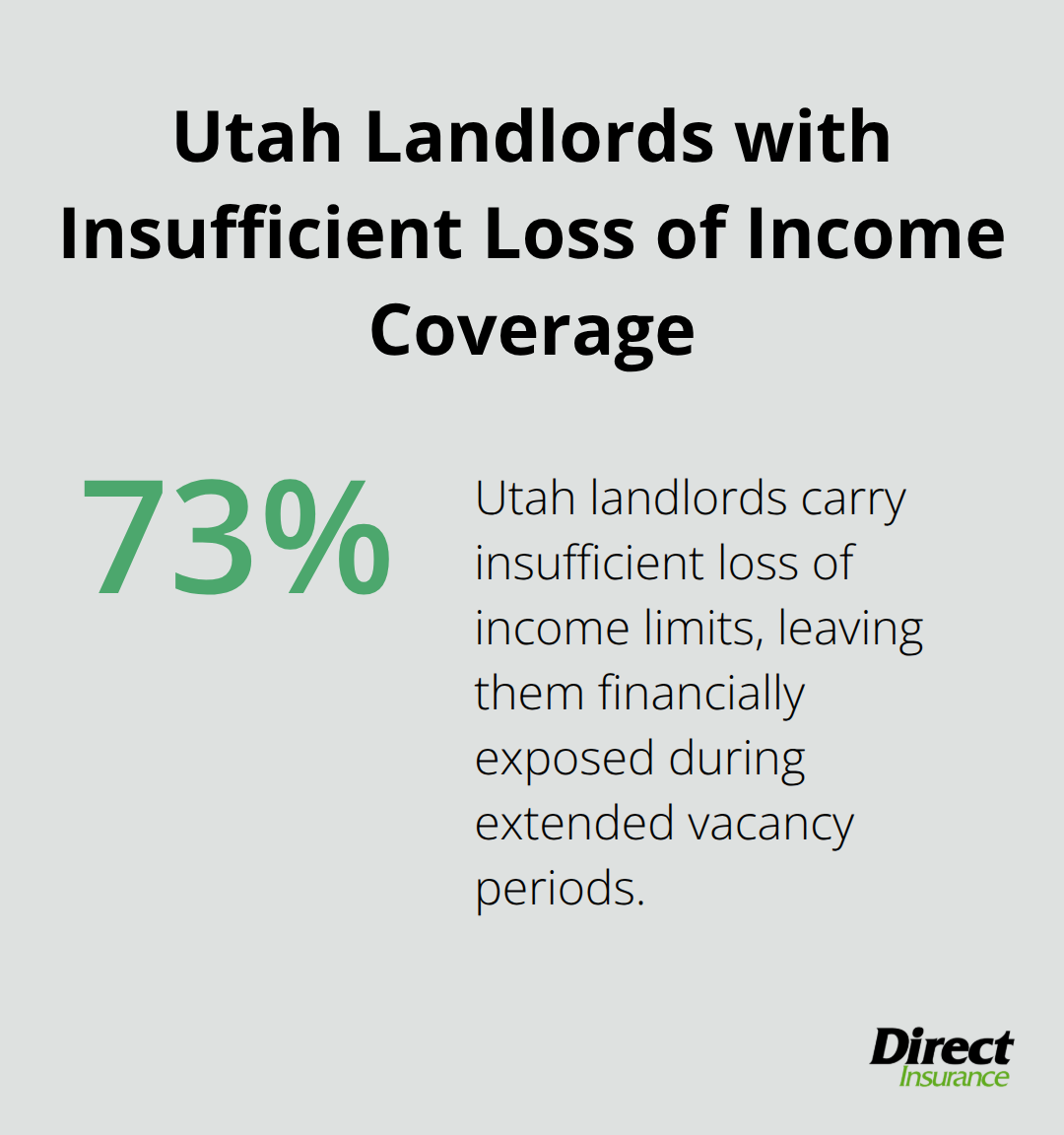
Loss of rental income coverage replaces 12-24 months of rent when covered damage makes your property uninhabitable. For a $2,000 monthly rental, set this coverage at $24,000-$48,000 to cover extended repair periods. Fire damage repairs typically take 4-6 months in Utah due to contractor availability, while water damage from burst pipes averages 2-3 months for complete restoration.
This coverage pays additional expenses when you need temporary accommodations for displaced tenants, plus lost rent during the repair period.
These coverage amounts depend heavily on your specific property characteristics and local risk factors, which vary significantly across Utah’s diverse markets.
What Drives Your Utah Landlord Insurance Premiums
Geographic Risk Zones Impact Costs Dramatically
Salt Lake City properties average $580 annually for landlord insurance, while Centerville properties drop to $456 according to Steadily Insurance data. Properties within two miles of the Wasatch Fault pay 15-25% higher premiums due to earthquake exposure, with Park City and Cottonwood Heights experiencing the steepest increases. Wildfire-prone areas near the Wasatch Mountains face surcharges of $200-$400 annually, while flood zone properties require separate coverage that adds $300-$800 to total costs.
Student rental areas near University of Utah campuses carry vandalism surcharges that average $150-$300 yearly due to higher claim frequency. Properties in Salt Lake County’s industrial zones face liability premium increases from environmental exposures, while rural Utah counties like Garfield and Wayne offer the lowest base rates but provide limited coverage options.
Property Age and Construction Materials Control Base Rates
Homes built before 1980 face premium increases of 20-35% due to outdated electrical systems, plumbing, and codes that increase fire and water damage risks. Wood frame construction costs 40% less to insure than brick veneer properties, but masonry homes built after 1990 receive discounts for superior fire resistance. Properties with galvanized steel plumbing face surcharges that average $200 annually, while copper or PEX systems qualify for reduced rates.
Furnace systems in 93.59% of Utah rental properties receive standard rates, but properties with wood stoves or space heaters face restrictions or coverage exclusions. Roof age matters significantly (with asphalt shingle roofs over 15 years old triggering rate increases of 10-20%), while metal systems earn discounts up to 15%.
Tenant Quality and Management Practices Affect Rates
Landlords who conduct comprehensive tenant screening through credit checks, employment verification, and criminal background reviews receive discounts of 5-15% from carriers like Progressive and Foremost. Properties managed by professional management companies qualify for additional rate reductions because of lower claim frequency and faster maintenance response times. Landlords who require tenants to carry renters insurance with minimum $300,000 liability coverage can reduce their liability premiums by 10-25% (as it provides additional protection layers).
Final Thoughts
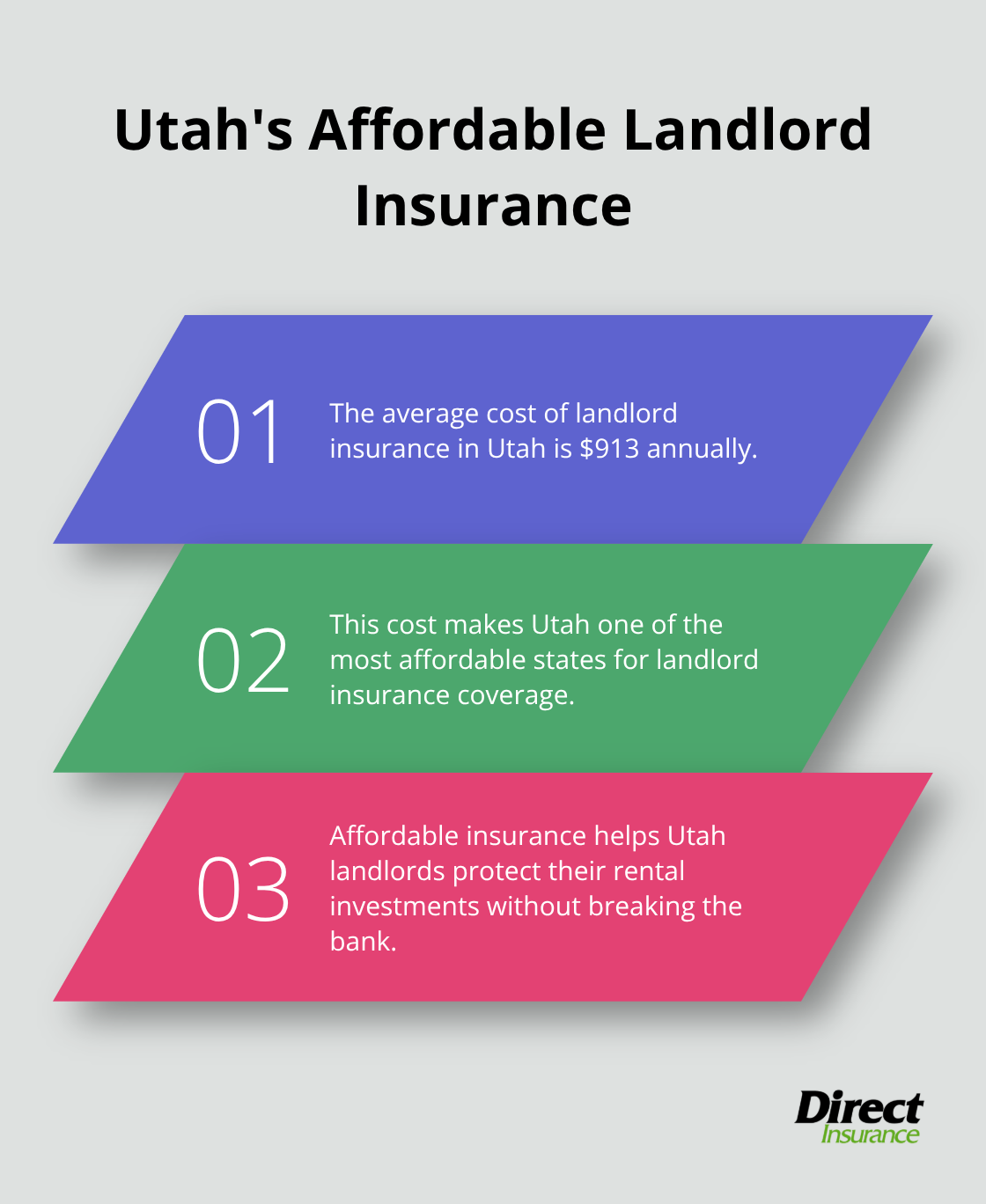
Landlord insurance Utah coverage protects your rental investment from financial disasters that standard homeowners policies won’t touch. The average annual cost of $913 makes Utah one of the most affordable states for this protection, yet many property owners still operate without adequate coverage. Smart landlords prioritize three coverage areas: dwelling protection that matches current construction costs, liability coverage of at least $1 million, and loss of rental income protection that covers 12-24 months of rent.
Properties near the Wasatch Fault need earthquake coverage, while wildfire-prone areas require additional hazard protection. Student rentals need higher vandalism limits, while luxury properties require increased dwelling coverage. Professional tenant screening and requiring renters insurance can reduce your premiums by 10-25% (which provides additional protection layers for your business).
We at Direct Insurance Services help Utah landlords shop multiple top-rated carriers to find competitive rates that match your specific property risks. Our Salt Lake City team understands Utah’s unique challenges, from seismic activity to seasonal freeze damage. Contact us for personalized quotes that protect your rental business without breaking your budget.

