New Driver Auto Utah: Tips For First Time Car Owners
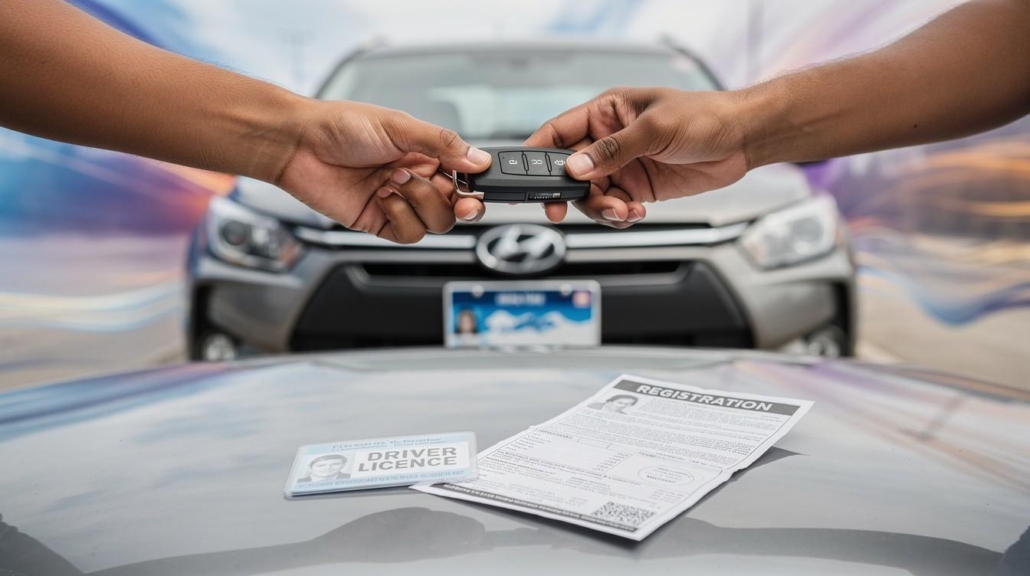
Buying your first car in Utah is exciting, but it also comes with real responsibilities. From understanding your vehicle’s maintenance needs to selecting the right insurance coverage, there’s a lot to learn as a new driver in auto Utah.
We at Direct Insurance Services have helped countless first-time car owners navigate these decisions. This guide walks you through the essentials you need to know right now.
Keep Your Car Running With Basic Maintenance
Skipping maintenance on your first car costs thousands down the road. New drivers often think they can ignore oil changes or tire rotations until something breaks, but that approach leads to engine damage, blowouts, and expensive repairs. Start checking your oil level every month and your other fluids-coolant, brake fluid, transmission fluid, and power steering fluid-every three months or before long trips. Most manufacturers recommend an oil change every 5,000 to 7,500 miles, though some newer cars can go 10,000 miles between changes. Check your owner’s manual for the exact interval for your vehicle. Low oil thickens over time and stops protecting your engine from friction and heat, which means your engine can seize without warning. If you ignore this one task, you’re looking at a $3,000 to $5,000 engine replacement.
Tire Care Matters More Than You Think
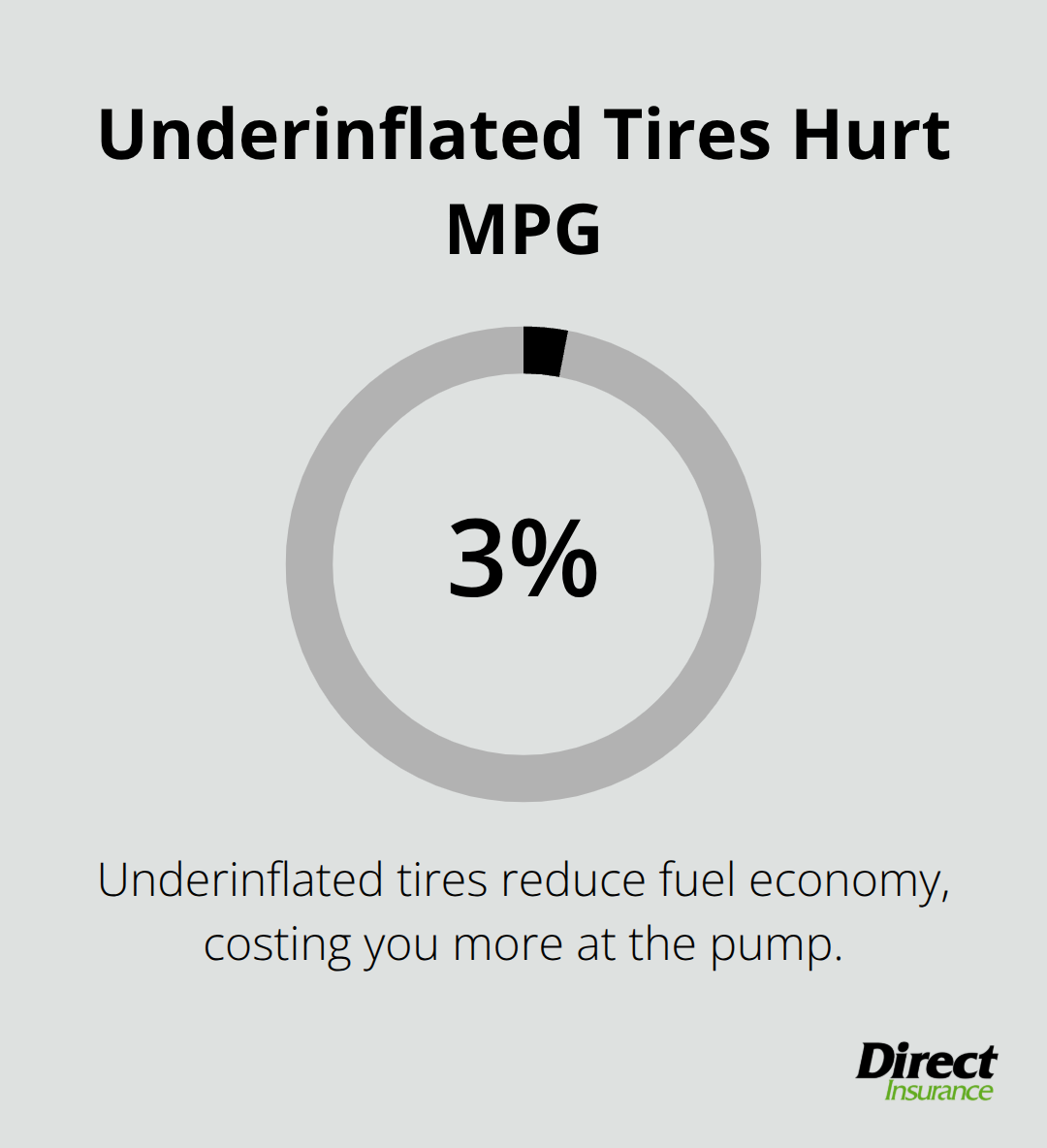
Tire rotation should happen every 5,000 to 8,000 miles to prevent uneven wear that shortens tire life. Front tires wear faster than rear tires because they handle steering and most of the braking force, so swapping them keeps all four tires lasting longer. Replacement tires typically cost $600 to $1,200 for a full set on most sedans, so regular rotation saves you real money. Check your tire pressure monthly and before long drives-underinflated tires reduce fuel economy by up to 3 percent and increase blowout risk. Your tire pressure should match the number on the driver’s door jamb, not the maximum pressure printed on the tire itself.
Tread depth matters too; tires with less than 4/32 of an inch of tread lose traction in wet conditions, and Utah’s mountain roads and winter weather demand adequate grip. Use the penny test: insert a penny into the tread with Lincoln’s head upside down, and if you see the top of his head, your tires are too worn.
Dashboard Warning Lights Demand Your Attention
Your dashboard warning lights tell you when something needs immediate attention. The oil pressure light looks like a can and means your oil level is dangerously low or your oil pump is failing-pull over and check oil immediately. The check engine light indicates an emissions system problem or a sensor malfunction; get a diagnostic scan at a mechanic within a week, not months later. The temperature gauge rising into the red zone means your engine is overheating, which can destroy your engine in minutes; turn off the air conditioning, turn on the heater to pull heat away from the engine, and find a safe place to stop. Utah’s heat and mountain driving stress cooling systems, so take this warning seriously. The brake warning light signals low brake fluid or worn brake pads-this is a safety issue that demands immediate attention. If you ignore these lights, you risk breaking down on remote Utah highways or causing an accident that could have been prevented. Many auto parts stores offer free diagnostic scans, so you have no excuse to ignore warning lights and hope they go away.
What Comes Next: Insurance and Protection
Maintenance keeps your car running, but insurance protects your finances when accidents happen. As a new driver in Utah, understanding your coverage options is just as important as checking your oil.
What Insurance Do You Actually Need in Utah
Utah’s Minimum Coverage Requirements
Utah law requires you to carry minimum liability coverage before you drive anywhere. That means bodily injury liability of at least $25,000 per person and $65,000 per accident, plus property damage liability of $15,000. These minimums are dangerously low, especially if you cause an accident that injures multiple people or damages expensive vehicles. A single serious accident could leave you personally liable for tens of thousands of dollars beyond those limits, which means creditors could pursue your wages and assets for years.
Why You Need Higher Liability Limits
Higher liability limits protect your financial future at a reasonable cost. We recommend carrying at least $100,000 in bodily injury coverage and $50,000 in property damage coverage, which costs only slightly more than the legal minimum.
Shop quotes from multiple insurers to compare rates, because premiums for these higher limits typically run 15 to 25 percent more than the absolute minimum, depending on your driving record and the vehicle you drive. Most insurers will ask about your driving history, age, and whether you’ve completed a defensive driving course, which can qualify you for discounts of 5 to 15 percent on your premium.
Collision and Comprehensive Coverage Protects Your Vehicle
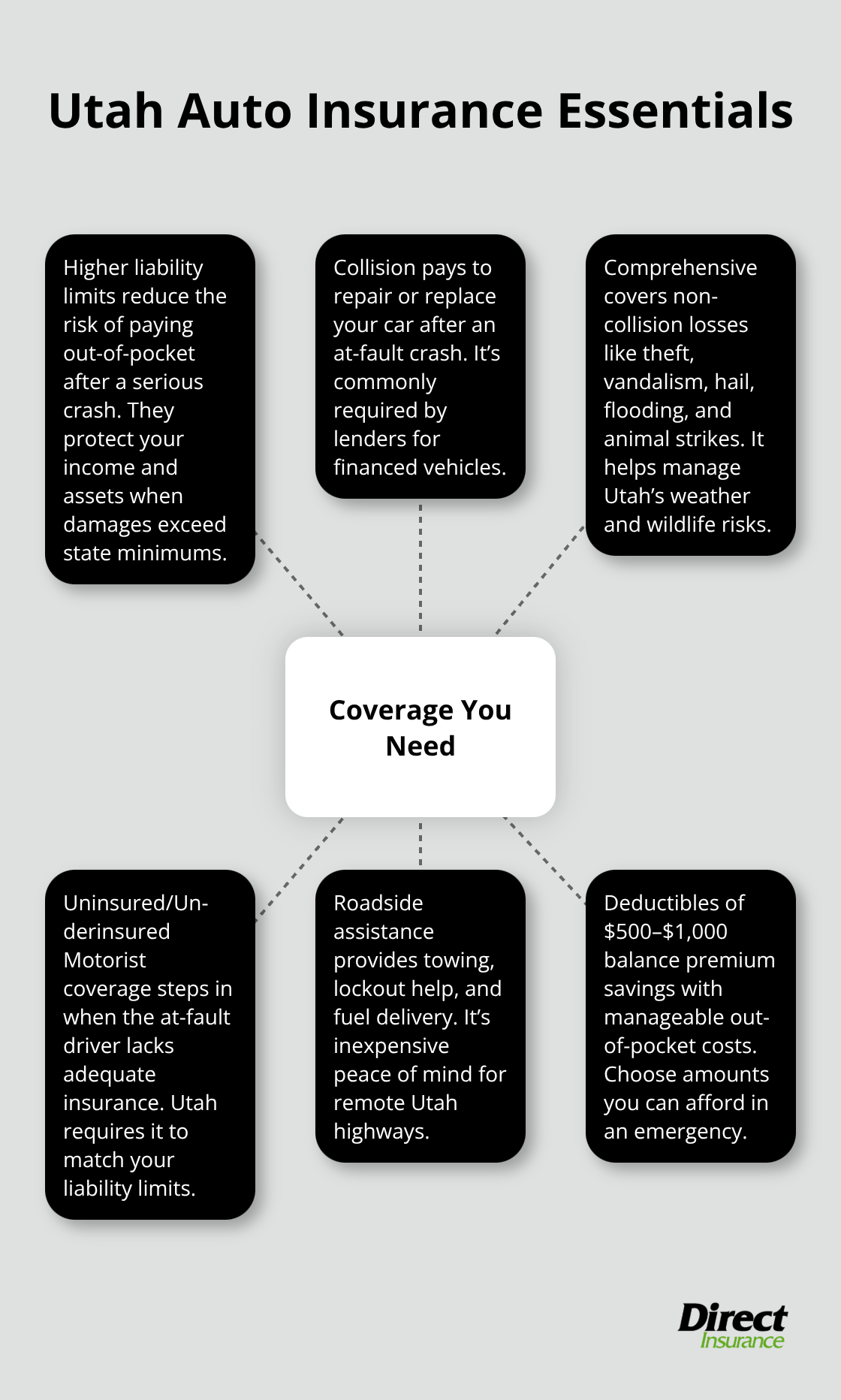
Collision and comprehensive coverage protect your vehicle itself when you’re at fault in an accident or when theft, weather, or other non-collision events damage your car. Collision coverage pays to repair or replace your vehicle after an accident you cause, while comprehensive covers theft, vandalism, hail, flooding, and animal strikes. For newer cars or vehicles you’re financing, your lender will require both, but even for older cars these coverages make sense because Utah’s mountain terrain and winter weather create real risks. A comprehensive claim for hail damage in Salt Lake City can run $3,000 to $8,000, and a collision claim for a serious accident easily exceeds $10,000, so skipping these coverages means paying out of pocket for major repairs.
Choosing Your Deductibles and Additional Protection
Choose deductibles of $500 to $1,000 to keep premiums reasonable while maintaining affordable out-of-pocket costs if you need to file a claim. Uninsured and underinsured motorist coverage protects you if another driver causes an accident but lacks adequate insurance, and Utah requires this coverage to match your liability limits. Consider adding roadside assistance through your insurer or AAA, which covers towing, lockouts, and fuel delivery when you break down on remote Utah highways, for roughly $100 to $150 per year. Getting the right coverage now prevents financial disaster later, and finding the best coverage ensures you match protection to your actual needs.
How to Drive Safely on Utah Roads
New drivers in Utah face challenges that drivers in other states don’t encounter. Mountain passes, sudden weather shifts, and terrain that demands respect mean you need driving skills beyond what a permit test covers. The difference between safe drivers and those who cause accidents comes down to specific habits and awareness. Utah’s roads require you to develop defensive driving techniques that work in real conditions, not theoretical scenarios.
Master Defensive Driving Techniques
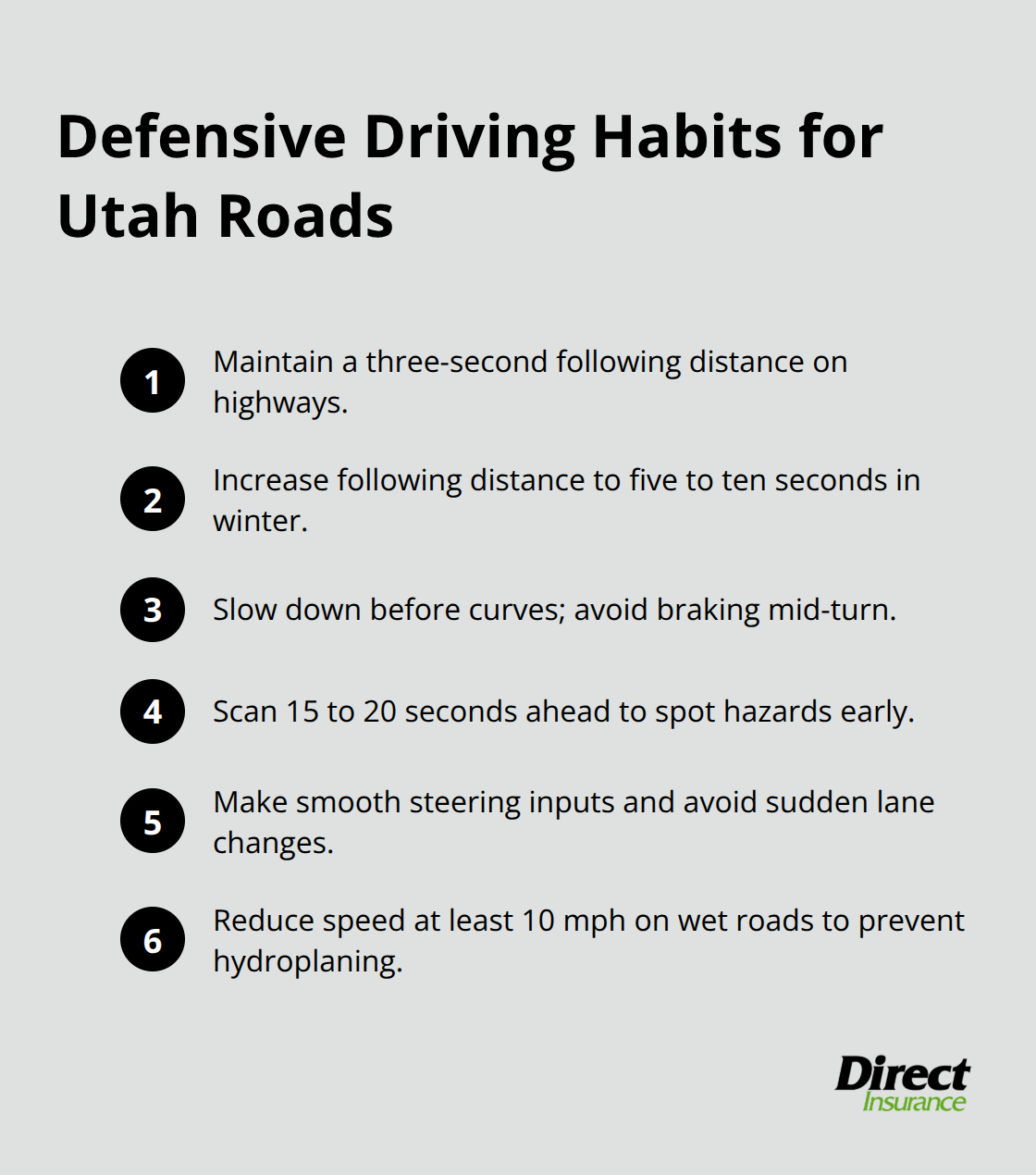
Maintain a three-second following distance behind other vehicles on highways and two seconds in city traffic. This gives you time to react if the car ahead brakes suddenly. In winter, increase this to five to ten seconds because snow and ice extend stopping distances dramatically.
Utah experiences significant winter weather in Salt Lake, Davis, and Utah counties, with snow and black ice creating conditions where your reaction time matters more than your vehicle’s speed.
Practice smooth steering inputs and avoid sudden lane changes, which destabilize your car and increase rollover risk on mountain roads. When you approach a curve, slow down before entering it rather than braking mid-turn, because braking while turning reduces traction and causes loss of control. Utah’s mountain terrain includes steep grades and sharp switchbacks, especially along I-15 north and south of Salt Lake City, so this skill directly prevents accidents.
Scan the road ahead 15 to 20 seconds in advance, not just at the car directly in front of you. This early warning system lets you anticipate stopped traffic, debris, or hazards before they become emergencies. Many new drivers focus only on the immediate road, which leaves them unprepared for sudden obstacles.
Handle Rain, Snow, and Winter Conditions
Rain reduces tire traction by 25 to 50 percent depending on tread depth and road surface, and wet roads cause hydroplaning if you drive too fast or have underinflated tires. Slow down by at least 10 miles per hour when roads are wet, and increase your following distance to five seconds.
Snow and ice reduce traction by 50 to 90 percent, making winter driving on Utah’s roads genuinely dangerous for unprepared drivers. Weather-related crashes spike during winter months, particularly on mountain passes. If you must drive in snow, use low gears to maintain traction and avoid sudden acceleration or braking. All-wheel drive helps you accelerate in snow but doesn’t improve braking or cornering, so speed control remains your primary safety tool.
Navigate Fog, Hail, and Wind
Fog reduces visibility and makes judging distance nearly impossible, so use your headlights and reduce speed significantly. Utah’s canyons and mountain areas experience fog regularly, especially in early morning and evening.
Hail can strike suddenly in Utah summer months, and while you can’t prevent hail damage, you can reduce collision risk by pulling to the side of the road and waiting for visibility to improve. Wind gusts, particularly common in spring and near open areas, can push your vehicle across lanes if you’re not prepared. Grip the steering wheel firmly and reduce speed in gusty conditions.
Establish a Maintenance Baseline and Safety Checks
Schedule a post-purchase inspection with a trusted mechanic to establish a maintenance baseline and identify any existing issues. Request a comprehensive inspection that covers engine, transmission, brakes, tires, fluids, and electrical systems, then address any problems immediately. This baseline helps you recognize when something changes or deteriorates.
Check whether your Utah county requires emissions tests or safety inspections, as requirements vary by location. Salt Lake, Davis, and Utah counties often have specific rules, so verify your county’s requirements with the DMV. If required, schedule these tests at certified facilities and bring your registration and required documents. Before testing, ensure your engine runs smoothly, address any check engine lights, and drive to warm up the engine for accurate readings. If your vehicle fails, review the detailed report, perform necessary repairs, and retest. Utah’s terrain and weather patterns demand that you treat vehicle maintenance as a safety issue, not just a financial one.
Final Thoughts
Owning your first car in Utah means taking responsibility for maintenance, insurance, and safe driving habits that protect both you and others on the road. Check your oil and fluids monthly, rotate your tires every 5,000 to 8,000 miles, and pay attention to dashboard warning lights the moment they appear. These simple tasks prevent thousands of dollars in damage and keep your vehicle reliable for years. Your insurance coverage matters just as much as your maintenance routine-Utah’s minimum liability limits leave you financially exposed if you cause a serious accident, so carrying higher limits protects your wages and assets from creditors.
Safe driving habits separate new drivers who avoid accidents from those who don’t. Maintain proper following distances, slow down in rain and snow, and scan the road ahead to anticipate hazards before they become emergencies. Utah’s mountain terrain and winter weather demand respect and preparation, not overconfidence. Collision and comprehensive coverage safeguard your vehicle against the real risks Utah’s weather and terrain create, from hail damage to winter accidents on mountain passes.
We at Direct Insurance Services have helped countless first-time car owners find the right coverage and build confidence behind the wheel. Our team understands Utah’s unique driving conditions and insurance needs because we’re locals who live here. Contact us today to shop quotes from multiple top-rated insurers and get personalized guidance on the coverage that fits your situation and budget.
Disclaimer: The information provided in this blog is for general informational purposes only and does not constitute legal, financial, or insurance advice. Coverage options, terms, and availability may vary. Please consult with a licensed professional for advice specific to your situation

