Affordable Homeowners Insurance Utah: Save On Coverage
Homeowners insurance in Utah doesn’t have to drain your budget. At Direct Insurance Services, we know that finding affordable homeowners insurance Utah residents can actually rely on takes strategy, not luck.
The right combination of discounts, smart coverage choices, and home improvements can cut your premiums significantly. This guide walks you through proven ways to lower your costs without sacrificing protection.
Finding the Right Coverage Without Overpaying
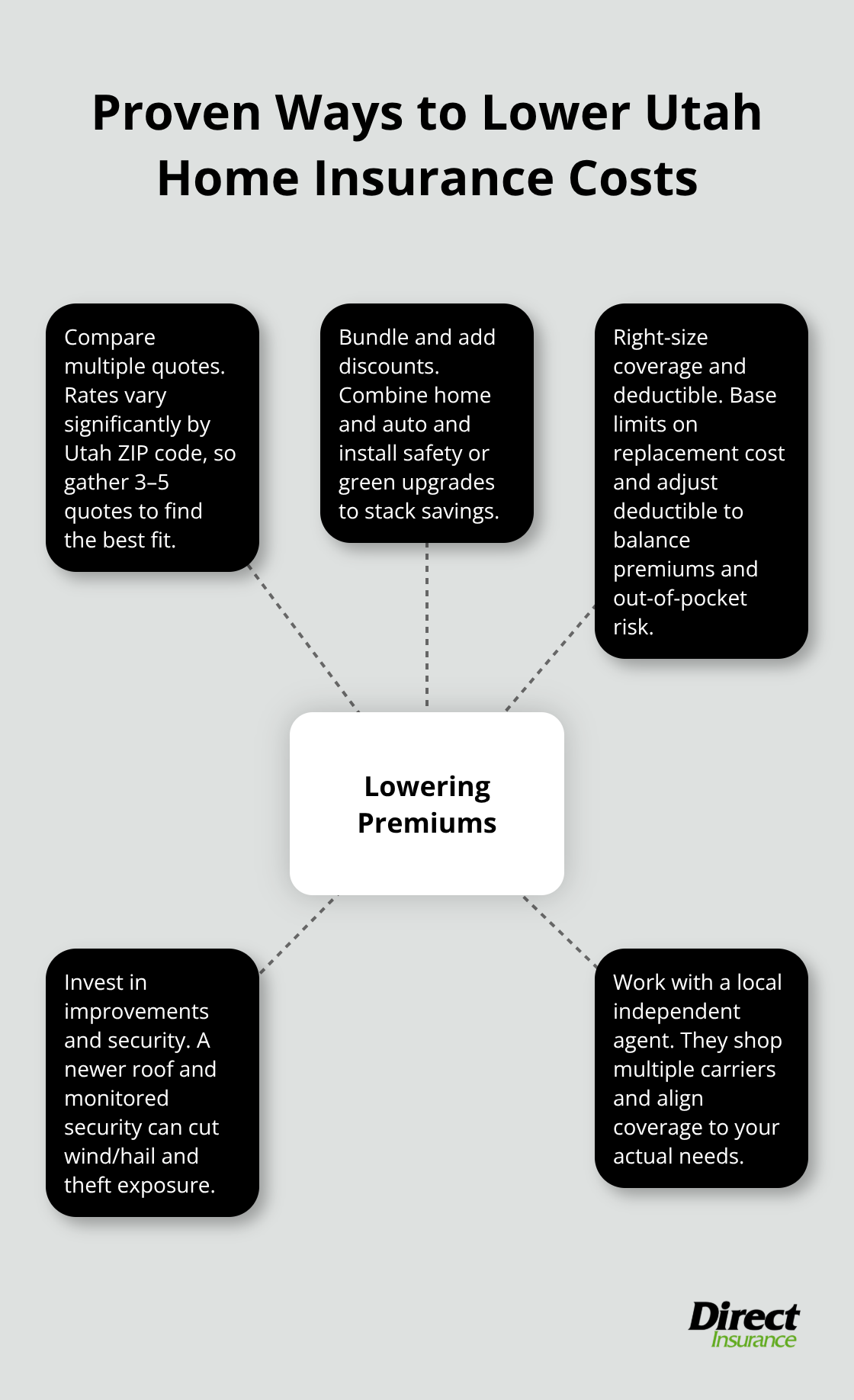
Comparing quotes across multiple insurers is non-negotiable if you want affordable homeowners insurance in Utah. You can obtain three to five quotes in less than an hour online, yet most Utah homeowners settle for their first option. Your ZIP code alone shifts your rate substantially because local risk factors-wildfire exposure, flood zones, weather patterns-vary block to block.
Bundling and Discounts Cut Real Costs
Beyond bundling, insurers offer discounts for new or renovated homes, safety devices like burglar alarms, and green home improvements. Installation of protective systems, roof replacements, and maintenance of defensible space around your property all reduce risk and trigger lower rates. Your claims history and credit score also influence pricing, so you should address these factors before you shop to qualify for better terms.
Right-Sizing Your Coverage Prevents Waste
Overestimating coverage wastes money; underestimating leaves you exposed. You should calculate your home’s replacement cost, not its market value, since rebuilding typically costs more than land and sale price combined. Raising your deductible from $500 to $2,000 reduces annual premiums, a meaningful decrease if you can absorb larger out-of-pocket costs during claims. Personal property coverage should match your actual belongings, and most Utah homeowners overestimate what they own. Optional coverages like blanket jewelry or escape of water protection address specific gaps without you padding unnecessary coverage across the board.
Local Expertise Makes the Difference
Shopping multiple carriers yourself takes time and effort, but you don’t have to do it alone. Local Utah insurance agents understand the specific risks your home faces-from wildfire exposure to winter weather patterns-and they know which carriers offer the best rates for your situation. An independent agency that shops multiple top-rated insurance companies can save you hours of research while uncovering discounts you might miss on your own. The right agent also helps you navigate coverage decisions that match your actual needs rather than what sounds good in marketing materials.
What Drives Your Utah Homeowners Insurance Rate
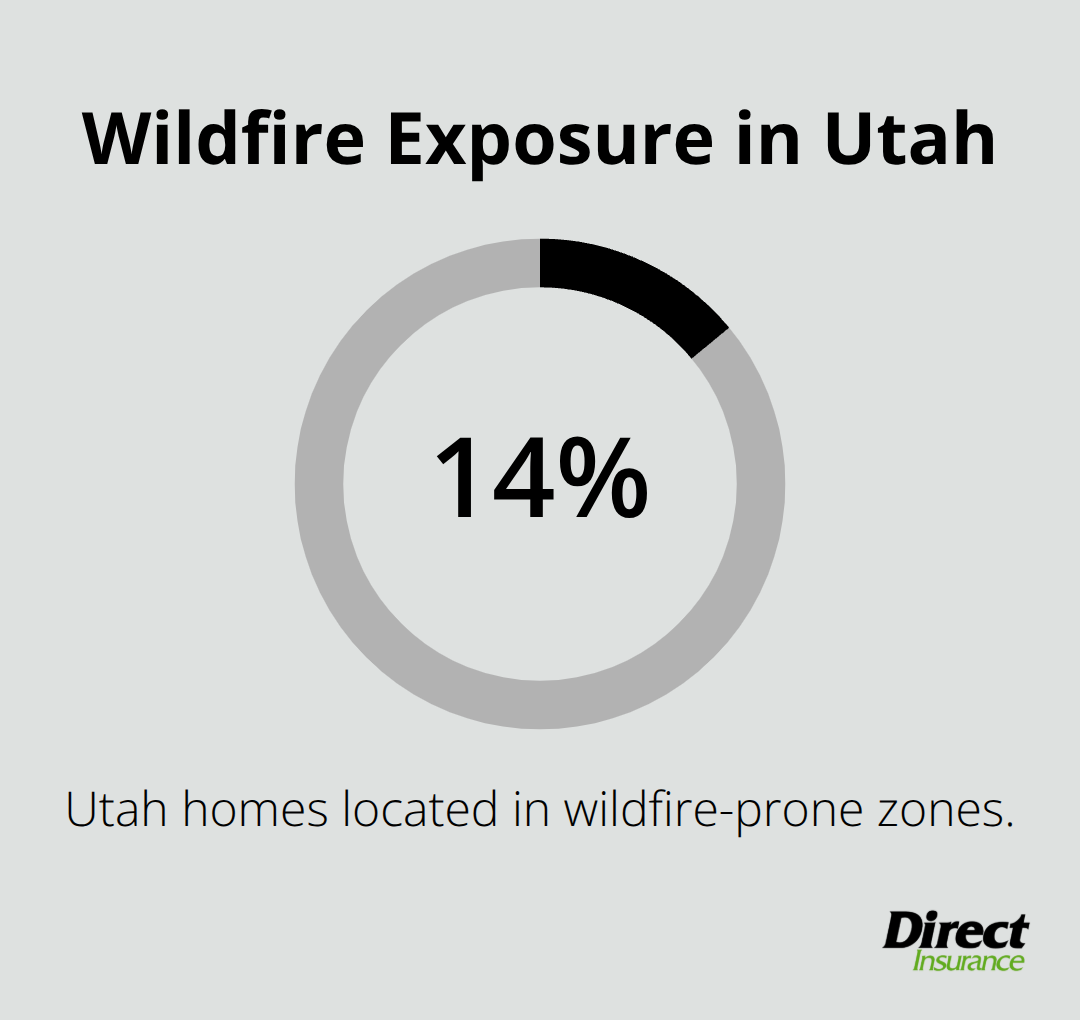
Your ZIP code is the single biggest factor determining what you pay for homeowners insurance in Utah, and it’s not even close. Wildfire risk, flood exposure, hail frequency, and winter weather patterns all vary dramatically within the state. Clearfield residents pay around $735 per year on average, while Orem homeowners in the same region pay roughly $760, according to The Zebra. That $25 difference reflects local claim history and risk concentration. If you live near the Wasatch Front or in areas with higher wildfire exposure, your rate climbs substantially. Utah ranks ninth nationally for wildfire risk, and about 14 percent of Utah homes sit in wildfire-prone zones, which directly impacts what insurers charge.
Flood risk compounds this picture. Even homes outside designated FEMA flood zones can flood, and standard homeowners policies exclude flood damage entirely. You need separate flood coverage through the National Flood Insurance Program or a private provider, but your location determines whether lenders require it and what that coverage costs.
How Your Home’s Age and Construction Matter
Older homes trigger post-purchase policy cancellations far more often than newer ones. Insurers conduct drive-by inspections after you close and cancel policies for peeling paint, missing porch railings, or roof condition. Homes under 15 years old rarely face this problem, but homes built before 2010 encounter cancellations at significantly higher rates. This happens to Utah homeowners regularly, and the cancellation deadline leaves you scrambling for coverage. Fixing exterior maintenance issues and gathering receipts for repairs can lead to reinstatement, but prevention through proactive maintenance costs far less than scrambling after cancellation. Construction type also matters. Homes built with fire-resistant materials and updated roofing qualify for lower rates than older wood-frame structures. Your home’s replacement cost, not its market value, determines appropriate dwelling coverage limits. A $400,000 dwelling limit averages around $992 annually, while a $250,000 limit runs approximately $705, according to The Zebra.
Credit Scores and Claims History Shape Your Price
Credit scores and claims history round out the pricing equation. Insurers view your credit score as a risk indicator, and multiple claims within five years signal higher future loss likelihood. Clean claims history and strong credit can qualify you for better rates before you even compare quotes. These factors work together with your home’s characteristics to establish your baseline premium. Understanding how insurers evaluate your profile helps you address weaknesses before shopping for coverage. The next section covers the specific actions you can take to lower what you actually pay, regardless of where your home sits or how old it is.
How to Actually Lower Your Utah Homeowners Insurance Premiums
Security Devices and Home Improvements Cut Rates Fast
Security devices and home improvements reduce your premiums faster than almost any other action you can take. A burglar alarm, smart home security system, or monitored fire detection system signals to insurers that you take risk seriously, and they reward that with rate reductions. Roof replacements rank among the most impactful upgrades because wind and hail accounted for the largest share of claims. If your roof exceeds 20 years old, replacing it not only reduces your rate but prevents cancellation risk entirely.
Defensible space around your property matters equally, especially if you live in wildfire-prone areas. Clear dead branches, remove brush within 30 feet of your home, and maintain distance between trees and structures to lower your wildfire exposure rating directly. These improvements cost money upfront, but a new roof or security system often pays for itself within three to five years through premium reductions alone.
Exterior Maintenance Prevents Post-Purchase Cancellations
Exterior maintenance prevents the post-purchase cancellations that plague older Utah homes. Peeling paint, missing porch railings, and deteriorating siding trigger cancellations after closing because insurers conduct inspections to verify property condition. Fix these issues before you sell or immediately after purchasing to prevent the scramble to find new coverage under deadline pressure. Photograph all maintenance work and keep receipts because insurers demand proof before reinstatement.
Raise Your Deductible to Cut Annual Costs
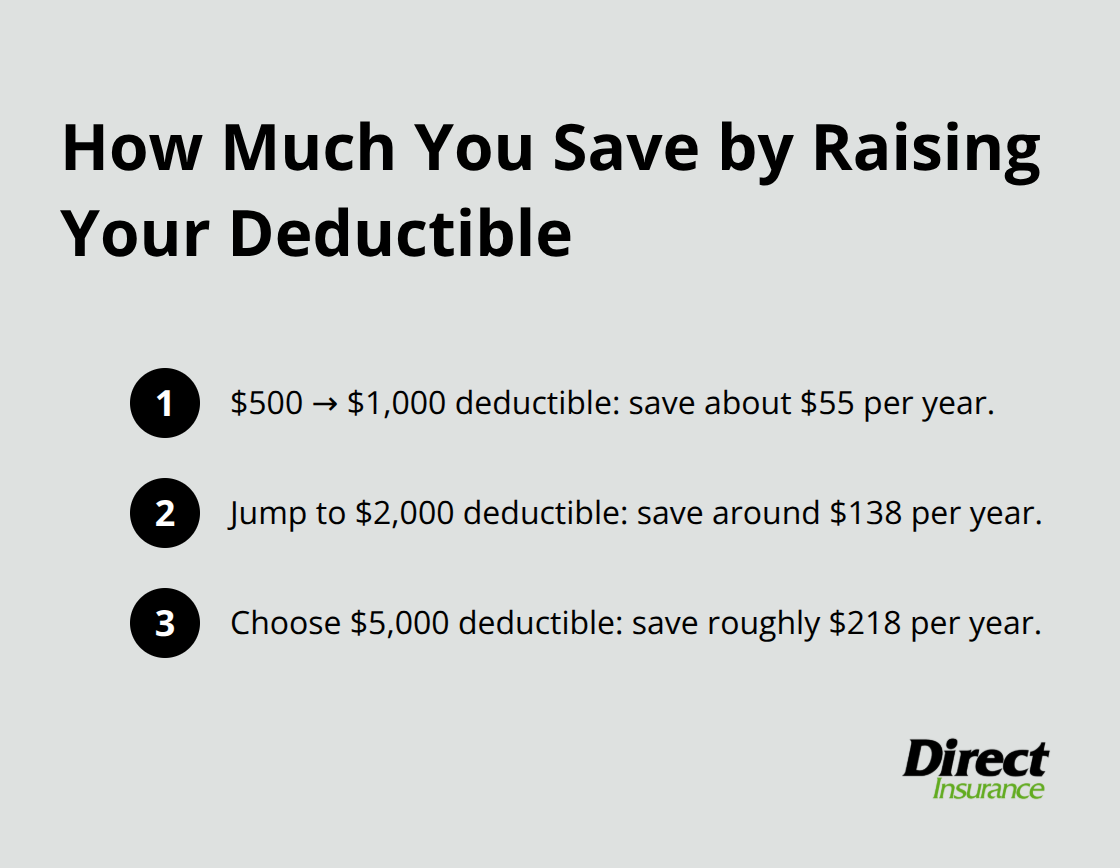
Your deductible choice directly controls what you pay annually, and most Utah homeowners set it too low. Raising your deductible from $500 to $1,000 cuts premiums by approximately $55 per year according to The Zebra, but jumping to $2,000 saves around $138 annually. At $5,000, you save roughly $218 per year compared to the $500 baseline.
The math only works if you can actually absorb that deductible during a claim without financial strain, so calculate your emergency fund before committing to higher deductibles.
Bundle Home and Auto for Maximum Savings
Bundling your home and auto insurance reduces your total cost by approximately $145 per year in Utah, which compounds your savings when combined with deductible increases and home improvements. Shop carriers that excel at bundling because some offer substantially better combined rates than others. American Family, Liberty Mutual, and State Farm all compete aggressively on bundled pricing in Utah, so compare their offers specifically rather than assuming one carrier dominates.
Your claims history and credit score lock in your baseline rate before any of these actions take effect, so address those factors first to maximize your leverage when negotiating with agents or shopping for new coverage.
Final Thoughts
Affordable homeowners insurance in Utah requires you to compare quotes across multiple carriers, leverage discounts and bundling, and invest in home improvements that reduce your risk profile. A $500 deductible costs roughly $218 more annually than a $5,000 deductible, and bundling home and auto saves approximately $145 per year. These savings compound when you add security systems or roof replacements that trigger additional rate reductions.
The real challenge lies in executing these strategies while managing Utah’s specific risks-wildfire exposure, flood zones, winter weather, and post-purchase cancellations that catch homeowners off guard. You need local knowledge to understand why neighboring cities charge different rates and why older homes face cancellation after closing. We at Direct Insurance Services shop multiple top-rated insurance companies on your behalf, uncovering discounts you’d miss alone and matching your coverage to your actual needs rather than marketing promises.
Contact Direct Insurance Services today to receive personalized quotes that reflect your home’s true risk profile and your budget. We’ll walk you through coverage options, explain how deductibles and bundling affect your final cost, and help you avoid the post-purchase cancellations that plague Utah homeowners. Your affordable homeowners insurance solution starts with one conversation.
Disclaimer: The information provided in this blog is for general informational purposes only and does not constitute legal, financial, or insurance advice. Coverage options, terms, and availability may vary. Please consult with a licensed professional for advice specific to your situation

