

Condo Homeowners Insurance Utah: What You Need To Know
Condo ownership in Utah comes with unique insurance challenges that many owners overlook. Your building’s master policy covers the structure itself, but it leaves significant gaps in protecting your personal belongings and liability.
At Direct Insurance Services, we’ve helped hundreds of Utah condo owners find the right coverage. This guide walks you through what you actually need to protect your investment.
What Condo Insurance Actually Covers vs. What It Doesn’t
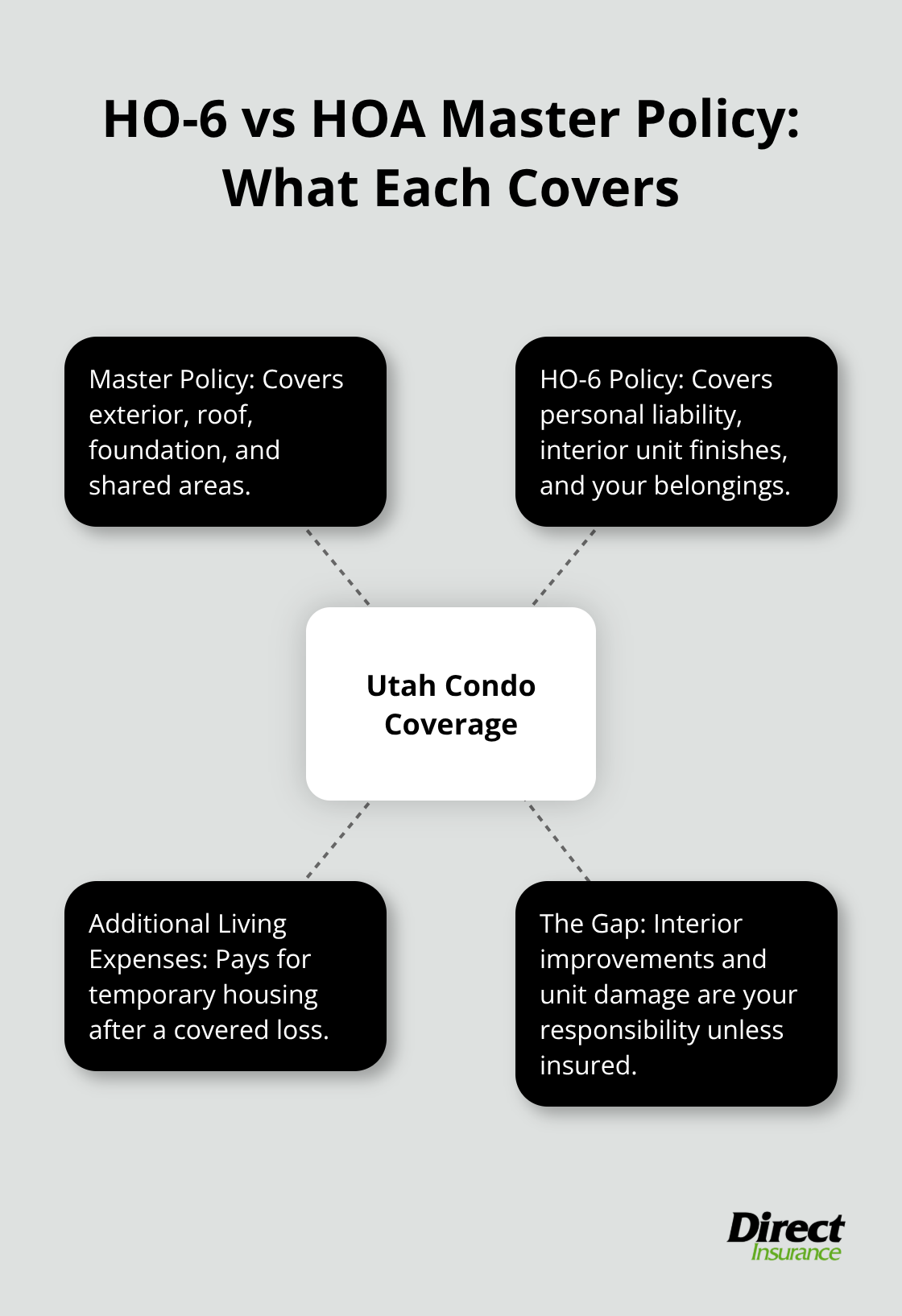
Condo insurance in Utah operates fundamentally differently from standard homeowners policies, and this distinction directly impacts what you pay for and what remains your financial responsibility. When you own a condo, the HOA’s master policy covers the building’s exterior, roof, foundation, and common areas like hallways and parking lots. Your individual condo insurance policy, technically called an HO-6 policy, covers personal liability, damage to your condo unit and belongings, and additional living expenses if a covered incident forces you to leave your unit.
This split coverage creates a critical gap that many Utah condo owners fail to address until a loss occurs. Standard homeowners policies assume you own the entire structure, so they cover both the building and contents. An HO-6 policy assumes the building is covered elsewhere, which means you’re responsible for protecting your interior investment. The difference is substantial: if a pipe bursts in your unit and damages your flooring and cabinets, the HOA policy won’t pay because it covers only shared building components. Your HO-6 policy must cover that damage, or you absorb the cost yourself.
How Utah’s Climate Affects Your Coverage Needs
Utah’s weather presents distinct risks that directly affect condo insurance costs and coverage requirements. Heavy snow loads in winter, especially in areas like Summit County where median premiums jumped 96.8% from 2020 to 2026 according to CoreLogic data cited by KSL TV, create roof and structural stress that impacts both master policies and individual units. Hail damage occurs frequently enough across Utah counties that most insurers now flag it as a primary rating factor.
Water damage from snow melt, ice dams, and spring runoff affects interior units regularly, yet standard HO-6 policies often exclude water backup from drains or sump pump failure unless you add a specific endorsement. This gap leaves many condo owners exposed to significant out-of-pocket costs when these events occur.
Earthquake Risk and the Wasatch Fault
Earthquake risk in Utah is real but frequently underestimated by condo owners-the Wasatch Fault runs through the state, and standard HO-6 policies exclude earthquake damage entirely. You need a separate earthquake endorsement or policy to cover seismic events. This isn’t a theoretical concern; it’s a genuine risk that affects your financial exposure in Utah.
Loss Assessment Coverage Protects You from HOA Bills
Loss assessment coverage addresses another Utah-specific consideration: if a shared roof is damaged and the HOA’s insurance doesn’t cover the full cost due to a high deductible, the association can assess unit owners for the shortfall. Your HO-6 policy can include loss assessment coverage to protect you from these unexpected bills. These scenarios happen regularly in Utah, and they generate substantial claims every year. Understanding what your HO-6 policy covers and what gaps exist is the first step toward protecting your investment, but knowing your coverage limits and deductibles matters just as much.
What Coverage Actually Protects Your Utah Condo
Personal Property Coverage: RCV vs. ACV
Your HO-6 policy must cover three critical areas that the HOA master policy won’t touch: your personal belongings inside your unit, your liability exposure, and specialized risks tied to Utah’s climate and geology. Personal property coverage pays to replace or repair your furniture, electronics, clothing, and other items if a covered peril like fire, theft, or wind damages them. In Utah, replacement cost value (RCV) coverage reimburses you for the full cost to replace items with new ones of similar quality. This matters significantly compared to actual cash value (ACV) coverage, which deducts depreciation-a five-year-old television worth $800 new might only pay you $400 under ACV. Most Utah condo owners should prioritize RCV for personal property because depreciation can leave you financially short after a loss.
Liability Protection in Your HO-6 Policy
Liability coverage in your HO-6 policy protects you if someone is injured in your unit and sues you for medical expenses or damages. Standard HO-6 policies typically include $100,000 to $300,000 in liability coverage, but that amount often falls short in today’s litigation environment. You should review your liability limits carefully-if you have significant assets or host frequent visitors, you may need higher limits or an umbrella policy to protect your financial security.
Water Backup and Earthquake Endorsements
Utah-specific endorsements separate adequate coverage from genuinely protective coverage. Water backup coverage is non-negotiable in Utah because spring snowmelt and ice dams create interior water damage claims regularly, yet standard HO-6 policies exclude this unless you specifically add it. Loss assessment coverage protects you from HOA assessments when shared damage exceeds the master policy’s limits or deductible, which happens frequently in Utah condos after hail or winter storms.
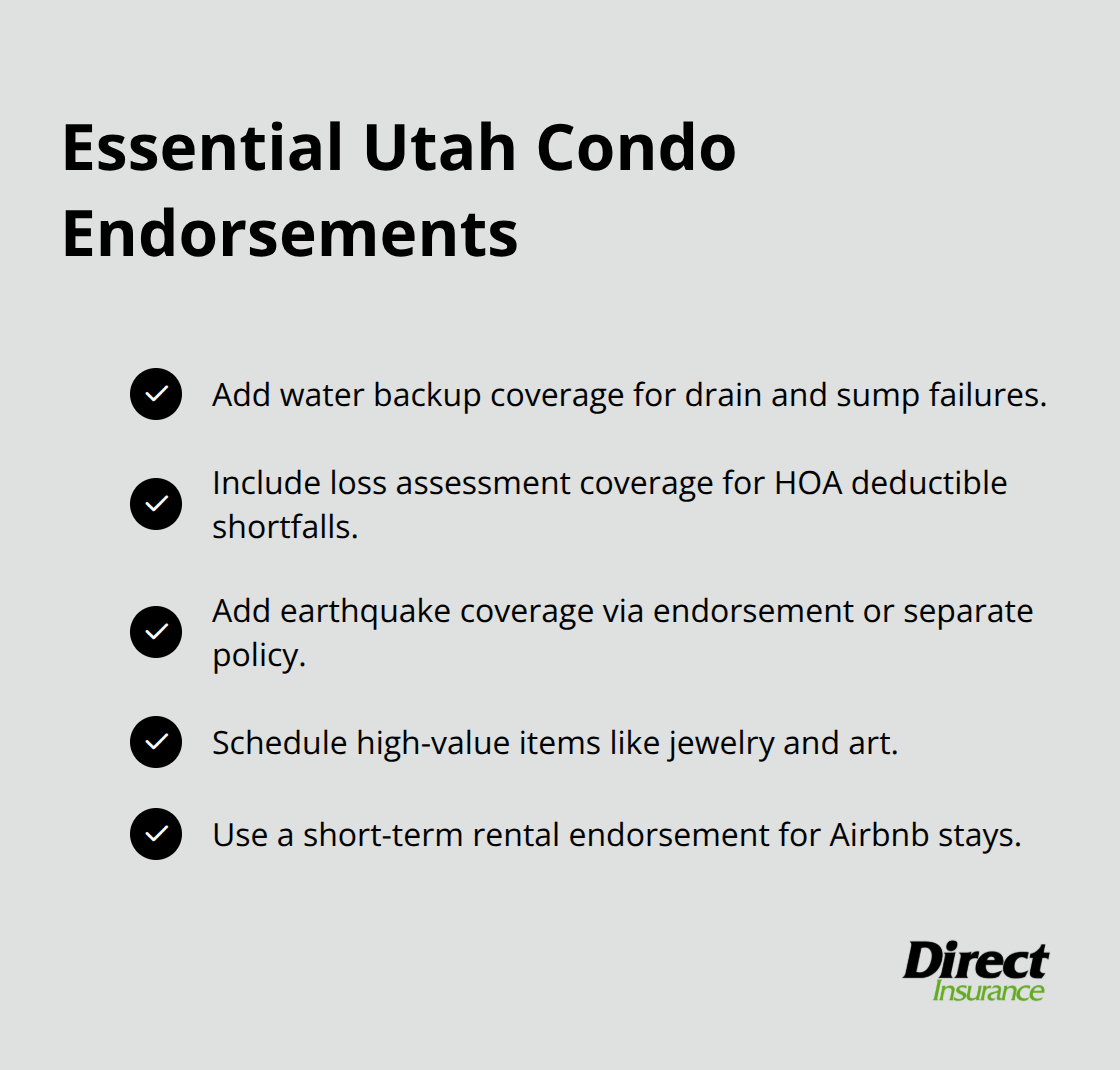
Earthquake coverage requires a separate endorsement or standalone policy because the Wasatch Fault makes seismic risk genuine, not hypothetical. When you request quotes from insurers, ask explicitly whether earthquake coverage is available as an endorsement and what the premium would be-prices vary substantially by zip code and building age.
Additional Protections for Your Valuables and Rental Activity
Scheduled personal property coverage lets you insure high-value items like jewelry or art at their full replacement cost, bypassing the standard policy’s sub-limits. If you rent your condo short-term through Airbnb or similar platforms, your standard HO-6 won’t cover liability or property damage during rental periods, and you’ll need a separate short-term rental endorsement or policy. The typical cost for a solid HO-6 policy in Utah ranges from $250 to $500 annually depending on your location, deductible selection, and coverage limits, making these endorsements relatively affordable additions that close critical gaps. Understanding what your HO-6 covers and what gaps exist is the first step, but knowing your exact coverage limits and deductibles matters just as much-and that’s where the next section helps you navigate the actual costs and savings strategies that apply to your situation.
What Drives Your Utah Condo Insurance Costs
Your condo insurance premium in Utah depends on factors that vary dramatically across the state, which is why two units in different zip codes have vastly different annual costs. Location matters most: according to the National Association of Realtors, the average cost of a homeowners policy in Utah is $1,541.00 annually or about $128.00 per month. This variation reflects fire risk, hail exposure, wildfire proximity, and weather severity in each region.
Building Age and Construction Type
Your building’s age and construction type significantly affect pricing because older masonry structures cost more to rebuild than newer wood-frame condos. Insurers assess structural vulnerability and replacement costs when setting rates, so a 40-year-old concrete building will carry higher premiums than a 10-year-old wood-frame unit in the same neighborhood. This factor alone can shift your annual premium by $200-400 depending on your building’s characteristics.
How Your Deductible Controls Your Premium
The deductible you select directly controls your premium: choosing a $1,000 deductible instead of $500 typically reduces your annual cost by 15-25%, though you’ll pay more out-of-pocket when filing a claim. Credit score influences premiums substantially in Utah, with insurers using it as a rating factor alongside claims history. If you’ve filed multiple claims in the past five years, expect higher rates because insurers view you as higher risk. Increasing your deductible from $500 to $1,500 typically saves $100-200 annually, but only if you have emergency savings to cover that amount when a loss occurs.
Bundling and Multi-Policy Discounts
Bundling your condo insurance with auto or umbrella policies generates the most immediate savings available to you. Most Utah insurers offer bundle discounts ranging from 10-25% when you combine two or more policies, meaning a condo owner who bundles condo and auto insurance might save $150-300 annually. Water backup endorsements, earthquake coverage, and scheduled personal property add $50-150 annually depending on your coverage limits, but skipping these in Utah is financially reckless given the state’s snow melt and seismic risks.
Shopping Multiple Quotes for Real Savings
The most effective cost-control strategy involves requesting quotes from at least three independent agents because premium variation between insurers for identical coverage regularly exceeds $200 per year. When you request quotes, provide identical details about your unit’s square footage, construction year, and desired deductible so comparisons are accurate. Different insurers weight discounts differently, so one company might offer superior bundling rates while another excels at earthquake coverage pricing.
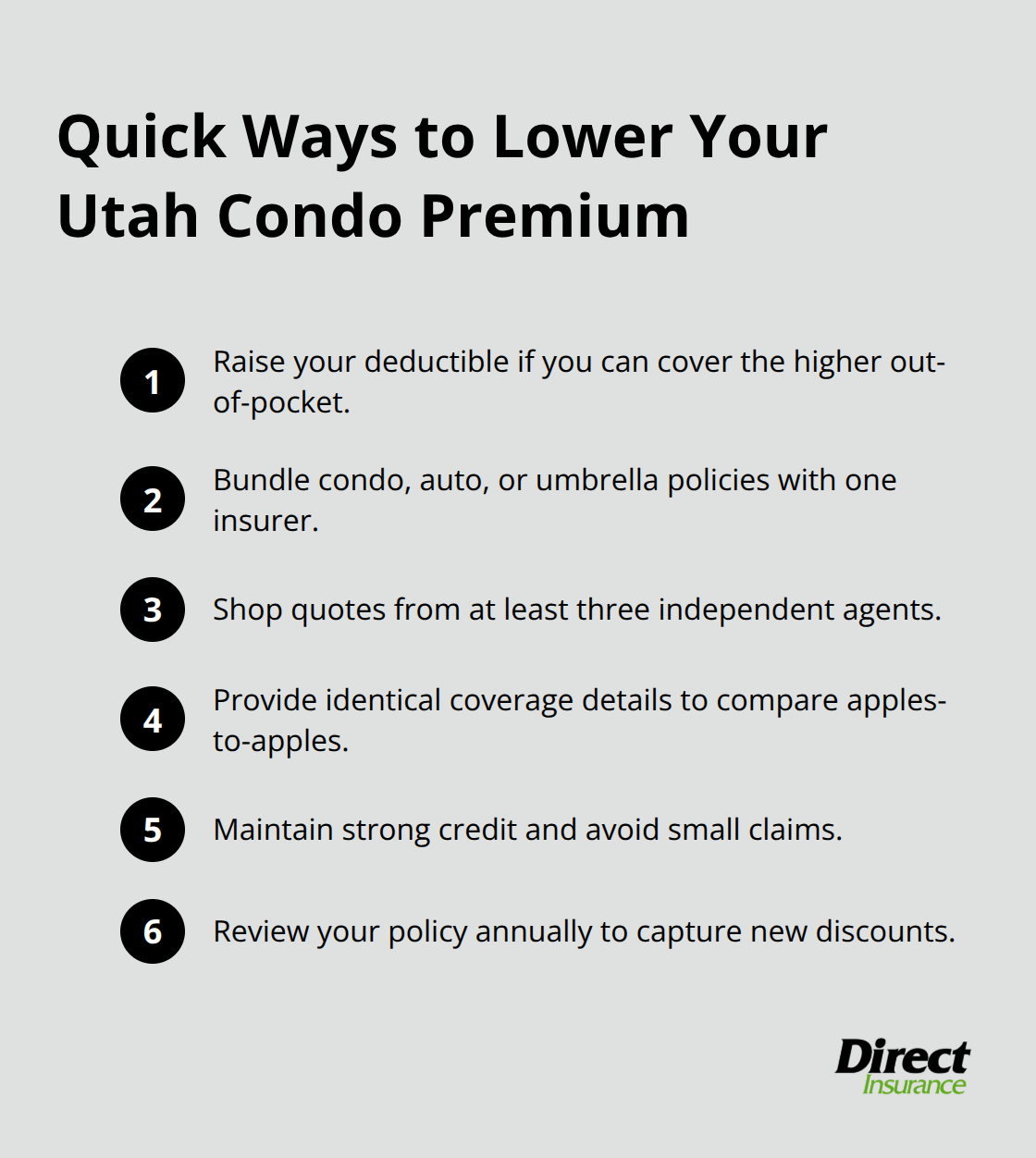
Annual policy reviews matter because life changes, property improvements, and market rate adjustments create opportunities to adjust coverage and potentially reduce costs without sacrificing protection.
Final Thoughts
Condo homeowners insurance in Utah requires a different approach than standard homeowners coverage because your HOA master policy covers only the building exterior and common areas. Your HO-6 policy fills the gaps by protecting your personal belongings, liability exposure, and interior improvements, plus Utah-specific risks like water damage from snow melt and earthquake exposure. The key is to understand what your HOA covers, identify the gaps, and purchase an HO-6 policy that addresses those gaps.
Request quotes from multiple insurers using identical coverage details so you can compare premiums accurately. When you request quotes, specify your desired deductible, ask about water backup and loss assessment coverage, and inquire whether earthquake endorsements are available in your zip code. Review your HOA master policy documents to understand exactly what the association covers and what deductible applies, because this directly affects what your HO-6 policy must cover.
We at Direct Insurance Services understand Utah’s unique insurance landscape and shop multiple top-rated insurance companies to find you the best condo homeowners insurance Utah coverage at competitive rates. Our team handles the comparison work so you don’t have to, and we understand the risks condo owners face in Utah, from heavy snow loads to earthquake exposure to unexpected HOA assessments. Contact us today to get quotes that actually protect your investment without overpaying for coverage you don’t need.
Disclaimer: The information provided in this blog is for general informational purposes only and does not constitute legal, financial, or insurance advice. Coverage options, terms, and availability may vary. Please consult with a licensed professional for advice specific to your situation

