
Understanding General Liability Insurance in Utah
Running a business in Utah comes with unique risks that could lead to costly lawsuits and claims. General liability insurance Utah coverage protects your company from third-party injuries, property damage, and advertising claims.
We at Direct Insurance Services help Utah business owners understand this essential protection and find affordable coverage that fits their specific needs.
What Does General Liability Insurance Actually Cover
General liability insurance provides the financial backbone that protects Utah businesses when customers, vendors, or visitors suffer injuries or property damage on your premises or from your business operations. This coverage handles medical expenses, legal defense costs, and settlement payments when third parties file claims against your company. The policy covers four primary areas: bodily injury claims when someone gets hurt at your business location, property damage when your operations damage someone else’s property, personal and advertising injury claims that involve defamation or copyright infringement, and medical payments for immediate treatment regardless of fault.

Third-Party Protection vs Your Business Assets
General liability insurance specifically protects against claims from people outside your company, not your own employees or business property. Workers’ compensation handles employee injuries, while commercial property insurance covers your assets (buildings, equipment, and inventory). Professional liability insurance addresses errors in your services, and cyber liability covers data breaches. General liability fills the gap when slip-and-fall accidents occur, when customers suffer injuries from your products, or when your work damages client property. Utah businesses pay an average of $500 to $1,000 annually for this coverage, with construction companies facing premiums of $3,000 to $10,000 due to higher risk exposure.
Contract Requirements and Business Credibility
Most Utah contracts and leases require proof of general liability insurance with minimum limits of $1 million per occurrence. Approximately 325,000 small businesses in Utah rely on this coverage to maintain professional credibility and meet client requirements. The policy responds immediately when claims arise and covers legal defense costs even for baseless lawsuits. Medical payments coverage provides quick compensation for minor injuries, which often prevents larger liability claims from developing into expensive litigation.
How Claims Work in Practice
When someone files a claim against your business, your insurance carrier takes control of the situation. The insurer assigns an adjuster to investigate the claim, hires attorneys when necessary, and negotiates settlements within your policy limits. Utah follows a modified comparative negligence rule where no defendant is liable for any amount exceeding their proportion of fault, and your insurer handles these complex legal determinations. This protection becomes even more valuable when you consider the specific risks that Utah businesses face in their daily operations.
Why Utah Businesses Face Higher Liability Risks
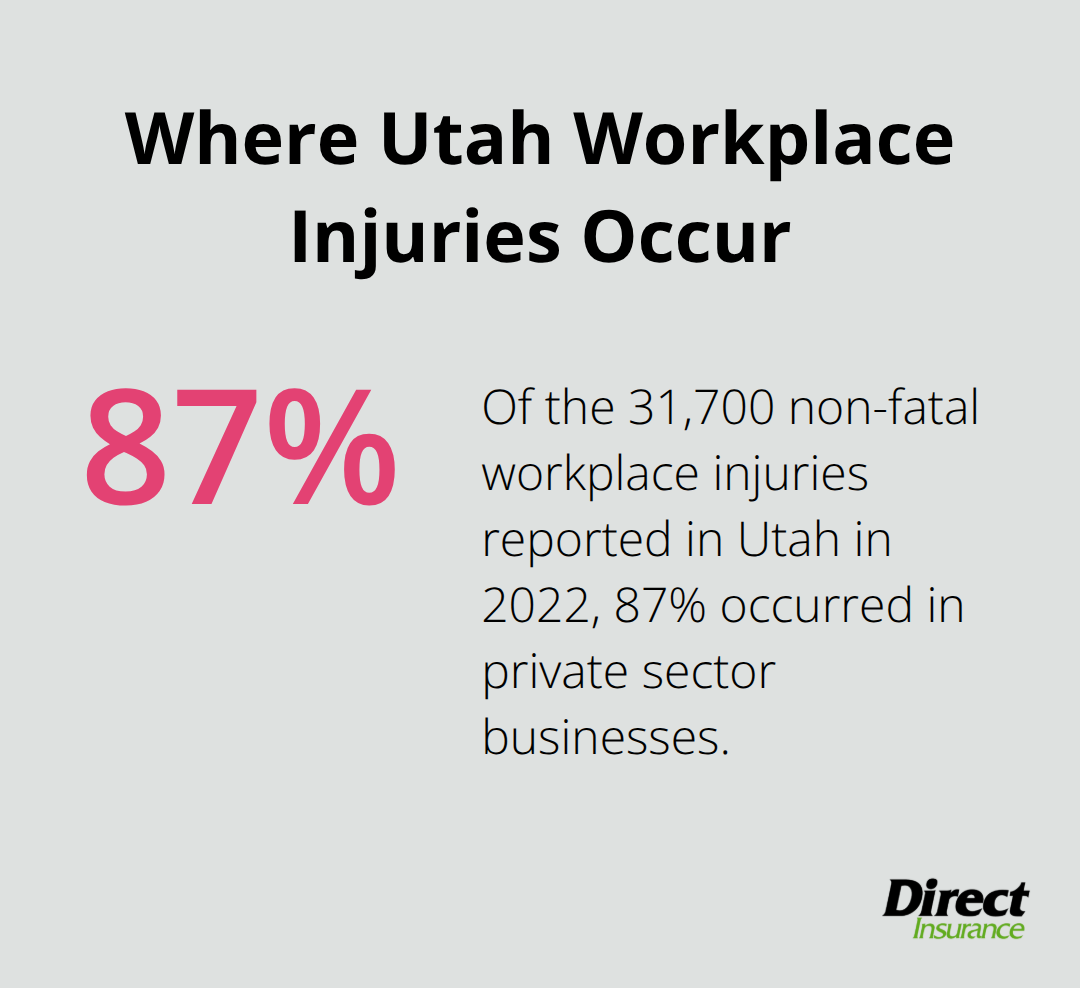
Utah businesses confront significant liability exposure that transforms general liability insurance from an optional expense into a financial necessity. Nearly 87% of the 31,700 non-fatal workplace injuries reported in Utah in 2022 occurred in private sector businesses, which creates substantial third-party liability risks beyond standard workers’ compensation coverage. These incidents often involve customers, vendors, and visitors who file costly lawsuits against business owners. Utah’s diverse economy spans high-risk industries like construction, manufacturing, and outdoor recreation services, where property damage and bodily injury claims occur with alarming frequency.
Geographic and Seasonal Risk Factors
Salt Lake City businesses face unique liability challenges during winter months when slip-and-fall incidents spike dramatically on icy sidewalks and parking lots. The state’s elevation changes and weather patterns create additional premises liability risks that many business owners underestimate. Construction contractors who work in mountainous regions encounter higher property damage exposure, while retail businesses in tourist areas like Park City deal with increased foot traffic and accident potential. Utah’s modified comparative negligence law means businesses can still face partial liability even when customers share fault, with compensation reduced by the plaintiff’s percentage of fault unless they are 50% or more at fault.
Legal Requirements and Contract Mandates
Utah law requires specific professions (general contractors, electricians, and plumbers) to maintain general liability insurance for licensing purposes. Most commercial leases and client contracts mandate minimum coverage limits of $1 million per occurrence, which effectively makes this insurance mandatory for business operations. The 325,000 small businesses that operate in Utah must navigate these requirements while they protect against average claim costs that can reach six figures for serious injuries.
Cost Analysis and Financial Impact
Smart business owners recognize that the monthly cost of $25 to $45 for general liability coverage represents minimal expense compared to potential lawsuit settlements. A single slip-and-fall claim can result in medical bills exceeding $50,000, while property damage claims often reach $100,000 or more. These financial realities make the annual premium of $500 to $1,000 appear insignificant when weighed against the costs that could destroy companies financially. The specific factors that determine these premium amounts vary significantly across Utah’s business landscape.
What Drives Your General Liability Premium in Utah
Insurance carriers calculate your general liability premium with a complex formula that weighs your business operations against statistical risk data. Construction contractors pay between $3,000 to $10,000 annually because they face constant exposure to property damage and injury claims, while office-based consultants typically pay $500 to $1,000 for the same coverage limits. Restaurant owners in Utah pay premiums 40% higher than retail businesses due to slip-and-fall risks from spilled liquids and hot surfaces.
Your annual revenue directly impacts costs because higher sales volumes correlate with increased customer interactions and claim frequency. Businesses with 10 employees pay roughly 60% more than sole proprietorships, as more workers create additional third-party interaction points where accidents occur.
Geographic Risk Assessment
Salt Lake City businesses face higher premiums than rural Utah companies due to increased foot traffic, higher property values, and elevated litigation rates in urban areas. Ski resort businesses in Park City face some of the highest rates in the state because tourist-heavy operations create more slip-and-fall claims during winter months.
Insurance companies analyze crime statistics, weather patterns, and local court award amounts when they set rates for specific ZIP codes. Businesses that operate in flood-prone areas or regions with harsh winter conditions receive higher base rates because environmental factors increase premises liability exposure.
Coverage Limits and Deductible Impact
Coverage limits significantly affect your premium calculations, with $2 million policies that cost approximately 40% more than $1 million limits. Companies that choose a $5,000 deductible instead of $1,000 can reduce annual premiums by 10% to 15%.

Business owners compare these cost factors against their actual risk exposure to optimize their coverage investment and find the right balance between protection and affordability.
Final Thoughts
General liability insurance Utah coverage delivers three fundamental benefits that protect your business operations. It provides immediate financial protection when third-party claims arise, covers legal defense costs that average $15,000 even for dismissed cases, and maintains your professional credibility when contracts require proof of coverage. This protection preserves your business assets and prevents lawsuit settlements from depleting your operating capital.
Smart business owners evaluate their specific risk exposure based on their industry, location, and customer interactions. They compare coverage limits against their actual asset values and potential claim costs in their market. They work with experienced agents who understand Utah’s unique business environment and legal requirements (including state-specific regulations that affect premium calculations).
We at Direct Insurance Services help Utah businesses shop multiple top-rated carriers to find competitive rates on comprehensive coverage. Our local team understands the specific risks that Utah companies face and provides personalized service that builds long-term protection strategies. Contact us today to get quotes from multiple carriers and secure the general liability protection your business needs.

