

Landlord Insurance for Condo Utah: Coverage Tips for Condo Owners
Owning a rental condo in Utah means protecting your investment from financial risks that standard homeowners insurance won’t cover. Landlord insurance for condo Utah is specifically designed to handle the unique challenges of renting out property, from tenant liability to lost rental income.
At Direct Insurance Services, we’ve seen too many condo owners make costly mistakes by either underinsuring their properties or relying on their HOA coverage to do more than it actually does. This guide walks you through the coverage options you need and the pitfalls to avoid.
What Landlord Insurance Actually Covers in Utah
Landlord insurance differs fundamentally from standard homeowners policies because it addresses the specific financial exposures created when you rent out property. Standard homeowners insurance protects your own occupancy and personal liability, but it explicitly excludes rental income and tenant-related claims. The moment you convert your condo into a rental, your standard policy becomes inadequate and potentially void if you file a claim. Landlord insurance fills this gap by covering liability when a tenant or their guest is injured on your property, damage to the structure itself, and loss of rental income if the property becomes uninhabitable due to a covered event. Utah doesn’t mandate specific landlord insurance requirements by state law, but most mortgage lenders require it if you’re financing a rental property, and many HOAs require proof of liability coverage. The distinction matters financially: a tenant injured in your condo could sue you personally for medical bills and lost wages, which standard homeowners insurance won’t defend.
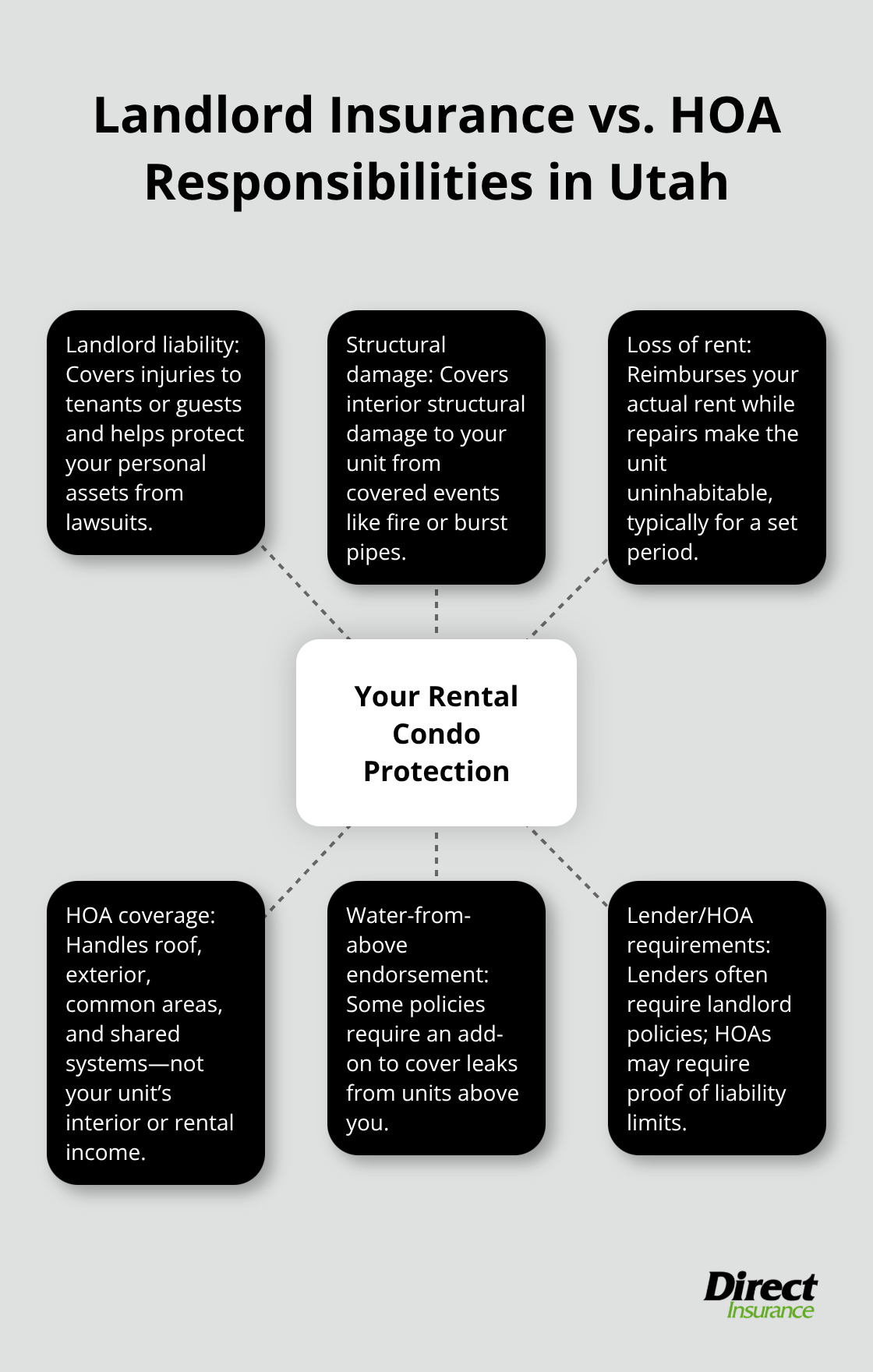
We’ve seen landlords face six-figure liability exposure when they carried inadequate coverage, and that’s exactly why understanding these differences upfront protects both your property and your personal assets.
Rental Income Protection Goes Beyond What You Think
Loss of rent coverage is one of the most misunderstood aspects of landlord policies in Utah. This coverage can cover additional living expenses if the rental property becomes uninhabitable due to covered events like fire or natural disasters. If a pipe bursts and damages your unit, repairs that take three months will trigger reimbursement for those three months of lost rent while the condo sits vacant. The coverage typically runs for a set period, often 12 months, and reimburses you at the actual rent rate you charge. However, it does not cover rent loss from tenant non-payment, lease termination, or normal vacancy between tenants. Many Utah condo landlords assume their HOA covers this, but HOA policies protect the common areas and shared structures, not individual rental income. Additionally, if your property is leasehold rather than fee simple, your ground rent continues regardless of whether your unit generates income, which makes loss of rent coverage even more important to your cash flow.
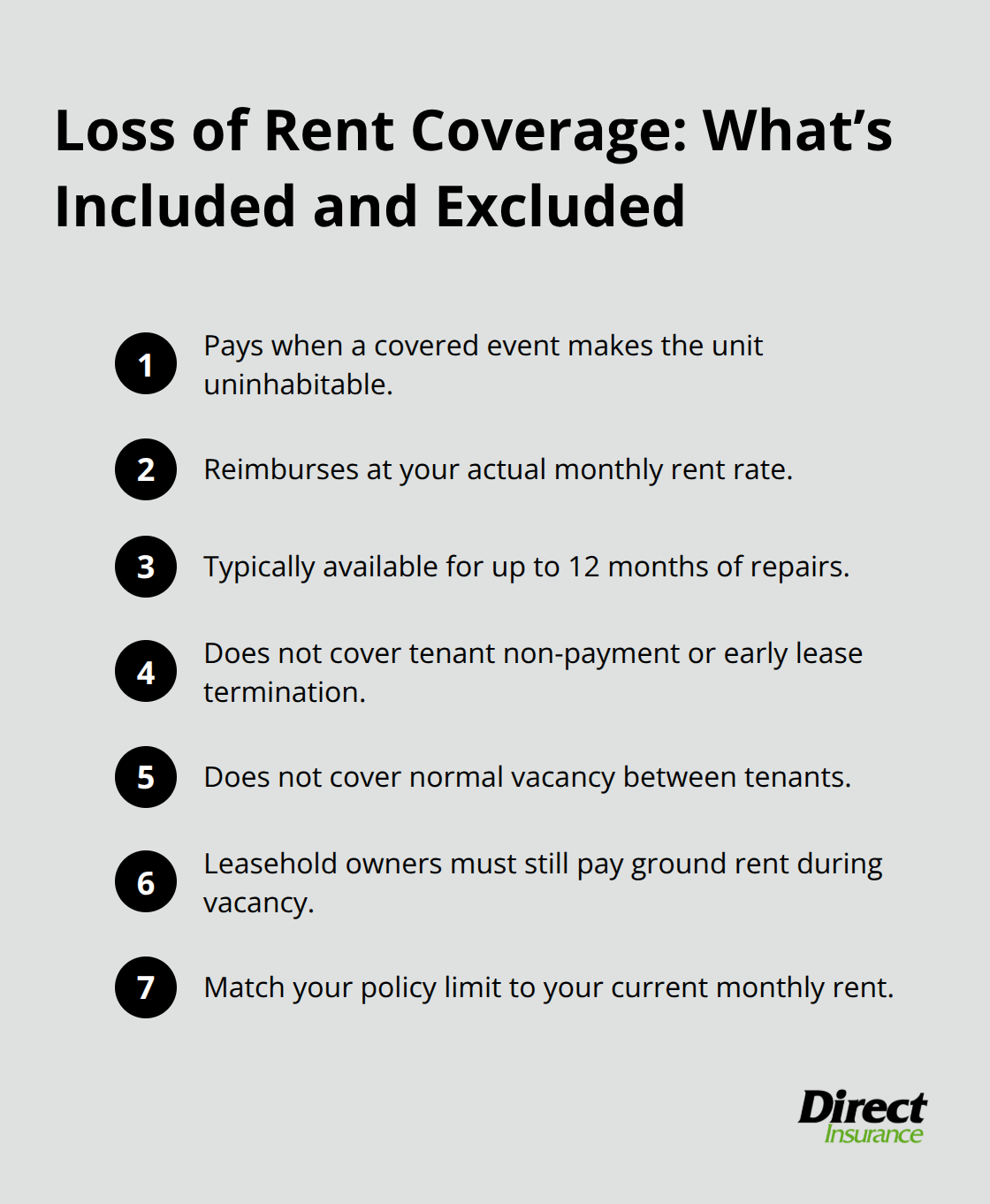
You need to verify your specific policy limits match your actual monthly rent, because underinsuring here creates a scenario where you absorb the financial hit yourself during extended repairs.
Liability and Water Damage Demand Specific Attention in Utah
Tenant liability coverage protects you when someone living in or visiting your rental unit is injured and sues you for damages. Utah courts have awarded significant judgments for slip-and-fall accidents, dog bite injuries, and unsafe conditions, which is why liability limits matter. Most landlords carry $300,000 in liability coverage, but if you have a pool, trampoline, or other attractive hazard on the property, you should carry at least $500,000. Water damage coverage is critical in Utah because winter freezing, burst pipes, and snow melt create frequent claims. Standard landlord policies cover sudden water damage like a burst pipe, but they exclude gradual leaks and maintenance issues. The distinction is sharp: if a pipe freezes and bursts overnight, coverage applies; if a slow drip from poor maintenance goes unnoticed for months, it doesn’t. Utah’s dry climate creates false security about water risk, but condo buildings with shared plumbing systems mean water damage can spread from a neighbor’s unit into yours, and you need coverage that protects both scenarios. Check whether your policy covers water damage from the unit above you, because some policies exclude this unless you add a specific endorsement. If you own a leasehold condo, confirm that your liability coverage extends to the building structure you occupy, since your lease terms might affect what you’re legally responsible for maintaining.
Fee Simple Versus Leasehold: How Ownership Structure Changes Your Coverage
Your ownership structure-whether you hold fee simple or leasehold title-directly affects what your landlord insurance must cover. Fee simple means you own the property outright, including the land beneath it, so your liability and structural coverage align with standard rental condo policies. Leasehold ownership means you own the building (your pro-rated share) but rent the underlying land from a landowner, which creates additional complexity. With leasehold property, your ground rent continues whether or not your tenant pays rent, and your insurance must account for this ongoing cost during vacancy or loss of rent periods. Your liability coverage also needs to reflect what you’re legally responsible for maintaining under your lease terms, since some leasehold agreements shift maintenance obligations in ways that affect your exposure. If your lease term is short or renewal terms are unfavorable, your property’s long-term viability changes, and your insurer needs to know this when pricing your policy. A real estate attorney should review your lease terms to confirm what you’re responsible for, because this directly shapes whether your landlord insurance adequately protects you or leaves gaps that could cost you thousands during a claim.
What Your HOA Policy Does and Doesn’t Cover
HOA policies protect the common areas, shared structures, and the building’s exterior-not your individual unit or your rental income. Many Utah condo landlords mistakenly believe their HOA coverage extends to their rental operations, which creates dangerous gaps in protection. The HOA covers the roof, foundation, hallways, and shared systems, but it does not cover your tenant’s liability claims, your loss of rent, or damage to your unit’s interior. If a guest in your unit slips and falls, your HOA policy won’t defend you; your landlord policy must. If your unit floods from a burst pipe in the shared wall, the HOA may cover the wall repair, but your landlord policy covers your interior damage and lost rent. You need to obtain a copy of your HOA’s insurance certificate and policy summary to understand exactly what it covers, then fill the gaps with your own landlord insurance. Some HOAs require landlords to carry minimum liability limits (often $300,000), so verify your HOA’s requirements and make sure your policy meets or exceeds them. This layered approach-HOA coverage for common areas plus your landlord policy for your unit and rental operations-is what actually protects your investment in Utah’s condo market.
Essential Coverage Options for Utah Condo Owners
Liability protection shields you from tenant injury claims
Liability protection is non-negotiable for Utah condo landlords. Standard coverage of $300,000 protects you in most scenarios, but if your condo has features that increase risk (a pool, hot tub, or ground-floor unit near stairs), you should carry $500,000 or higher. Your liability coverage defends you legally when a tenant or guest sues for injuries on your property, and it also covers damage they cause to the building if you’re found responsible. This distinction matters because tenant injury claims and property damage claims both fall under liability protection, so you need adequate limits for both exposures.
Water Damage Coverage Requires Specific Attention in Utah
Water damage deserves specific attention in Utah because winter freezing and burst pipes create frequent claims that standard policies handle inconsistently. Coverage kicks in for sudden, accidental water damage like a frozen pipe bursting overnight, but it excludes gradual leaks from poor maintenance or deferred repairs. If you own a leasehold condo, confirm that your water damage coverage includes damage from neighboring units above you, since shared plumbing systems mean your exposure extends beyond your own pipes. Some policies require you to add an endorsement for water damage from upper units, so ask your agent directly whether this is included or needs to be added.
Loss of Rent Coverage Compensates You During Property Repairs
Loss of rent coverage compensates you when a covered event like fire or burst pipes makes the unit uninhabitable and your tenant cannot occupy it. This coverage reimburses you at your actual monthly rent rate for the period the property sits vacant during repairs, typically up to 12 months of coverage. The critical step here is to verify your policy limit matches your actual rent-if you charge $1,800 monthly but only carry $12,000 in annual loss of rent coverage, you absorb the shortfall yourself. Natural disasters and weather events like hail or wind damage trigger this coverage, but tenant non-payment and normal vacancy between leases do not. If your condo is leasehold, your ground rent continues during vacancy, which means loss of rent coverage becomes even more essential to your cash flow since you pay both the lease obligation and lost rental income simultaneously.
Additional Coverages Fill Critical Protection Gaps
Additional coverages like replacement cost for personal property in the unit, loss assessment coverage for special HOA fees, and equipment breakdown coverage for appliances provide layers of protection that standard policies exclude. The investment in these add-ons is modest compared to the financial exposure they cover, especially in Utah where winter weather and aging building systems create frequent claims. You should review your loss of rent limits annually as rent increases, because failing to adjust coverage as your rental income grows leaves you exposed. These layered protections work together to address the specific risks that Utah condo landlords face, and they transform your policy from basic coverage into comprehensive protection that actually matches your rental operation’s financial reality.
Common Mistakes Condo Landlords Make with Insurance
Underinsuring Your Property’s Replacement Cost Costs You Thousands
The first and most expensive mistake Utah condo landlords make is setting coverage limits based on what they paid for the unit or what they owe on the mortgage, not what it would actually cost to rebuild it today. If you purchased your condo for $250,000 five years ago but it would cost $320,000 to fully rebuild it now, your policy limit must reflect current replacement cost. When a fire or major water event occurs, the insurer pays based on your policy limit, not based on what you think the property is worth. Landlords who fail to adjust coverage limits face significant out-of-pocket repair costs because their limits were set years earlier and never adjusted for inflation or Utah’s rising construction costs.
Request a replacement cost estimate from your insurance agent every two years, and update your policy limits accordingly. Avoid online calculators or rough estimates. Obtain actual quotes from Utah contractors for what it would cost to rebuild your specific unit, then add a buffer for unexpected costs.
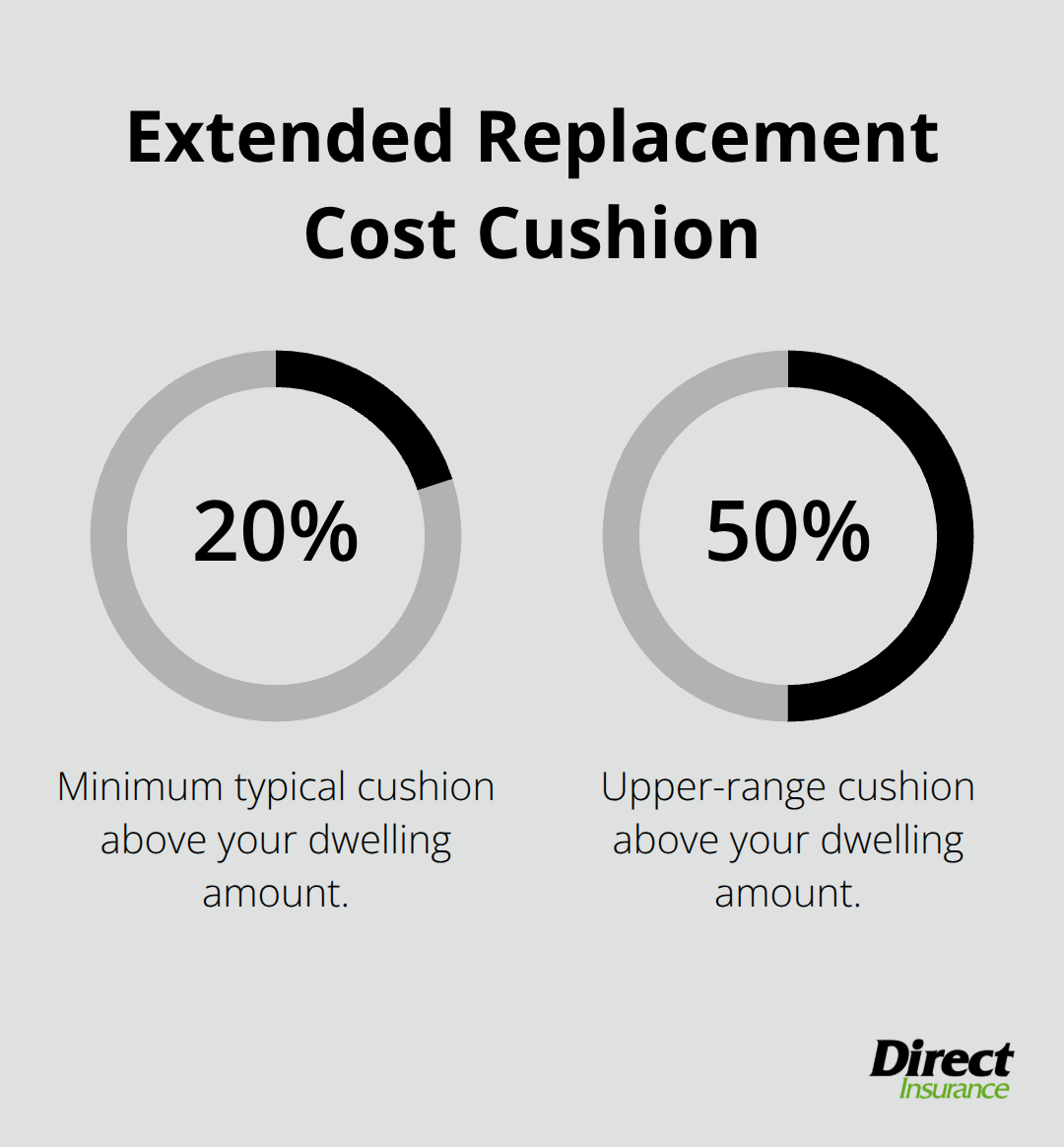
Extended replacement cost provides an additional cushion (usually 20% to 50% above your dwelling amount) if rebuilding costs exceed your policy limit. Your loss of rent coverage requires the same annual review. If you charged $1,500 monthly rent two years ago but now charge $1,900, your loss of rent limit must increase proportionally, or you absorb the difference yourself during a claim.
Assuming Your HOA Policy Covers Your Rental Operation Creates Dangerous Gaps
The second critical mistake is assuming your HOA policy covers everything related to your rental operation. HOA coverage protects common areas and shared structures, but it excludes rental liability and your individual unit’s interior. When your tenant’s guest slips on water in your unit’s bathroom and sues you for $75,000 in medical bills, your HOA policy will not defend you. Your landlord liability policy must, and if you lack adequate limits or skipped this coverage altogether, you pay that judgment from your personal assets.
Utah courts regularly award five and six-figure judgments for tenant injury claims, which means your personal savings and future income face real risk if your landlord policy has gaps. This is not theoretical exposure. The HOA policy excludes rental liability by design, so you cannot rely on it to protect your rental operation. You must carry a separate landlord liability policy with limits that match your actual exposure.
Carrying Inadequate Liability Limits Exposes Your Personal Assets
The third mistake flows directly from the first two: landlords carry liability limits that are too low for their actual exposure. A $300,000 liability limit sounds substantial until you face a serious injury claim. If your condo is a ground-floor unit with a patio or near common stairs, or if you allow tenants with families or pets, your injury risk increases significantly. Try carrying at least $500,000 in liability coverage for ground-floor units or properties with higher traffic, and review this limit annually as your property ages or the neighborhood changes.
If you own a leasehold condo, confirm your liability coverage extends to your specific maintenance obligations under your lease. Some landlords discover after a claim that their coverage did not account for what their lease actually makes them responsible for maintaining. This gap between your lease obligations and your insurance coverage can leave you personally liable for amounts your policy will not pay. Request a written summary of your current coverage limits from your agent, compare those limits to your actual property value and monthly rent, then schedule a conversation to close any gaps before a claim forces you to pay out of pocket.
Final Thoughts
Protecting your condo investment in Utah requires three concrete actions. First, verify that your landlord insurance for condo Utah matches your actual property replacement cost and monthly rent, not what you paid for the unit years ago. Second, confirm your liability limits are adequate for your specific property type and tenant profile, with at least $500,000 in coverage if you own a ground-floor unit or leasehold property. Third, obtain a copy of your HOA policy and compare it directly to your landlord policy to identify gaps in coverage, then fill those gaps before a claim exposes your personal assets.
The mistakes we see most often are preventable. Landlords who underinsure their replacement cost face thousands in out-of-pocket repairs. Those who rely on HOA coverage to protect their rental operation discover too late that it does not. Those who carry inadequate liability limits end up defending themselves personally when a tenant injury claim exceeds their policy limits.
Contact your current insurance agent or broker and request a written summary of your current dwelling limit, loss of rent limit, and liability limit. Compare those numbers to your actual property replacement cost, your monthly rent, and your property’s injury risk profile. If gaps exist, address them immediately, or reach out to Direct Insurance Services to schedule a coverage review and build a comprehensive landlord insurance plan that protects your condo rental operation.
Disclaimer: The information provided in this blog is for general informational purposes only and does not constitute legal, financial, or insurance advice. Coverage options, terms, and availability may vary. Please consult with a licensed professional for advice specific to your situation

