

Business Interruption Planning: Safeguard Your Operations
When your business stops, your revenue stops too. A single day of downtime can cost thousands in lost income, emergency repairs, and scrambled operations.
At Direct Insurance Services, we know that business interruption planning isn’t optional-it’s survival. This guide walks you through what coverage protects you, the real threats facing your operations, and how to build a plan that actually works when disaster strikes.
What Business Interruption Insurance Actually Protects
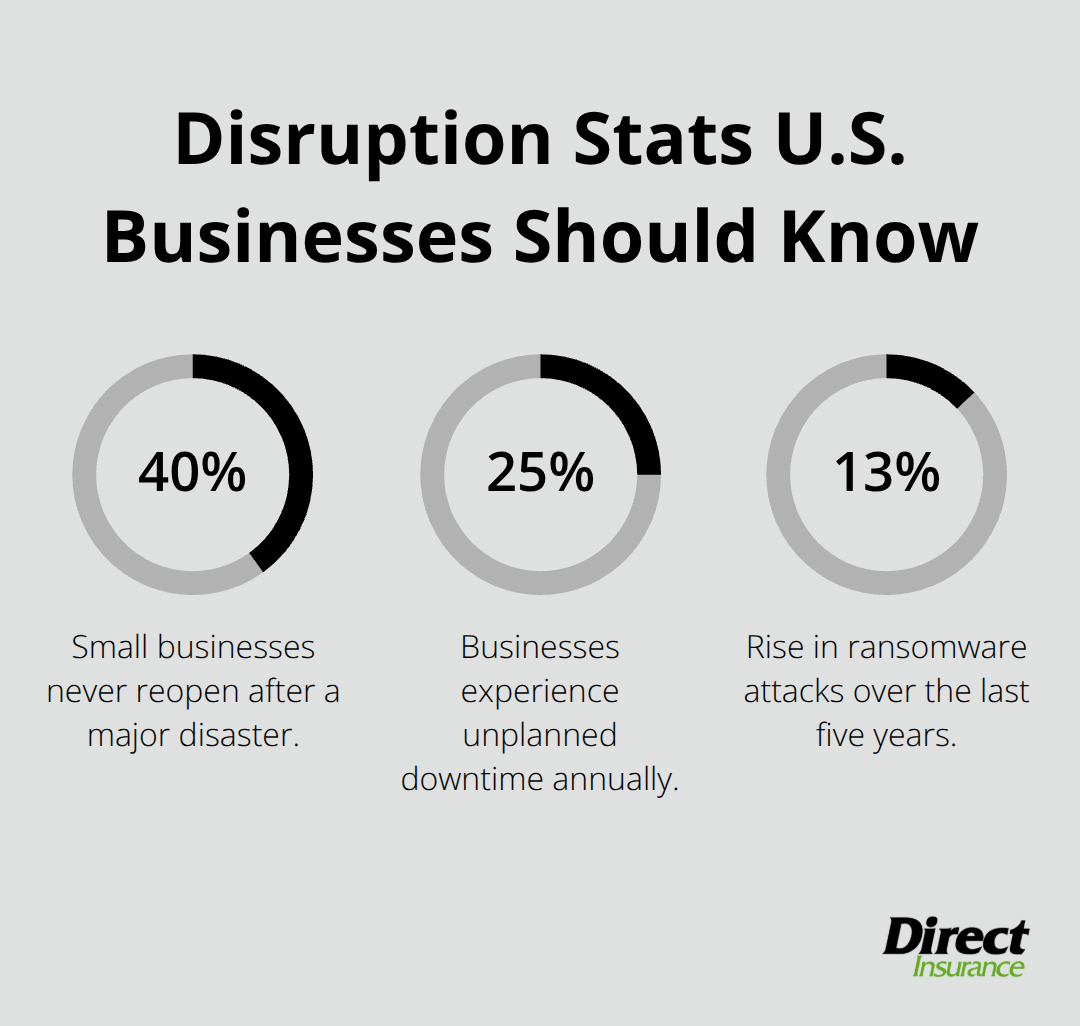
Business interruption insurance fills a gap that standard property coverage leaves wide open. When a fire, flood, or other covered event shuts down your operations, property insurance pays to rebuild your building or replace equipment. Business interruption insurance pays your operating expenses and lost profits while you recover. 40% of small businesses never reopen after a major disaster, often because they cannot survive the financial gap between losing revenue and resuming operations. This coverage addresses that exact problem by replacing the income your business would have earned during downtime.
The Income Replacement You Actually Need
Most business interruption policies cover your net profit and normal operating expenses for a defined period after a covered loss. This means the policy reimburses you for wages, rent, loan payments, utilities, and other fixed costs that continue even when you are not generating revenue.
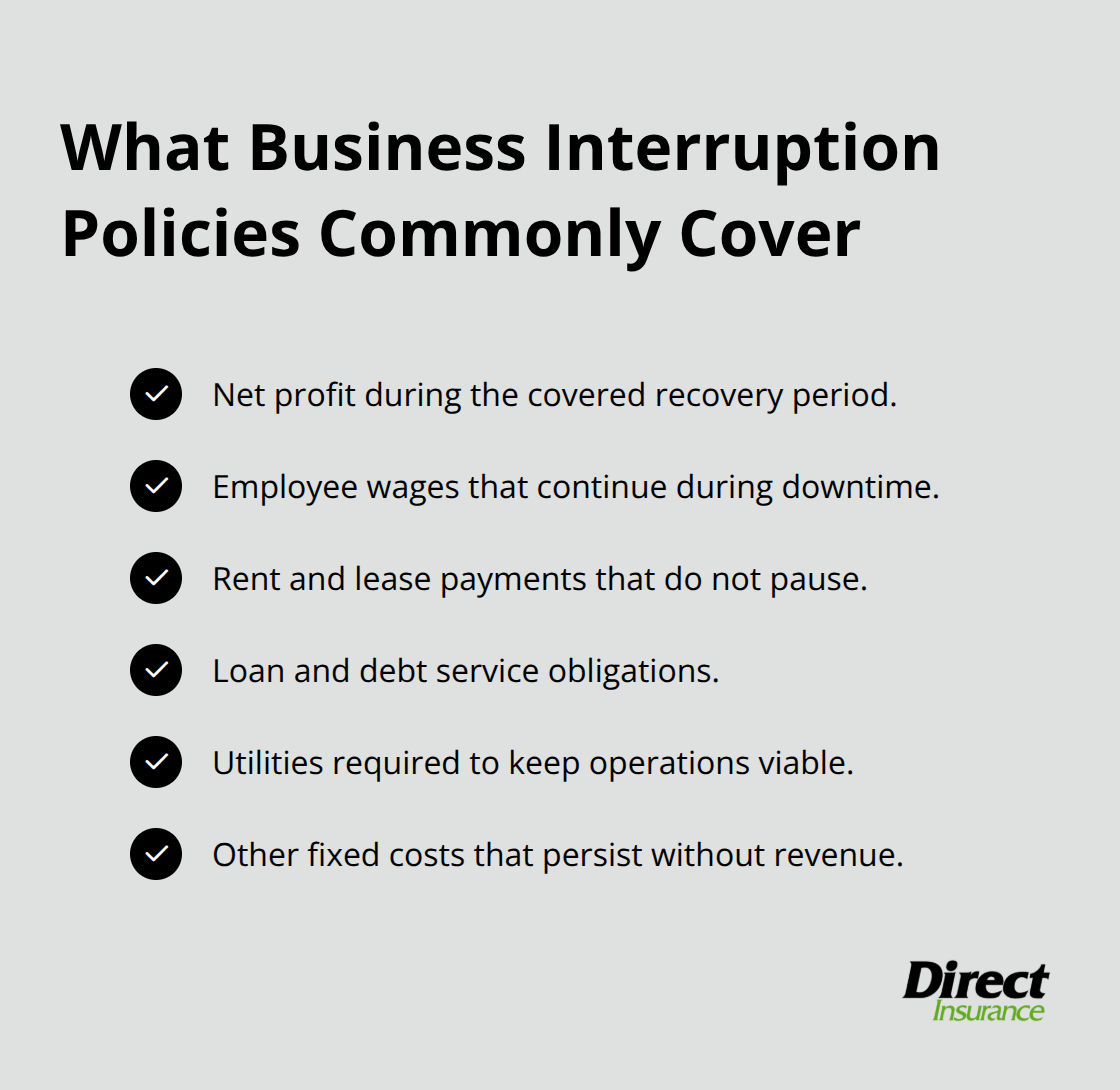
The length of coverage matters significantly-policies typically offer 12, 24, or 36 months of protection. A manufacturing facility that loses $50,000 daily in revenue needs coverage that extends long enough to rebuild equipment and restart production. Without this protection, businesses often drain savings, take on emergency debt, or close permanently while waiting to recover. The coverage amount should reflect your actual monthly operating costs plus reasonable profit margin, not just a rough estimate.
Emergency Expenses and Temporary Solutions
When disaster strikes, you face immediate costs beyond your normal operations. Business interruption coverage extends to reasonable extra expenses you incur to minimize losses and resume operations faster. This includes temporary office space, expedited equipment repairs, emergency staffing, or renting temporary production equipment. If a server failure forces you to move operations to a co-working space for two weeks, that rental cost and the cost of temporary IT support fall under this coverage. The policy also covers costs to transfer records to a backup location or establish a temporary command center. These expenses can add 20-30% to your recovery costs, and standard property insurance will not cover them. Some policies include specific limits for these expenses, so understanding your actual recovery costs matters when you purchase coverage.
What Gaps Remain in Your Protection
Business interruption insurance protects your finances during recovery, but it does not prevent the disruption from happening in the first place. You still need to identify which threats pose the greatest risk to your operations and build defenses against them. The next section examines the specific threats that interrupt business continuity most often and shows you how to prepare for each one.
Common Threats to Business Continuity
Natural disasters remain the most visible threat to business operations, but they’re not the only ones. The National Center for Disaster Preparedness reports that 25% of businesses experience unplanned downtime annually from various causes. Weather events like floods and tornadoes cause obvious damage, yet they’re predictable enough to prepare for.
Weather Events and Natural Disasters
Severe weather in your region should trigger specific recovery protocols. If you operate in a flood zone, you need elevated equipment, offsite data backups, and a documented plan to move operations within 24 hours. Document your exact location’s historical disaster patterns and purchase coverage that matches those patterns. Your recovery procedures should account for the specific threats your geography faces-coastal businesses need hurricane protocols, while inland operations need tornado and severe wind procedures.
Cyber Attacks and Data Breaches
Cyber attacks pose a different problem because they’re less visible and harder to prevent. Ransomware attacks have risen by 13 percent in the last five years, with an average cost of $1.85 million per incident in 2023. A single compromised password or unpatched server can lock your entire operation, freeze customer data, and force you to choose between paying criminals or losing months of records. Implement offline backups using the 3-2-1 rule-three copies of critical data, on two different media types, with one copy stored offsite. This approach protects you even if attackers encrypt your primary systems.
Supply Chain Failures and Vendor Dependencies
Supply chain failures hit harder than most business owners expect because they’re indirect. Your facility runs fine, but you cannot operate without a critical vendor or material. When semiconductor shortages hit manufacturing in 2021, some factories sat idle for weeks despite being fully operational because they lacked components. Identify your top five vendors right now and research alternative suppliers for each before you need them. This preparation prevents production stops when your primary vendor faces disruptions.
Ranking Your Specific Threats
The most dangerous mistake is treating these threats as equally likely. Rank your specific threats based on your location, industry, and operations. A retail business in a flood-prone area should prioritize flood recovery procedures. A healthcare provider should prioritize cyber resilience because data breaches directly impact patient care. A manufacturer should prioritize supplier diversification because production stops without materials. Understanding which threats matter most for your specific situation allows you to allocate resources where they actually protect your business, rather than spreading effort across generic scenarios that may never affect you.
How to Build a Plan That Actually Works
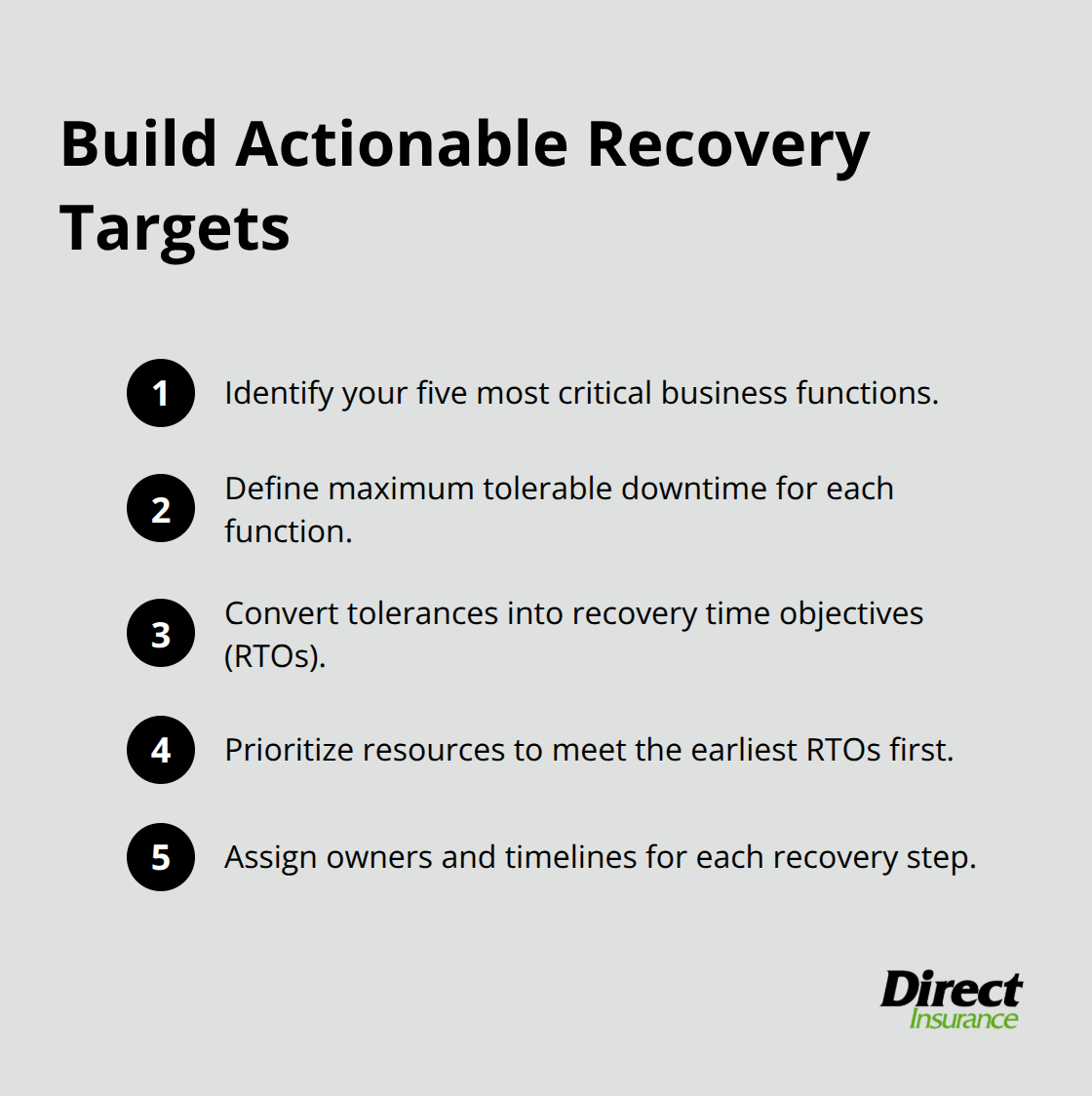
Your business interruption plan must map exactly where operations stop when disaster strikes. Start by identifying your five most critical business functions-the ones that generate revenue or enable everything else to work. For a manufacturer, this means production lines and inventory management. For a service business, it means client communication systems and staff availability. For retail, it means point-of-sale systems and supplier deliveries. Write down how long each function can remain offline before you lose customers, miss deadlines, or face irreversible damage. A software company might tolerate 4 hours of downtime before customers switch providers permanently. A hospital cannot tolerate 30 minutes without backup power. These tolerance windows become your recovery time objectives, and they drive every other decision in your plan.
Map Your Dependencies and Vulnerabilities
Document which systems, people, and vendors each critical function depends on. If your production line requires electricity, a specific supplier, and five trained technicians, then your recovery plan must address all three. Most business owners discover during this exercise that they have single points of failure they never recognized. One vendor supplies 80% of your materials. One person holds the passwords to critical systems. One facility houses all your equipment. These vulnerabilities matter far more than generic disaster scenarios.
Create Specific Recovery Procedures with Clear Timelines
Once you know what must recover first, build specific procedures with exact timelines and responsible people. Assign one person to activate your backup data systems, another to contact your backup suppliers, and a third to communicate with customers. Write down the sequence-which steps happen first, which can happen simultaneously, and which depend on others finishing. Include phone numbers, email addresses, and alternate contact methods for every person and vendor involved.
Test Your Plan Regularly and Measure Results
Test your plan regularly through simulation of the actual disruption and measurement of whether your team hits the timelines you set. Your test does not require a real disaster-run a tabletop exercise where your team sits down, describes a specific scenario, and walks through the procedures step by step. If your team discovers a missing phone number or realizes that your backup supplier is also in the flood zone, fix it immediately.
Update Your Plan After Operational Changes
Update your entire plan within 90 days of any major operational change: new vendors, relocated facilities, staff departures, or new equipment. A plan that worked last year but has not been reviewed since your company doubled in size will fail when you actually need it.
Final Thoughts
Business interruption planning protects your operations when threats strike, but only if you act before disaster arrives. Insurance replaces lost income while you recover, and your plan determines how fast you recover. Together, they separate businesses that survive disruptions from those that close permanently.
Contact Direct Insurance Services to review your current coverage and identify gaps. We work with multiple top-rated insurance companies to find business interruption policies that match your actual recovery costs and timeline. Our team understands the specific risks facing Utah businesses, from weather patterns to supply chain vulnerabilities unique to your region.
Schedule time with your leadership team to map your critical operations and dependencies. Identify which functions must recover first, which vendors you depend on, and where single points of failure exist. The businesses that survive major disruptions prepared before disaster struck-they knew their vulnerabilities, had insurance in place, and practiced their recovery procedures.
Disclaimer: The information provided in this blog is for general informational purposes only and does not constitute legal, financial, or insurance advice. Coverage options, terms, and availability may vary. Please consult with a licensed professional for advice specific to your situation

