

Utah Condo Insurance Options: Tailored Coverage for Your Unit
Condo ownership in Utah comes with unique insurance needs that differ significantly from traditional homeownership. Your HOA’s master policy covers the building structure, but it leaves gaps in protection for your personal belongings and liability.
At Direct Insurance Services, we help condo owners navigate Utah condo insurance options to find coverage that actually fits their situation. This guide breaks down what you need to know to protect your investment.
What Makes Condo Insurance Different from Homeowners Insurance
Coverage Limits and What’s Actually Protected
Condo insurance operates on a fundamentally different model than homeowners insurance, and misunderstanding this difference costs Utah condo owners money every year. Your HOA’s master policy covers the building’s exterior walls, roof, and common areas, but it stops there. That policy does not protect your interior walls, your fixtures, your personal belongings, or your liability if someone gets hurt inside your unit. A standard homeowners policy covers everything on a single-family property because you own the entire structure. With a condo, you own only your unit’s interior, which is why you need a specialized HO-6 policy to fill those gaps.
Condo owners who assumed their HOA coverage was sufficient often face thousands in out-of-pocket costs after water damage, theft, or a liability claim. The master policy your HOA maintains protects common elements like hallways, the roof, and the building’s frame, but it explicitly excludes your personal space. If a pipe bursts in your unit and damages your hardwood floors and cabinets, that becomes your responsibility, not the HOA’s.
The Role of the Building’s Master Policy
The HOA’s master policy creates a foundation of protection for the building itself, yet it leaves your personal liability exposed. If someone slips on your kitchen tile and sues you, your HOA’s liability coverage does not protect you personally. The master policy covers the structure and common areas only, leaving a significant gap in your protection.
This gap exists because the HOA’s policy treats the building as a single entity. Your unit sits within that structure, but your interior space and the improvements you’ve made fall outside the master policy’s scope. The HOA cannot purchase coverage for every individual unit’s contents and personal liability-that responsibility falls to you.
Why Your Personal Policy Fills Critical Gaps
Your HO-6 policy covers personal liability, damage to your condo unit and belongings, and additional living expenses if a covered incident forces you to leave. This specialized coverage addresses what the master policy cannot. Utah condo owners should also consider loss assessment coverage, which protects you if the HOA needs to levy special charges for major repairs or deductible shortfalls from the master policy. Without this addition, a single assessment could cost you thousands.
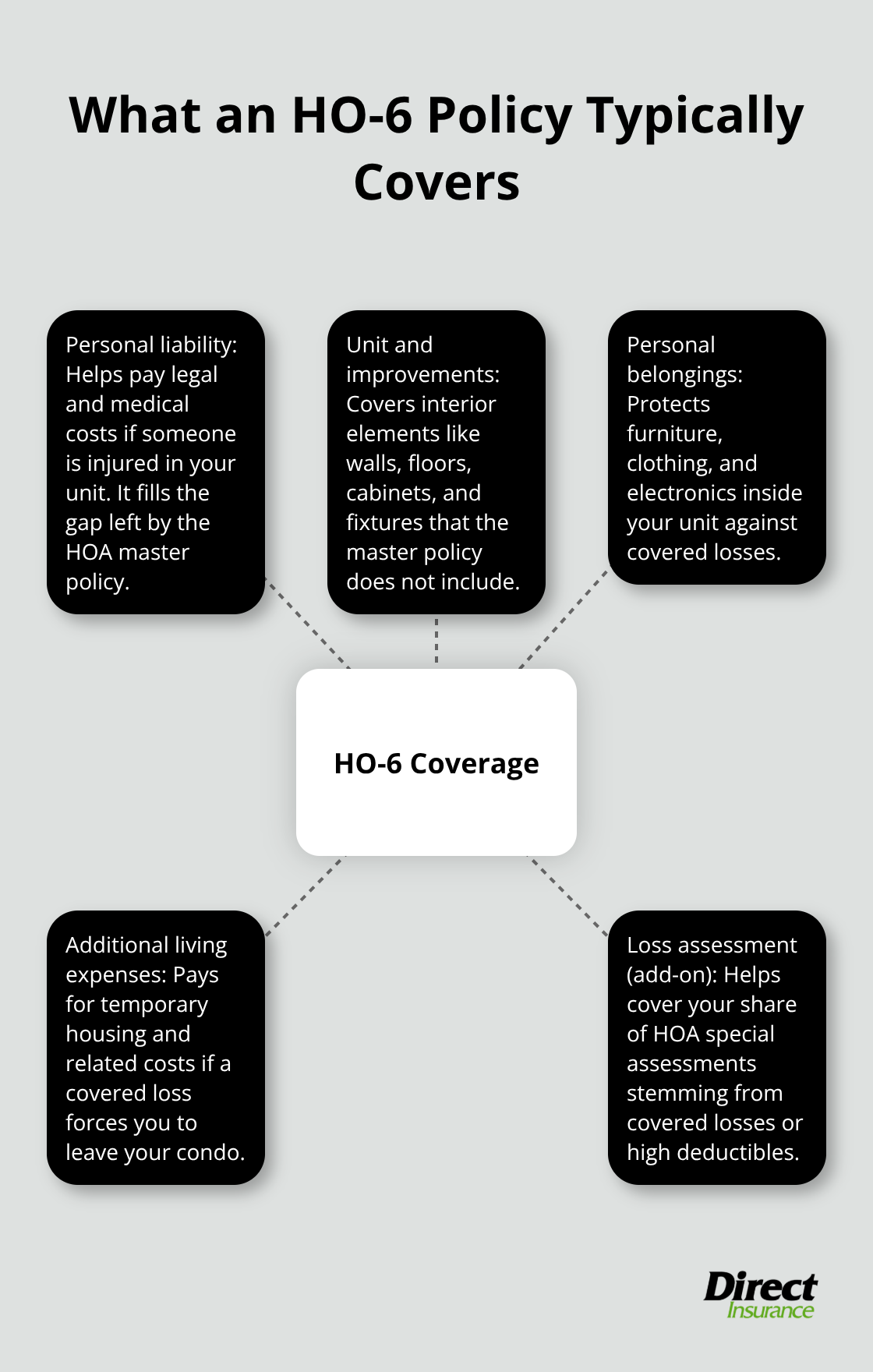
The combination of your HO-6 policy and the HOA’s master policy creates complete protection, but only if you understand what each one covers and where the overlaps and gaps exist. Understanding these distinctions helps you avoid costly gaps in coverage. With this foundation in place, you can now explore the specific types of condo insurance coverage available to Utah residents and determine which options match your situation.
Types of Condo Insurance Coverage Available in Utah
HO-6 Policies: Your Foundation for Condo Protection
HO-6 policies form the foundation of condo insurance in Utah, and they differ substantially from standard homeowners policies in what they protect. An HO-6 covers your personal belongings inside your unit, damage to improvements you’ve made like flooring or cabinets, additional living expenses if you need temporary housing after a covered loss, and personal liability if someone gets injured in your unit. Most HO-6 policies in Utah start with personal liability limits based on your assets and dwelling coverage, though you should strongly consider raising this to at least $300,000 given the rising cost of medical claims and lawsuits. The Insurance Information Institute reports that the average homeowners insurance claim in 2024 exceeded $12,000, and liability claims can reach into hundreds of thousands.
Your deductible typically ranges from $500 to $2,500, and choosing a higher deductible directly lowers your monthly premium. If your condo sits in an older Utah building, water damage coverage becomes non-negotiable since aging pipes and roof issues plague units built before 1990. Many insurers now exclude water damage or cap it at $5,000 to $10,000 unless you purchase a separate endorsement, which costs an extra $15 to $40 monthly but protects you from catastrophic losses.
Loss Assessment Coverage: Protection Against HOA Emergencies
Loss assessment coverage operates as insurance against the HOA’s financial emergencies, and it deserves serious consideration in Utah’s condo market. When the HOA’s master policy has a high deductible or insufficient reserves, it can levy special assessments on individual owners to cover major repairs or insurance gaps. A single assessment can cost $5,000 to $50,000 depending on the building’s condition and the scope of repairs needed.
Loss assessment coverage typically costs $20 to $50 annually and covers your share of these assessments up to your policy limit, usually $1,000 to $5,000. The Utah Condominium Ownership Act allows HOAs to assess owners for building maintenance and insurance deductibles, making this coverage especially valuable if your HOA lacks substantial reserves.
Additional Coverage Options for High-Value Items
Beyond these core protections, you should evaluate whether additional personal property coverage makes sense for your situation. If your unit contains high-value items like jewelry, art, or electronics, standard HO-6 policies cap coverage on these items at $1,500 to $2,500 total. Scheduled personal property endorsements remove these caps and protect specific items at their full value.
Utah condo owners in areas prone to break-ins or theft should also examine whether their base liability coverage adequately protects them, since inadequate coverage leaves you personally liable for judgments exceeding your policy limit. The right combination of these coverage options depends on your building’s age, your personal assets, and your HOA’s financial health-factors that vary significantly across Utah’s diverse condo market. Understanding what coverage options exist sets the stage for the next critical step: comparing your specific needs against available policies and finding the right fit for your situation.
How to Choose the Right Condo Insurance for Your Situation
Review Your HOA’s Master Policy Details
Start by obtaining a copy of your HOA’s master policy directly from your HOA board or property manager. This document reveals exactly what the master policy covers, what it excludes, and most importantly, what deductible applies. Many Utah condo owners skip this step and later discover their HOA carries a $5,000 or $10,000 deductible on the master policy, which means any claim below that amount gets passed to individual owners through special assessments. Request the declarations page and coverage summary, not the full policy document. The declarations page shows dwelling coverage limits, liability limits, and deductible amounts in clear language.
If your HOA’s master policy has a $50,000 deductible, loss assessment coverage becomes essential for your HO-6 policy. Additionally, ask your property manager whether the master policy covers water damage, since many Utah buildings constructed before 1995 face aging infrastructure issues that trigger water claims regularly.
Assess Your Personal Belongings and Liability Needs
Inventory your personal belongings and calculate their actual replacement cost, not their current value. Most Utah condo owners dramatically underestimate what they own. Walk through your unit and photograph items in every room, checking receipts or credit card statements for purchase prices. Standard HO-6 policies typically cover personal property at 50 to 70 percent of your dwelling coverage limit, which often falls short of actual replacement needs.
If your inventory totals $75,000 in belongings but your HO-6 dwelling coverage sits at $50,000, your personal property coverage maxes out around $25,000 to $35,000, leaving a substantial gap. The National Association of Insurance Commissioners reports that the average household contains roughly $30,000 in personal property, yet most policyholders carry coverage for only half that amount. Assess your liability exposure honestly as well. If you frequently host gatherings or own a dog, liability claims become more likely.
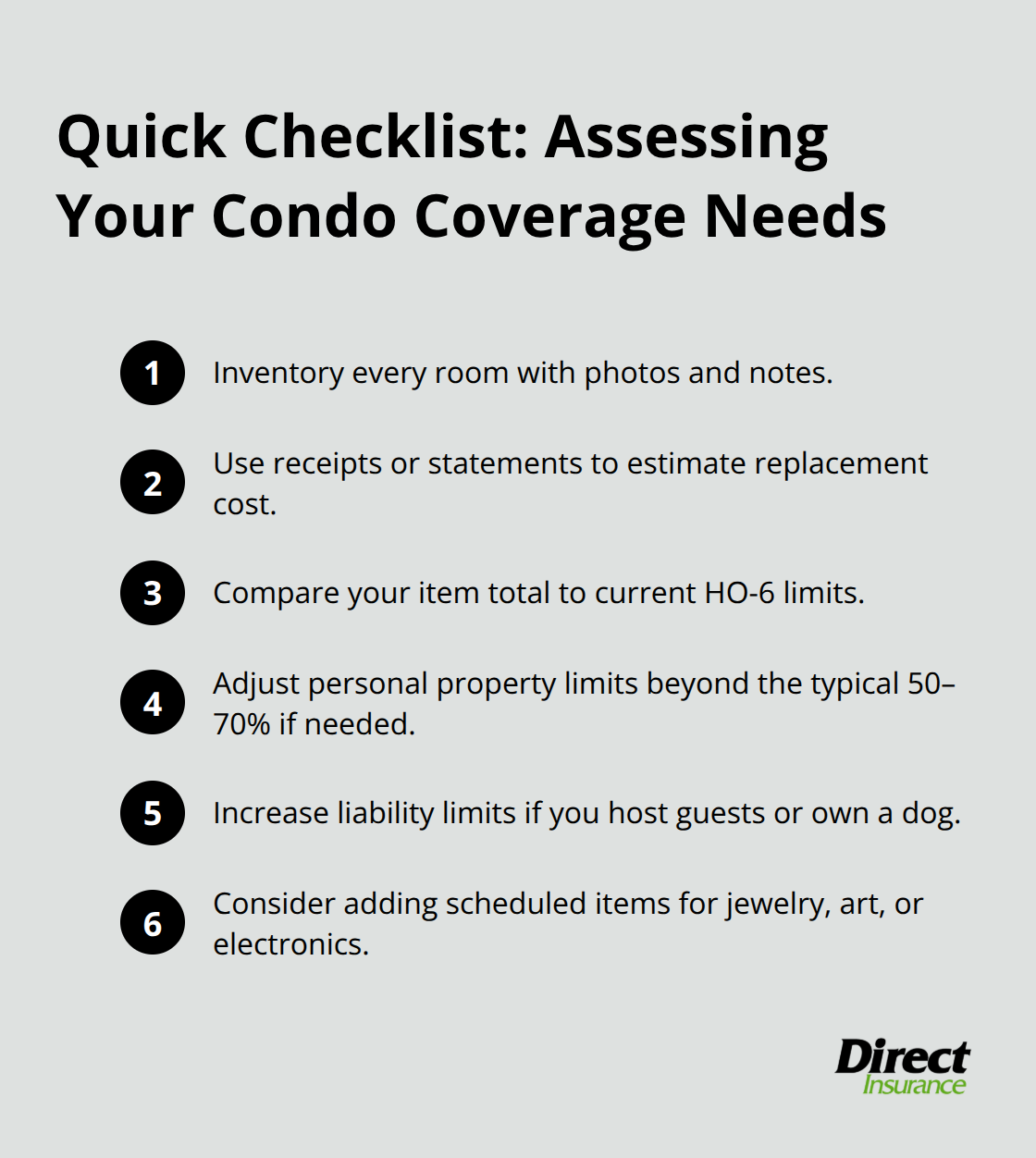
A single serious injury lawsuit in Utah can easily exceed $300,000 in damages, making minimum liability limits of $100,000 inadequate for most condo owners.
Compare Quotes from Multiple Insurers in Utah
Contact at least three different insurers and request quotes for identical coverage levels. Do not accept the first quote you receive. Utah insurers price HO-6 policies differently based on building age, location within Salt Lake City or surrounding areas, claims history, and underwriting guidelines. One insurer might charge $45 monthly for the same coverage another charges $65 for, primarily because they assess risk differently.
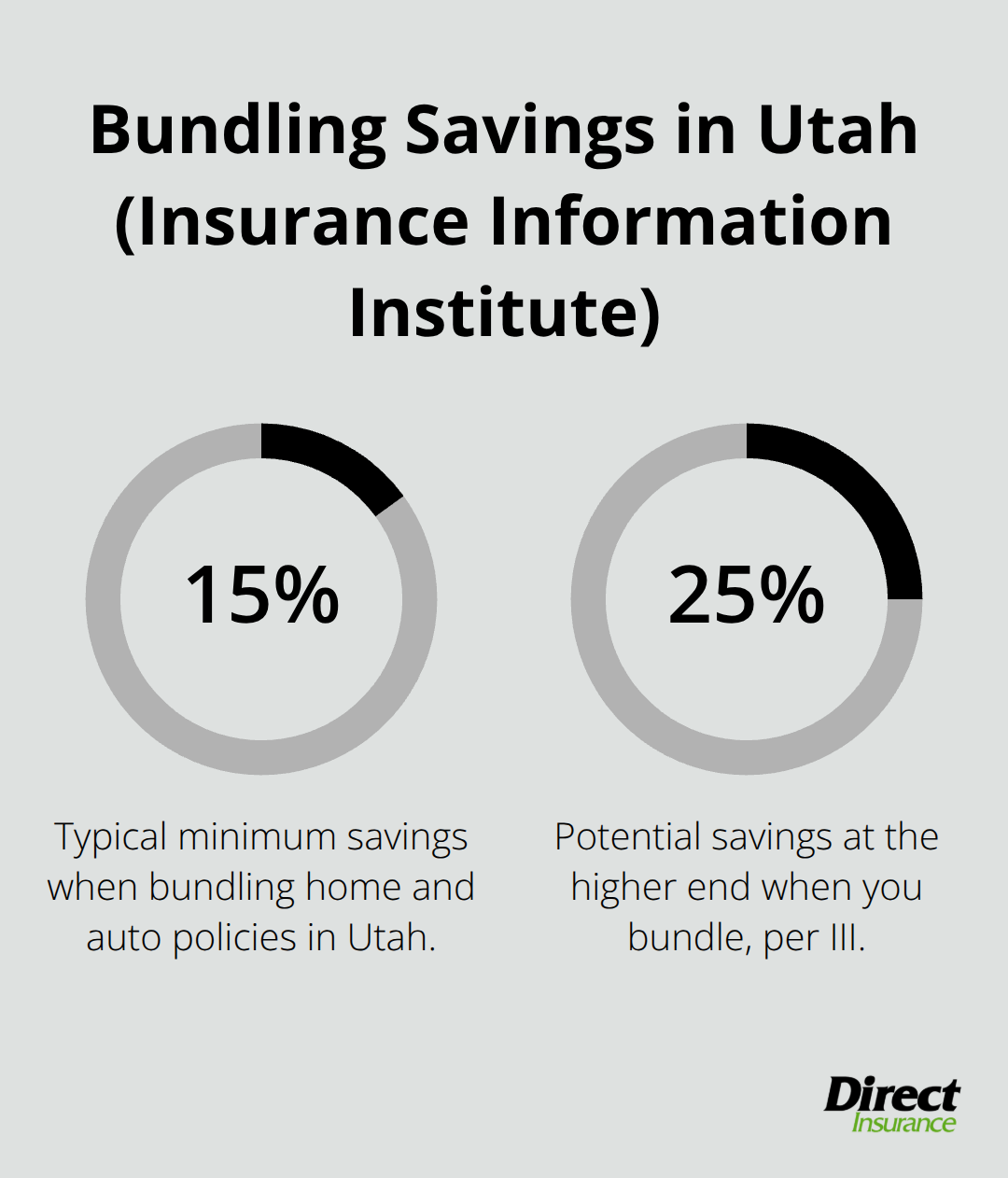
When comparing quotes, verify each one includes the same deductible, personal property limit, liability limit, and any endorsements you need like scheduled personal property or water damage coverage. Ask each insurer about available discounts for bundling auto insurance, maintaining a claims-free history, or installing security systems. The Insurance Information Institute found that bundling home and auto insurance typically saves Utah residents 15 to 25 percent on their combined premiums.
Direct Insurance Services, an independent agency based in Salt Lake City, shops multiple top-rated insurance companies to find you the best rates and coverage for your specific situation, which saves you time and money compared to calling insurers individually.
Final Thoughts
Protecting your Utah condo requires understanding the gaps between your HOA’s master policy and your personal coverage needs. Your HO-6 policy fills those gaps by covering your interior improvements, personal belongings, and personal liability. Loss assessment coverage adds another layer of protection against unexpected HOA charges, and without these protections in place, a single water damage claim, theft, or liability lawsuit could cost you tens of thousands of dollars out of pocket.
The right Utah condo insurance options depend on your building’s age, your personal assets, and your HOA’s financial reserves. Start by reviewing your master policy details to understand what deductible applies and what coverage gaps exist. Then inventory your belongings honestly and assess your liability exposure based on how you use your unit. Finally, compare quotes from multiple insurers to find coverage that matches your needs at a price that fits your budget.
We at Direct Insurance Services have been helping Utah residents protect their homes since 1973. As locals who understand Utah’s unique risks and condo market, we shop multiple top-rated insurance companies to find you the best coverage available. Contact Direct Insurance Services today to get a quote and speak with someone who knows Utah condos inside and out.
Disclaimer: The information provided in this blog is for general informational purposes only and does not constitute legal, financial, or insurance advice. Coverage options, terms, and availability may vary. Please consult with a licensed professional for advice specific to your situation

