
High Risk Auto Coverage: Options for Difficult Cases
Getting denied for standard auto insurance or facing sky-high premiums can feel frustrating. If you have accidents, traffic violations, or a DUI on your record, you’re not alone-millions of drivers need high risk auto coverage every year.
At Direct Insurance Services, we work with drivers in difficult situations every day. We know your options, and we’re here to show you how to find affordable coverage that actually works for your situation.
What Makes You High Risk to Insurers
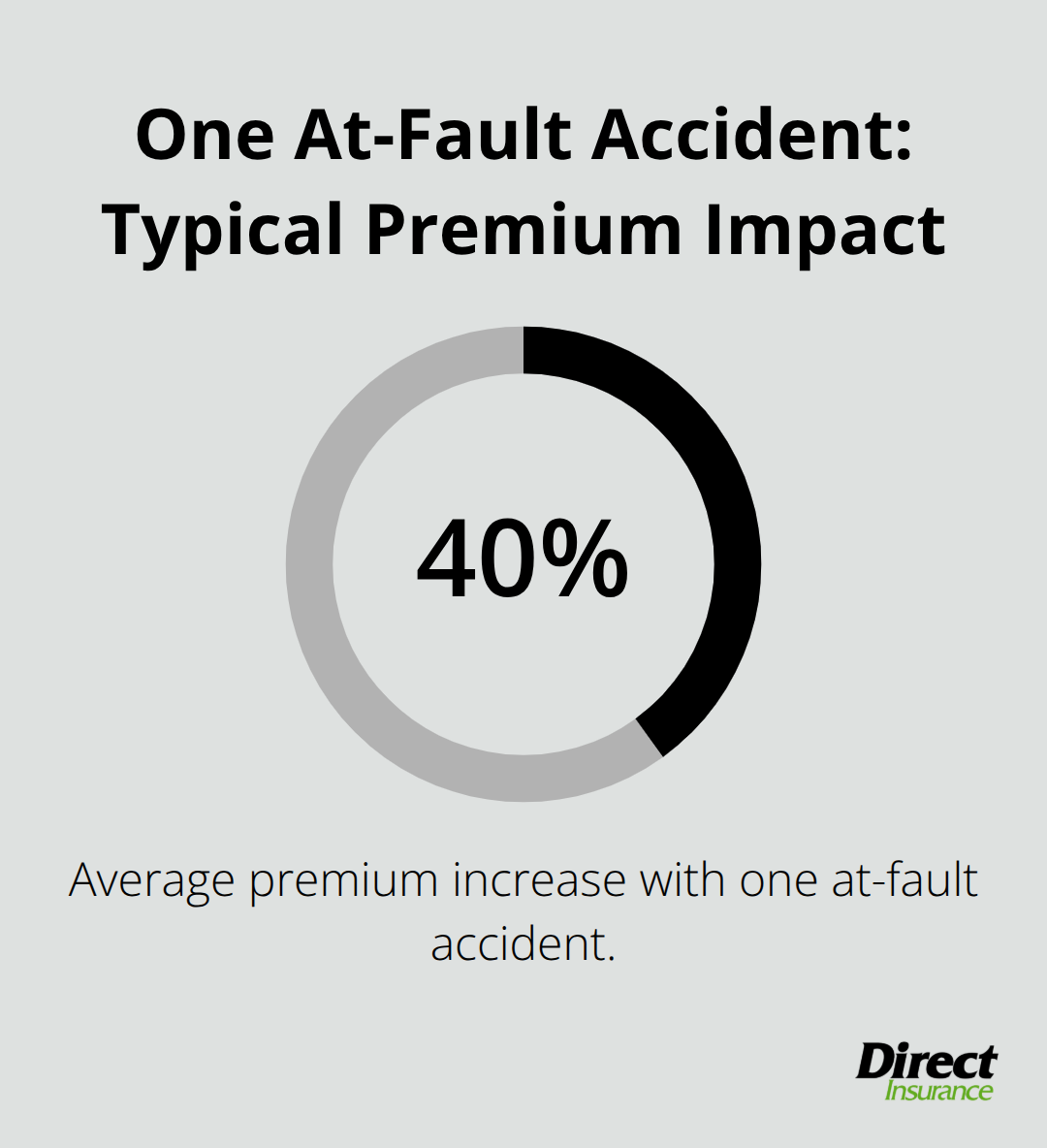
Insurers classify drivers as high risk based on concrete factors that predict claims. Your driving history matters most-a single traffic violation can raise your premiums, but multiple violations within three to five years signal serious risk. The National Association of Insurance Commissioners reports that drivers with even one at-fault accident pay roughly 40% higher premiums on average. Two or more accidents within a short timeframe push you into the high-risk category almost automatically, because insurers see a pattern of loss.
Insurers also scrutinize your claims history closely. If you’ve filed multiple claims in five years, standard carriers often deny coverage outright because you represent too much financial exposure.
Traffic Violations and Driving Records
Traffic violations stay on your record for three to seven years depending on your state, and not all violations carry equal weight. A speeding ticket costs you less than a reckless driving conviction. DUI and DWI convictions carry the heaviest penalties-insurers view these as proof of extremely poor judgment, and most standard carriers will reject your application immediately. Suspended or revoked licenses create the same automatic rejection from admitted carriers. If your license suspension resulted from accumulating traffic violations or from a DUI, standard insurance remains unavailable for years. Some states require an SR-22 filing (which we’ll cover next), but reaching that point means you’ve already crossed into high-risk territory.
Multiple Claims Signal Unacceptable Risk
Insurers price based on expected losses, and drivers with two or more claims in five years look like they’ll produce more losses than premiums can cover. A fender bender plus a comprehensive claim for theft or weather damage within 24 months flags you as statistically likely to file again. Collision claims especially worry insurers because they suggest either poor driving skills or carelessness. Drivers with prior claims are significantly more likely to file additional claims, making historical loss patterns the strongest predictor of future claims. This is why your claims history matters as much as your driving violations-both tell the same story to underwriters.
What Happens Next
Once insurers identify you as high risk, standard coverage options disappear. Your next step involves understanding the specific programs and policies designed for drivers in your situation-and that’s where your real options begin.
Your Coverage Options When Standard Insurance Denies You
When standard insurers reject your application, three practical pathways exist to secure legal coverage. The first involves an SR-22 filing, which isn’t insurance itself but rather a certificate of financial responsibility that proves you carry minimum liability coverage. If you’ve had a DUI, suspended license, or accumulated too many violations, your state’s Department of Motor Vehicles likely requires this filing before you can legally drive.
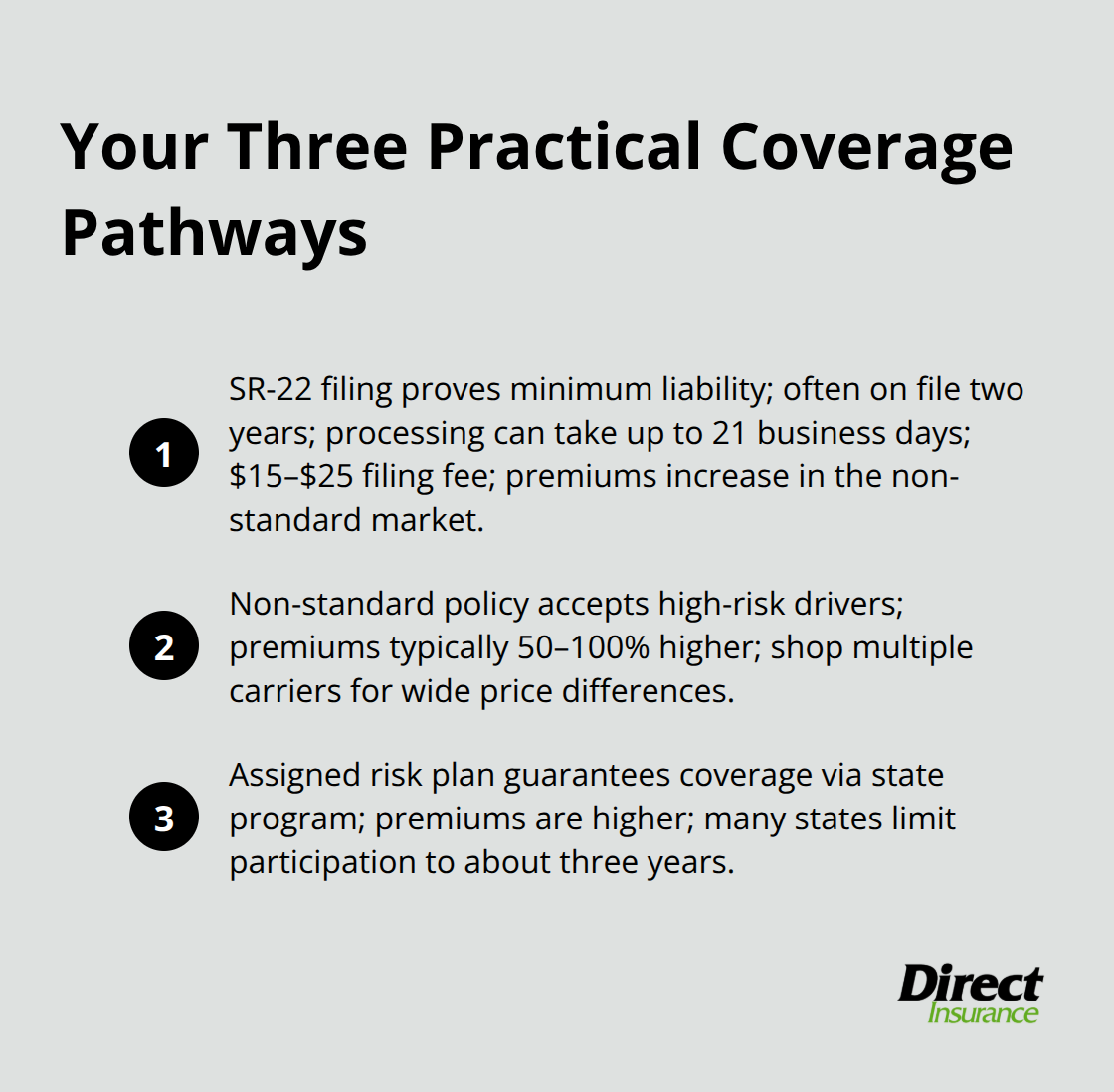
An SR-22 stays on file for two years from your most recent conviction in most states. You file it through your insurance company, and they submit it directly to your state-the process takes up to 21 business days. The cost varies, but expect to pay a filing fee of around 15 to 25 dollars on top of your insurance premium. Your actual insurance premium jumps significantly because you now occupy the non-standard market, where carriers specialize in high-risk drivers and price accordingly.
Non-Standard Insurance Policies Offer Your Best Realistic Option
Non-standard insurance policies represent your second option and often your best realistic choice for affordable coverage. These carriers accept drivers with blemished records because managing high-risk volume is their entire business model. Companies like Bristol West, National General, and Safe Auto operate in the non-standard space, and they use sophisticated underwriting to price risk more precisely than admitted carriers. You pay substantially more than a clean driver-typically 50 to 100 percent higher premiums-but you receive coverage that actually responds to claims. Non-standard policies come with the same legal requirements as standard policies: liability, collision, and comprehensive options all remain available. Shopping multiple non-standard insurers matters tremendously because pricing varies wildly. One carrier might quote you 180 dollars monthly while another charges 240 dollars for identical coverage.
Assigned Risk Plans Provide a Safety Net
Assigned risk plans function as the insurance market’s safety net and represent your third option. These state-run programs guarantee coverage for drivers who cannot obtain it commercially, and every admitted insurer in your state must participate proportionally. Assignment happens randomly, meaning you don’t choose your carrier. The trade-off is guaranteed access: assigned risk plans must accept you regardless of your driving record. Premiums run high because these plans absorb the most difficult cases, but they provide a legitimate backstop. Most states cap how long you stay in assigned risk-typically three years-before you can shop the standard market again if your record improves.
Finding the Right Path Forward
Each pathway serves different situations and timelines. An SR-22 filing works best if you need immediate legal compliance and already have a non-standard insurer lined up. Non-standard policies offer flexibility and competitive pricing when you shop actively across multiple carriers. Assigned risk plans protect you when other options fall through, though higher costs make them a last resort rather than a first choice. Your specific situation-the violations on your record, your state’s requirements, and your budget-determines which option makes the most sense. The next section shows you how to lower your premiums and improve your standing with insurers, regardless of which pathway you choose today.
How to Lower Your Premiums
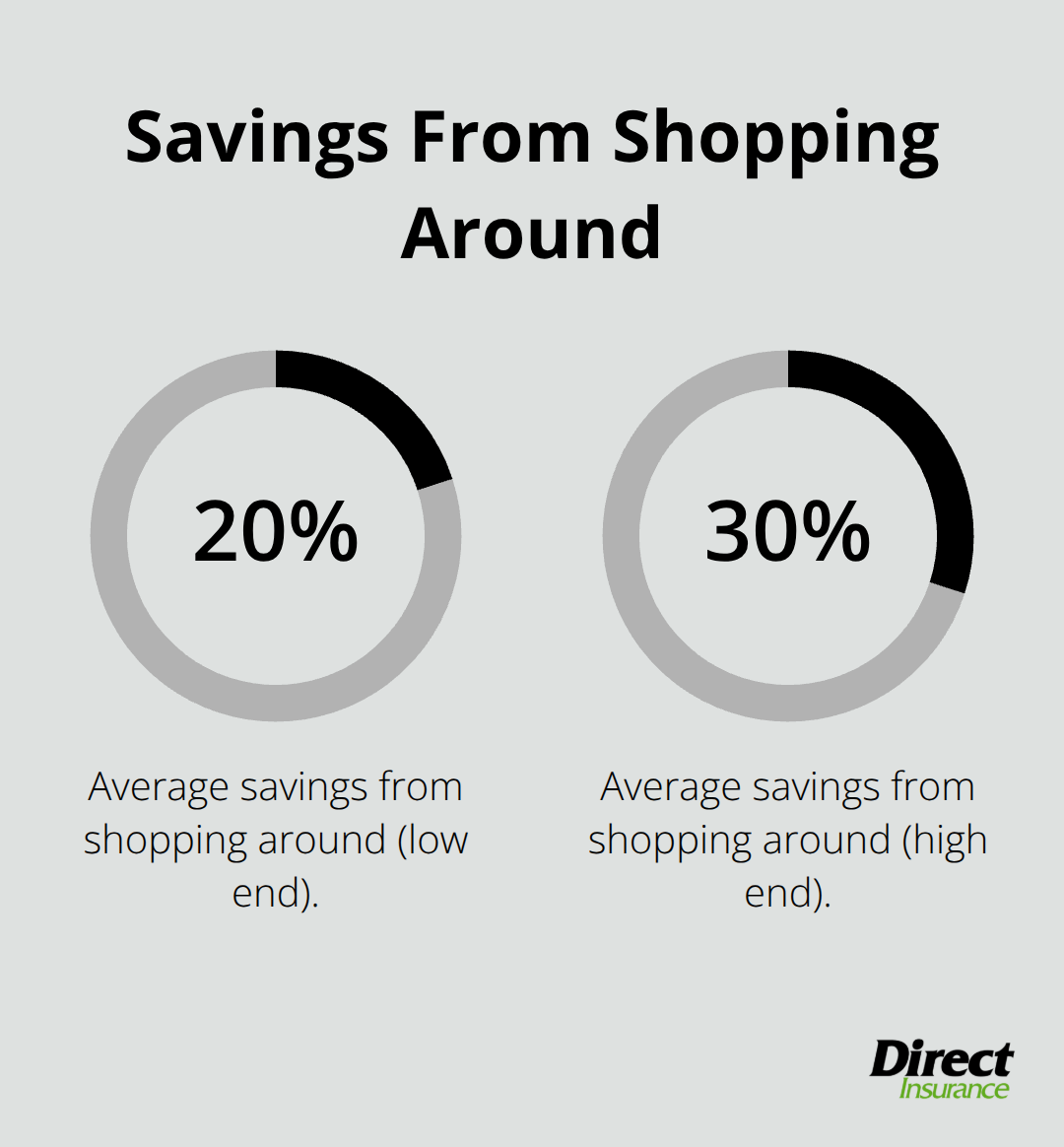
Shopping multiple insurers isn’t optional if you’re high risk-it’s the only way to find rates you can actually afford. Non-standard carriers price the same driver differently based on their underwriting models, and the difference between the cheapest and most expensive quote regularly exceeds 100 dollars monthly. Request quotes from at least five carriers before settling on a policy, and be specific about your violations and claims when you apply. Incomplete applications lead to inaccurate quotes that waste your time. The Council for Community and Economic Research found that shopping around saves drivers an average of 20 to 30 percent on premiums, and high-risk drivers benefit even more because pricing variation runs wider in this segment.
When you receive quotes, ask each carrier about their specific pricing for drivers with your violation type-some carriers penalize DUIs more heavily than accidents, while others reverse that weighting. Set a timeline to shop again in six months, not annually. Your record improves faster than most people realize, and what costs 250 dollars monthly today might drop to 200 dollars in half a year as violations age off your driving history.
Defensive Driving Courses Reduce Premiums Immediately
A defensive driving course isn’t about learning obvious safety tips-it’s a concrete way to reduce your premiums immediately and signal to insurers that you take risk seriously. Most insurance companies offer defensive driving discount savings depending on your base premium. The discount typically lasts three years, giving you real financial breathing room. Many courses can be completed online in four to six hours, and your state likely maintains a list of approved providers on its Department of Motor Vehicles website. Some states also allow these courses to reduce points on your driving record or satisfy court requirements after violations. The National Safety Council and Defensive Driving.com both offer courses that meet most state requirements. Combine a defensive driving discount with multi-policy bundling-adding home or renters insurance to your auto policy-and you stack savings that can exceed 25 percent. The key involves completing the course before you renew your policy, not after, so the discount applies immediately to your next premium.
Continuous Coverage Protects Your Record and Rates
Letting your insurance lapse, even for a few days, permanently marks you as high risk in most states and can increase your premiums by 50 percent or more when you reapply. Insurers view lapses as proof of financial irresponsibility or intentional avoidance of coverage, and that signal stays on your record for years. If you’re struggling with premium payments, contact your current insurer before your policy expires and ask about payment plans or reduced coverage options-most carriers offer flexible payment schedules specifically to prevent lapses. Dropping collision coverage on an older vehicle costs less than you might expect and keeps your policy active. Even a liability-only policy maintains continuous coverage and protects your record. Some carriers offer prepaid policies where you pay quarterly or semi-annually instead of monthly, reducing the temptation to skip a payment. The math is brutal: missing one month to save 150 dollars costs you 500 to 800 dollars in increased premiums when you restart coverage. An independent agency can help you find payment structures that work with your budget, ensuring coverage never lapses and your rates don’t spike unnecessarily.
Final Thoughts
High risk auto coverage opens three concrete pathways forward: SR-22 filings for immediate legal compliance, non-standard policies that offer competitive pricing when you shop actively, and assigned risk plans as your safety net. Each option serves different situations, and your specific violations, state requirements, and budget determine which makes the most sense for you right now. The real work starts after you secure coverage, as defensive driving courses cut your premiums immediately and signal to insurers that you take safety seriously.
Shopping multiple carriers every six months captures rate improvements as your violations age off your record, while maintaining continuous coverage without lapses protects your rates from spiking unnecessarily. These actions compound over time, moving you from high-risk pricing toward standard rates as your record improves. An independent agency changes everything by shopping top-rated insurance companies on your behalf and finding coverage that actually fits your budget and situation.
Contact Direct Insurance Services today to get quotes from multiple carriers and start moving toward affordable coverage that works for your situation. Our team understands Utah’s unique risks and insurance landscape, and we build relationships focused on your long-term success. We shop multiple carriers to find you the best coverage at competitive rates and offer flexible payment options so your policy never lapses.
Disclaimer: The information provided in this blog is for general informational purposes only and does not constitute legal, financial, or insurance advice. Coverage options, terms, and availability may vary. Please consult with a licensed professional for advice specific to your situation

