
Auto Insurance Shopping Utah: Tips to Compare Quotes Like a Pro
Auto insurance shopping in Utah doesn’t have to be overwhelming. Most drivers either accept the first quote they receive or jump between websites without a clear strategy, leaving money on the table.
We at Direct Insurance Services have helped thousands of Utah drivers find better rates by comparing quotes systematically. This guide walks you through exactly how to do it.
Why Utah Drivers Should Compare Auto Insurance Quotes
Utah’s weather and road conditions create real insurance challenges that directly affect your rates. The state experiences significant winter weather, with Salt Lake City averaging 60 inches of snow annually according to the National Weather Service. This translates to higher collision and comprehensive claims across the state, which insurers factor into their pricing models. Mountain driving, common in Utah, increases accident risk compared to flatter regions. Insurers know this, and they price accordingly. If you accept the first quote without shopping around, you’re likely paying a premium for conditions that multiple insurers handle differently.
Insurance Competition Creates Real Rate Differences
Utah’s insurance market includes major national carriers like State Farm, Geico, and Progressive alongside regional players, which means genuine competition exists for your business. Two drivers with the same driving record, vehicle, and coverage needs might receive quotes differing by hundreds of dollars annually. Some insurers weight winter accident frequency more heavily than others. Some place greater emphasis on your specific zip code within Utah. These variations mean that comparing quotes isn’t optional if you want competitive pricing-it’s the only way to identify which insurer values your risk profile most favorably.
Where Most Utah Drivers Go Wrong
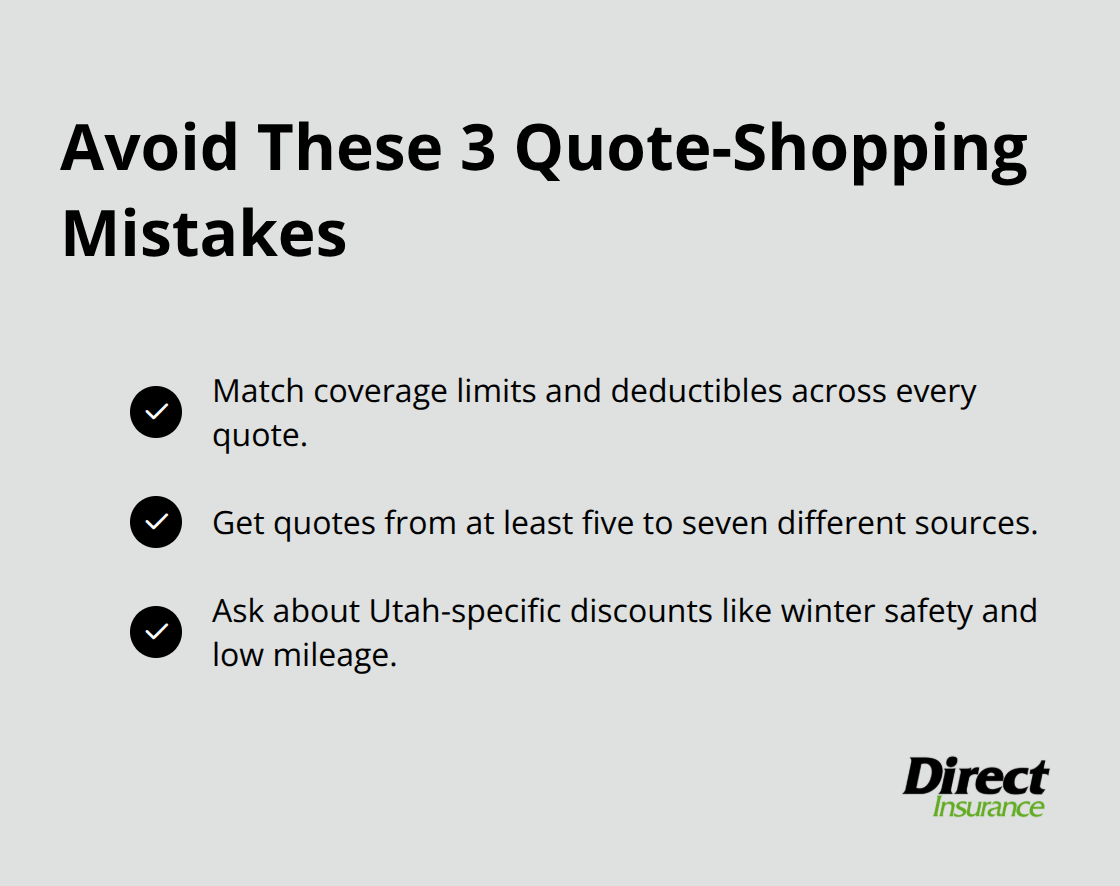
Many drivers make three critical mistakes when shopping for insurance. First, they compare quotes without matching coverage limits and deductibles across all quotes, making price comparisons meaningless. Second, they gather quotes from only two or three sources, missing insurers who might offer significantly better rates for their situation. Third, they ignore available discounts specific to Utah drivers, such as winter safety discounts or low-mileage adjustments for those who work from home during heavy snow months. The Utah Insurance Department doesn’t mandate that insurers offer identical discounts, so one carrier’s discount structure might save you far more than another’s. Taking time to gather at least five quotes with identical coverage specifications takes roughly 30 minutes and frequently uncovers savings of $200 to $600 annually for Utah drivers.
Now that you understand why comparison matters, the next step involves gathering quotes systematically and organizing them in a way that reveals true price differences.
How to Gather and Compare Multiple Auto Insurance Quotes
Compile Your Information Before Requesting Quotes
Gather your vehicle and driving information in one document before you contact a single insurer. You’ll need your Vehicle Identification Number, current coverage details if you’re switching insurers, driving history for the past three to five years, and specifics about how you use your vehicle daily. Most insurers ask whether you commute to work, how many miles you drive annually, and if you use your vehicle for business purposes. Utah drivers working from home during winter months should highlight low annual mileage, as this significantly reduces your premium with many carriers. Have your current policy handy if you’re shopping to switch coverage. Gathering this information upfront prevents delays and guarantees quotes reflect your actual situation rather than generic assumptions. Most drivers spend ten to fifteen minutes assembling this data, and it eliminates the frustration of starting a quote only to realize you’re missing critical details.
Collect Quotes from Multiple Sources
Obtain quotes from at least five to seven different sources to see genuine price variation. Start with major national carriers like State Farm, Geico, and Progressive, then add regional competitors and independent agents who represent multiple insurers. Online quote tools from individual insurers provide fast estimates, though they sometimes lack nuance around Utah-specific factors like winter driving patterns. Independent agents can factor in details that automated systems miss, particularly regarding discounts for safety features or bundling home and auto coverage.
Organize Quotes for Accurate Comparison
Create a simple spreadsheet with each insurer’s name, quote amount, and coverage details in adjacent columns after collecting your quotes. Match every quote to identical coverage limits, deductibles, and optional protections across all rows so you’re comparing actual apples to apples, not different coverage levels. This process takes twenty minutes but reveals which insurer genuinely offers the best rate for your situation rather than which one simply quotes the lowest number on different terms. You’ll spot patterns quickly-one carrier might excel at pricing for drivers with clean records, while another specializes in younger drivers or those with previous claims.
With your quotes organized and comparable, you’re ready to understand what actually drives these price differences.
Key Factors That Impact Your Auto Insurance Rate in Utah
Your Driving Record Sets the Foundation
Your driving record remains the single most influential factor in your Utah auto insurance premium, and insurers weight it heavily because it predicts future claims more accurately than any other metric. Accidents, traffic tickets, and violations on your record will increase your premiums.
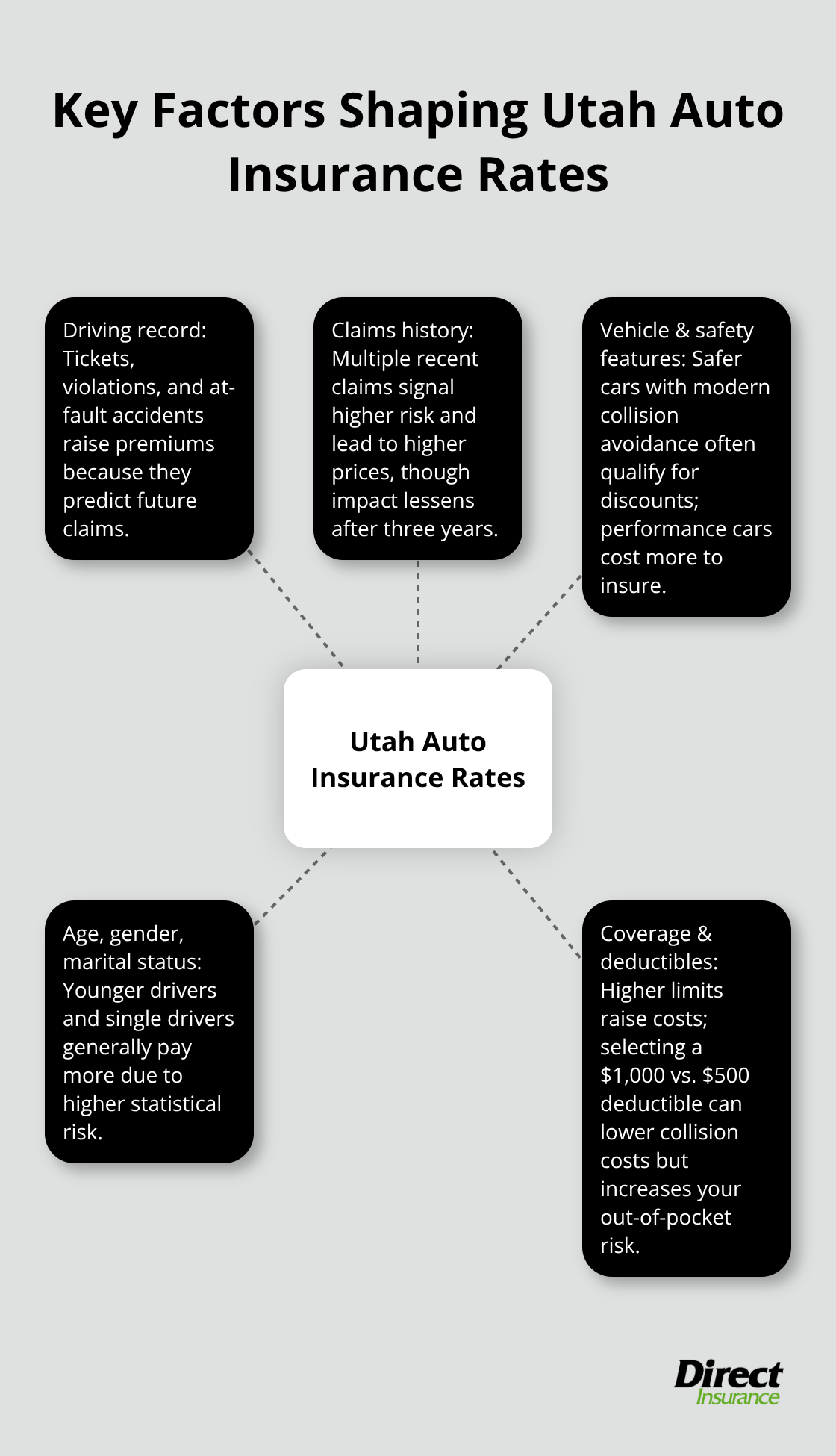
Utah insurers scrutinize the past three to five years of your driving history, so an accident from four years ago still impacts your current quote more than you might expect.
Claims history matters equally-if you file multiple claims within the past three years, insurers view you as higher risk and adjust pricing accordingly. The positive side is that this factor improves over time. Once three years pass without incidents, that accident or claim gradually loses its grip on your rates. If you have violations or claims, shopping quotes from multiple insurers becomes even more critical because some carriers specialize in drivers with less-than-perfect records and price more competitively for your situation than national averages suggest.
Vehicle Characteristics and Safety Features
Your vehicle’s characteristics directly influence what you pay because some cars cost more to repair, attract more theft, or perform poorly in Utah’s winter conditions. Vehicles with strong safety ratings and modern collision avoidance systems qualify for discounts with most Utah insurers. Conversely, high-performance vehicles and sports cars command higher premiums regardless of your driving record because repair costs and accident severity statistics justify it.
Age, Gender, and Marital Status
Your age and marital status function as statistical proxies for risk that insurers use despite their imperfect nature. Drivers under 25 face premiums roughly 50 to 100 percent higher than drivers aged 30 to 59 according to Insurance Information Institute data, while married drivers typically receive lower quotes than single counterparts. This gap narrows significantly once you reach 30, so younger Utah drivers should expect higher quotes but should not assume those rates are permanent.
The number 100% seems to be not appropriate for this chart. Please use a different chart type.
Coverage Limits and Deductibles Give You Control
Coverage limits and deductibles offer immediate control over your premium-selecting a $1,000 deductible instead of $500 typically reduces collision coverage costs by 15 to 30 percent, though this strategy only makes sense if you can actually afford that deductible when needed. The specific combination of these factors unique to your situation is precisely why comparing quotes side by side reveals such dramatic savings opportunities for Utah drivers.
Final Thoughts
Auto insurance shopping in Utah requires a straightforward approach, but the payoff justifies the effort. Collect quotes from at least five to seven insurers with matching coverage limits, organize everything in a spreadsheet so price differences become obvious, and watch how dramatically your options shift. Most Utah drivers who follow this process uncover annual savings between $200 and $600, which adds up to real money over time.
Working with a local agent streamlines this entire process significantly. An independent agent represents multiple insurers and understands Utah’s specific driving conditions, winter weather patterns, and regional risk factors that automated online quotes sometimes miss. At Direct Insurance Services, our team has been helping Utah drivers find competitive coverage since 1973, and we shop multiple top-rated insurance companies on your behalf so you get personalized service without spending hours on comparison websites yourself.
Start gathering your vehicle information today and request quotes from multiple sources, or contact an independent agent who can handle the legwork for you. Visit Direct Insurance Services to speak with our team about your auto insurance needs. Utah’s competitive insurance market means better coverage is available at a lower price if you’re willing to look for it.
Disclaimer: The information provided in this blog is for general informational purposes only and does not constitute legal, financial, or insurance advice. Coverage options, terms, and availability may vary. Please consult with a licensed professional for advice specific to your situation

