Vacation Rental Coverage Utah: Protect Your Short-Term Rental
Your vacation rental in Utah generates income, but it also exposes you to risks that standard homeowners insurance won’t cover. Guest injuries, property damage, and liability claims can drain your finances fast.
At Direct Insurance Services, we’ve seen rental owners lose thousands because their policies had critical gaps. The right vacation rental coverage Utah protects both your property and your income stream.
Why Standard Homeowners Policies Won’t Cover Your Rental
Standard homeowners insurance policies only include specific covered events and almost always exclude coverage for business activities like rental operations. Once you start charging guests, your traditional policy becomes void for any claim related to the rental operation. Insurance companies classify rental properties as commercial ventures, and homeowners policies are designed only for owner-occupied homes. If a guest is injured on your property or damages your furnishings, your homeowners insurer will deny the claim outright. This isn’t a gray area or a technicality-it’s written directly into policy language.
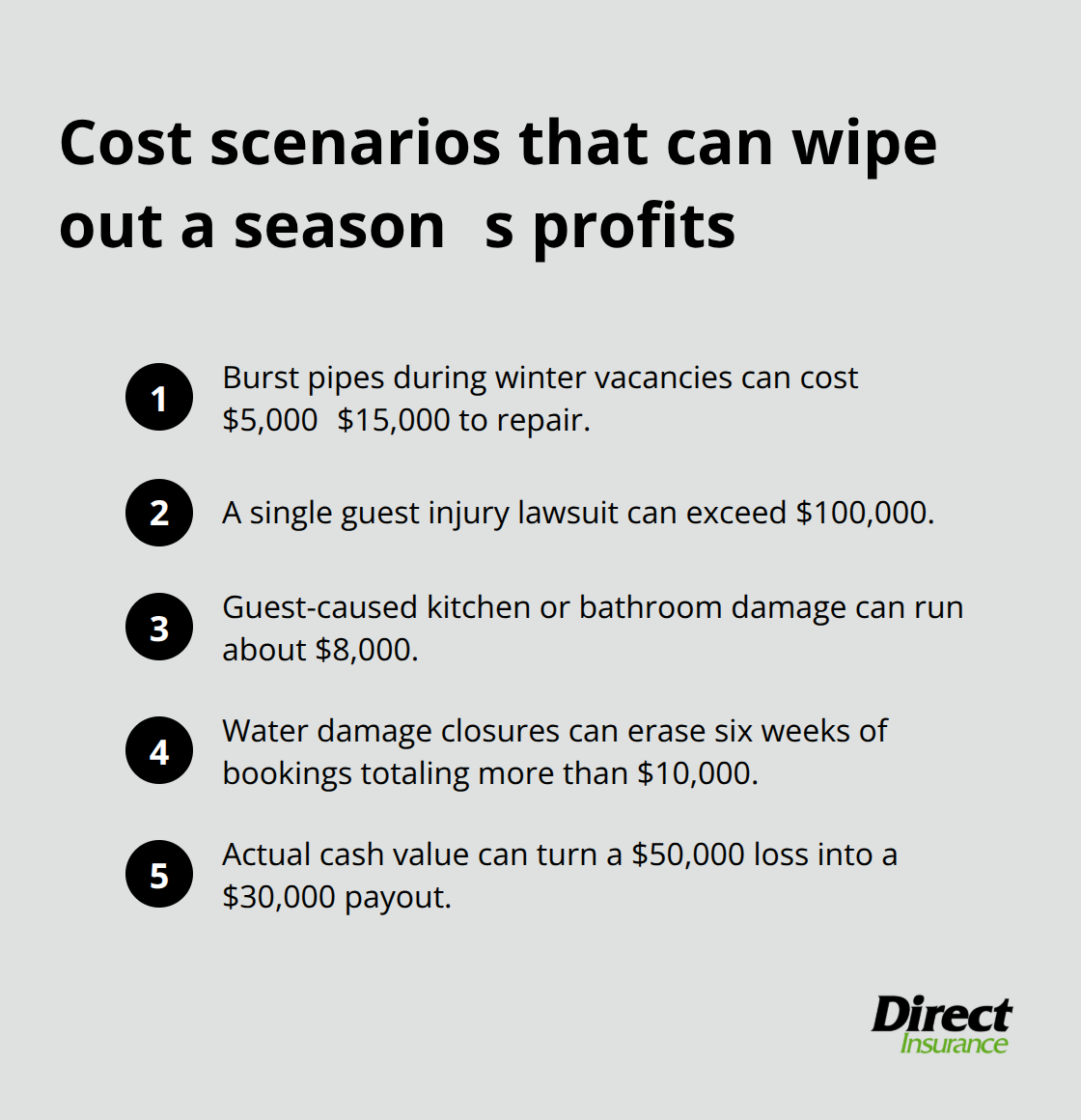
Utah hosts operating without proper vacation rental insurance face full financial liability for guest injuries, property damage, and lost income. The vacancy coverage gaps are equally severe. Standard homeowners policies don’t cover frozen pipes, mold, or water damage that occurs when your property sits empty between bookings. In Utah’s mountain regions like Park City, extended winter vacancies can lead to burst pipes costing $5,000 to $15,000 in repairs, with zero coverage under a homeowners policy.
Guest Liability Exposures Homeowners Insurance Ignores
A guest slips on your deck and breaks their leg. Another guest’s friend is injured at your property. Someone gets sick from food served at your rental. Standard homeowners policies exclude all of these scenarios because they involve paying customers. Commercial general liability coverage starting at $1 million provides the baseline protection you need, and Salt Lake City and Park City require proof of GL coverage to issue rental licenses.
Platform protections from Airbnb and VRBO are secondary at best and frequently exclude property damage claims entirely, leaving you exposed. A single guest injury lawsuit can exceed $100,000 in legal and settlement costs.
Property Damage and Theft Gaps
Guest-caused damage to walls, flooring, furniture, and electronics isn’t covered by homeowners insurance once rental activity begins. If a guest causes $8,000 in damage to your kitchen or bathroom, you absorb the entire cost. Theft and vandalism during vacant periods receive zero coverage under standard policies, yet these incidents happen regularly at vacation rentals.
The financial impact compounds when you factor in lost rental income during repairs and recovery. Your property sits idle while you pay for repairs out of pocket, with no income to offset those expenses. This dual hit-repair costs plus lost bookings-can devastate your annual returns.
Income Loss During Repairs
Water damage events in Park City rentals can lead to six weeks of lost rental income totaling more than $10,000. Standard homeowners policies don’t reimburse you for bookings you miss while your property is being repaired. You lose income while simultaneously paying contractors, which creates a financial squeeze that many hosts don’t anticipate.
Understanding these gaps is the first step toward protecting your investment. The next section covers the specific types of coverage that address each of these exposures and why they matter for Utah vacation rentals.
What Coverage Actually Protects Your Utah Vacation Rental
The Three Essential Coverage Types
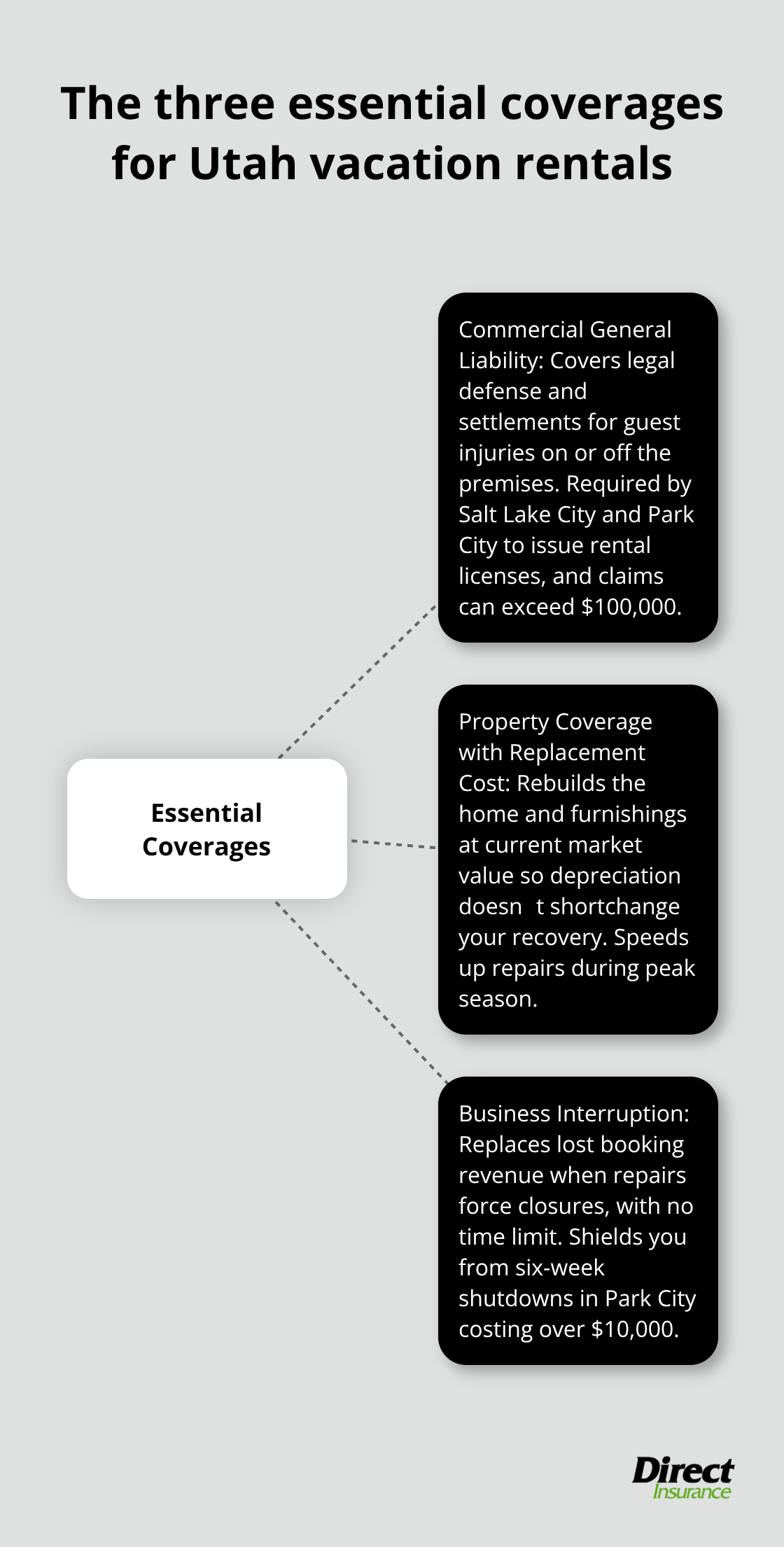
Vacation rental insurance in Utah requires three essential components, and you need all three to avoid the financial disasters outlined earlier. Commercial general liability coverage is non-negotiable, especially since Salt Lake City and Park City require proof of GL coverage to issue rental licenses. This coverage pays legal defense costs and settlements when a guest is injured on your property or sues you for bodily injury, and it applies to incidents both on and off your premises. Without it, you remain personally liable for every dollar of a guest injury claim, which can easily exceed $100,000.
Property damage coverage with replacement cost protection rebuilds your home and furnishings at current market value, not depreciated amounts. This distinction matters enormously when you need to recover fast during peak rental season. Actual cash value policies leave you thousands short because they deduct depreciation, turning a $50,000 loss into a $30,000 payout. Business interruption coverage pays actual lost bookings revenue with no time limit, which protects you when water damage events in Park City keep your property closed for six weeks, costing over $10,000 in lost income alone.
Sizing Your Business Interruption Limit
Calculate your business interruption coverage based on average monthly rental income. If you earn $4,000 monthly, try $16,000 to $20,000 in business interruption coverage to cover a four to five week closure. This approach ensures you can cover both repair costs and ongoing expenses while your property sits idle. Under-sizing this coverage leaves you vulnerable to the exact financial squeeze that many hosts don’t anticipate.
Additional Protections for Utah’s Rental Environment
Liquor liability coverage is essential if you provide alcohol or allow guests to bring it, since standard homeowners policies exclude alcohol-related incidents entirely. Amenities liability protects injuries involving pools, hot tubs, bikes, kayaks, and similar amenities that attract guest activity and liability claims. Pet liability with no breed restrictions covers dog bites and other pet-related injuries, which happen frequently at pet-friendly vacation rentals.
Extended vacancy protection addresses Utah’s seasonal risk-frozen pipes, mold, and water leaks during winter closures cost thousands to repair and receive zero coverage under homeowners policies. Property entrustment coverage guards against theft and vandalism during vacant periods, which occur regularly at vacation rentals. Bed bug and flea protection covers extermination costs and lost revenue from canceled bookings, a growing issue in the vacation rental industry. Squatters protection provides legal support and lost revenue coverage if a guest refuses to leave, addressing longer-term stays that create operational headaches.
Premium Costs and Discount Opportunities
Premiums vary significantly by location and risk profile. Luxury Park City properties exceed $2,500 annually, Salt Lake City properties typically run $800 to $1,500, and flood or wildfire-prone areas push base premiums up 25 to 35 percent. Security systems, smoke detectors, professional management, and rigorous guest screening reduce premiums by 10 to 20 percent, so these investments pay for themselves quickly. The specific features of your property and your operational practices directly influence what you’ll pay for coverage.
Finding the right policy requires comparing multiple carriers and understanding exactly what each one covers. The next section walks you through how to work with local agents and evaluate your options to secure the protection your Utah rental actually needs.
Finding the Right Vacation Rental Insurance for Utah
Work with Local Agents Who Know Utah Properties
Shopping for vacation rental insurance in Utah requires you to move beyond generic online quotes and work directly with agents who understand the specific risks of your property type and location. A Park City luxury home needs vastly different protection than a Salt Lake City condo or a Moab desert property, yet many online comparison tools treat all rentals identically. Local agents understand these distinctions and know which carriers actually cover vacation rentals in your area, saving you hours of phone calls with insurers who won’t quote your property at all.
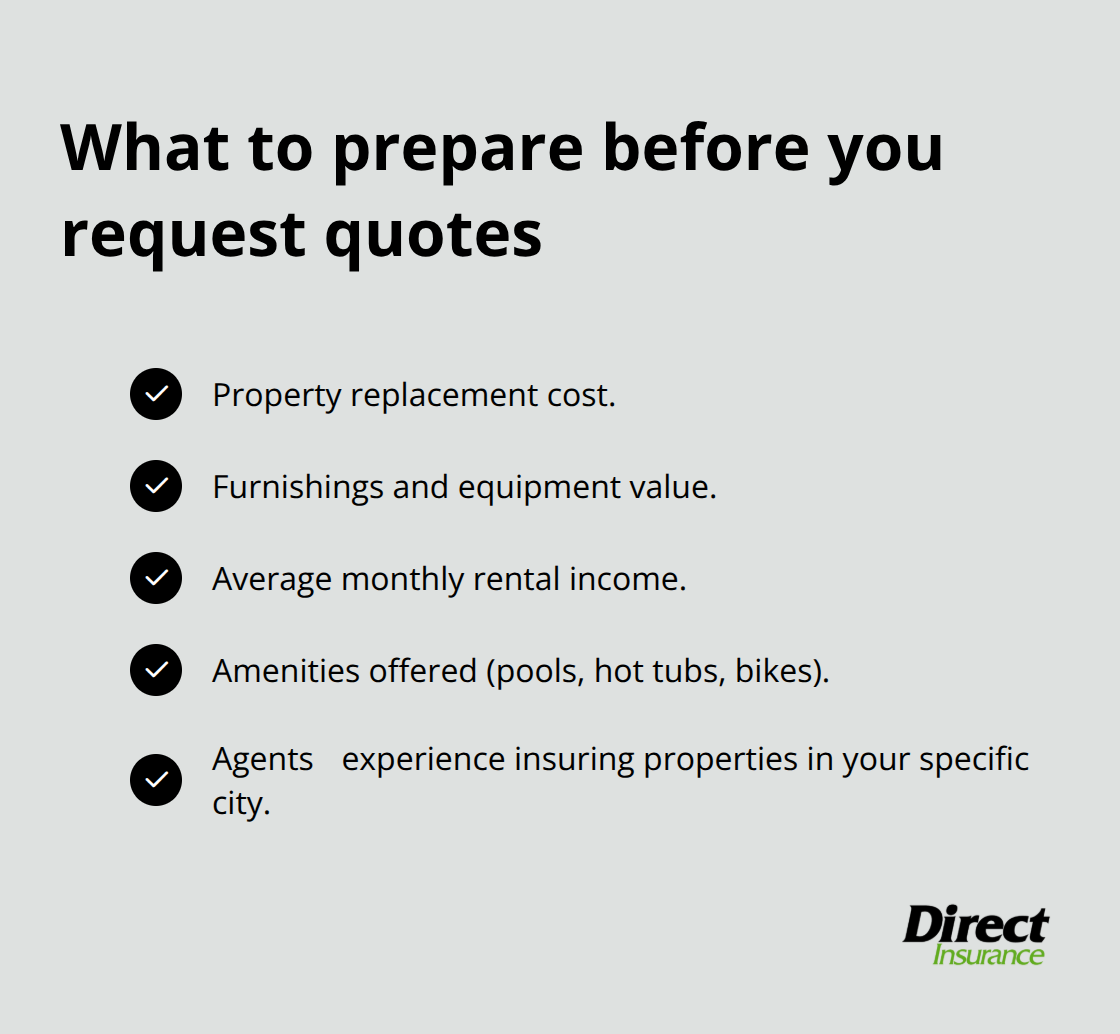
Start by documenting your property’s replacement cost, the value of furnishings and equipment you provide, your average monthly rental income, and which amenities you offer (pools, hot tubs, bikes). This information becomes the foundation for accurate quotes and prevents you from under-insuring or overpaying for coverage you don’t need. When contacting agents, ask specifically whether they’ve written policies for properties in your city, since Salt Lake City enforces different rules than Park City, which enforces different rules than Moab.
Compare Coverage Options Beyond Price
Comparing policies requires you to look beyond price and examine what each carrier actually covers and excludes. Demand replacement cost coverage with no sub-limits on contents, since actual cash value policies will leave you thousands short when replacing furnishings and electronics during peak season. Confirm that business interruption coverage replaces your lost income during repairs.
Ask each carrier whether they cover extended vacancy periods, frozen pipes, and water damage during seasonal closures, since these gaps destroy many rental owners financially. Request the policy exclusions in writing before you commit, then read them carefully for language that excludes guest-caused damage, theft during vacancies, or specific amenities you own. Some carriers exclude coverage if you allow pets, others exclude alcohol-related incidents entirely, and a few exclude certain high-risk areas.
Evaluate Exclusions and Hidden Gaps
The policy that costs $300 less annually might exclude the exact incident that would bankrupt you, making the cheaper option catastrophically expensive. A local agent can explain what each exclusion means for your specific property, helping you avoid these traps. Get quotes from at least three carriers before deciding, since premium variations of 40 to 60 percent are common for identical coverage levels.
Some carriers offer 10 to 20 percent discounts for security systems, professional management, or rigorous guest screening that others don’t recognize. These discounts can shift which policy makes financial sense for your situation. Compare not just the base premium but also what each carrier rewards through their discount structure.
Review and Update Coverage Annually
Once you’ve selected a policy, schedule an annual review to confirm your coverage still matches your property’s value and your rental income, since both can shift significantly year to year. Property values increase, furnishings wear out and get replaced, and your rental income may grow or decline based on market conditions. Your insurance should reflect these changes to keep you properly protected without overpaying for outdated limits.
Final Thoughts
Your Utah vacation rental generates income that standard homeowners insurance won’t protect, and the gaps we’ve outlined-guest liability, property damage, lost income during repairs-happen regularly to rental owners who operate without proper coverage. The financial consequences are severe, and one water damage event or guest injury claim can wipe out your annual returns. Securing vacation rental coverage Utah means taking three concrete steps: document your property’s replacement cost, furnishings value, monthly rental income, and amenities; contact local agents who understand the specific risks of your location, whether that’s Park City’s luxury market, Salt Lake City’s urban regulations, or Moab’s seasonal volatility; and compare policies from multiple carriers, focusing on what each one actually covers rather than just the price tag.
We at Direct Insurance Services have served Utah property owners for decades and understand the unique risks of vacation rentals across the state. Our agents shop multiple top-rated insurance companies to find you the best coverage at competitive rates, and they explain exactly what each policy covers and excludes so you avoid the gaps that destroy rental owners financially. Contact an agent this week with your property details and get quotes from multiple carriers to see how much protection costs for your specific situation.
The difference between under-insured and properly protected often comes down to a single conversation with someone who knows Utah’s rental market. Once you have the right coverage in place, you can focus on growing your rental income without the constant worry that one incident will eliminate your profits.
Disclaimer: The information provided in this blog is for general informational purposes only and does not constitute legal, financial, or insurance advice. Coverage options, terms, and availability may vary. Please consult with a licensed professional for advice specific to your situation

