Small Business Insurance Utah: Smart Coverage On A Budget
Running a small business in Utah means protecting what you’ve built. At Direct Insurance Services, we know that small business insurance in Utah isn’t just a legal requirement-it’s your financial safety net against unexpected disasters.
Most Utah business owners underestimate how quickly a single liability claim or property loss can drain their savings. The right coverage keeps your business standing when things go wrong.
Why Utah Businesses Face Real Insurance Risks
Liability Claims Drain Your Cash Flow Fast
Liability claims hit Utah small businesses harder than many owners expect. A single customer injury lawsuit or property damage claim costs anywhere from tens of thousands to hundreds of thousands of dollars, and your personal assets become targets if your business lacks proper coverage. General liability insurance protects you when someone sues for bodily injury, property damage, or advertising injury-these aren’t rare situations. Construction firms, retail shops, and service providers face daily exposure to customer interactions that can turn costly. Without coverage, you pay legal fees, settlements, and judgments directly from your operating capital or personal savings. Utah courts don’t show leniency to underinsured businesses, and juries award damages based on actual harm, not your company’s financial position.
Property Damage and Interruption Losses Stop Operations Cold
Property damage and business interruption losses are equally devastating but often overlooked. Equipment failures, fire, theft, or weather damage halt operations for weeks or months, killing your cash flow while fixed costs continue. Commercial property insurance covers your buildings, machinery, inventory, and tools-essential for any business with physical assets. Business interruption coverage then reimburses lost income when operations stop due to a covered event, protecting rent payments, wages, and loan obligations during recovery. Utah’s rapidly expanding economy across real estate, technology, and healthcare means more competition and tighter margins, so even a short shutdown can force closure.
State Law and Lender Requirements Mandate Coverage
Utah state law requires workers compensation insurance if you have employees, and most lenders or landlords demand general liability coverage before signing contracts. Skipping these coverages doesn’t save money-it exposes you to catastrophic financial loss that insurance could prevent for a fraction of that cost. The right policies align with what Utah law expects and what your business partners require. Understanding which coverages are mandatory versus recommended helps you build a foundation that protects both your operations and your legal standing. Now that you understand the real risks Utah businesses face, the next step is identifying which specific insurance types address your particular situation.
Four Coverage Types That Protect Utah Businesses
General Liability Insurance Covers Customer Injuries and Damage Claims
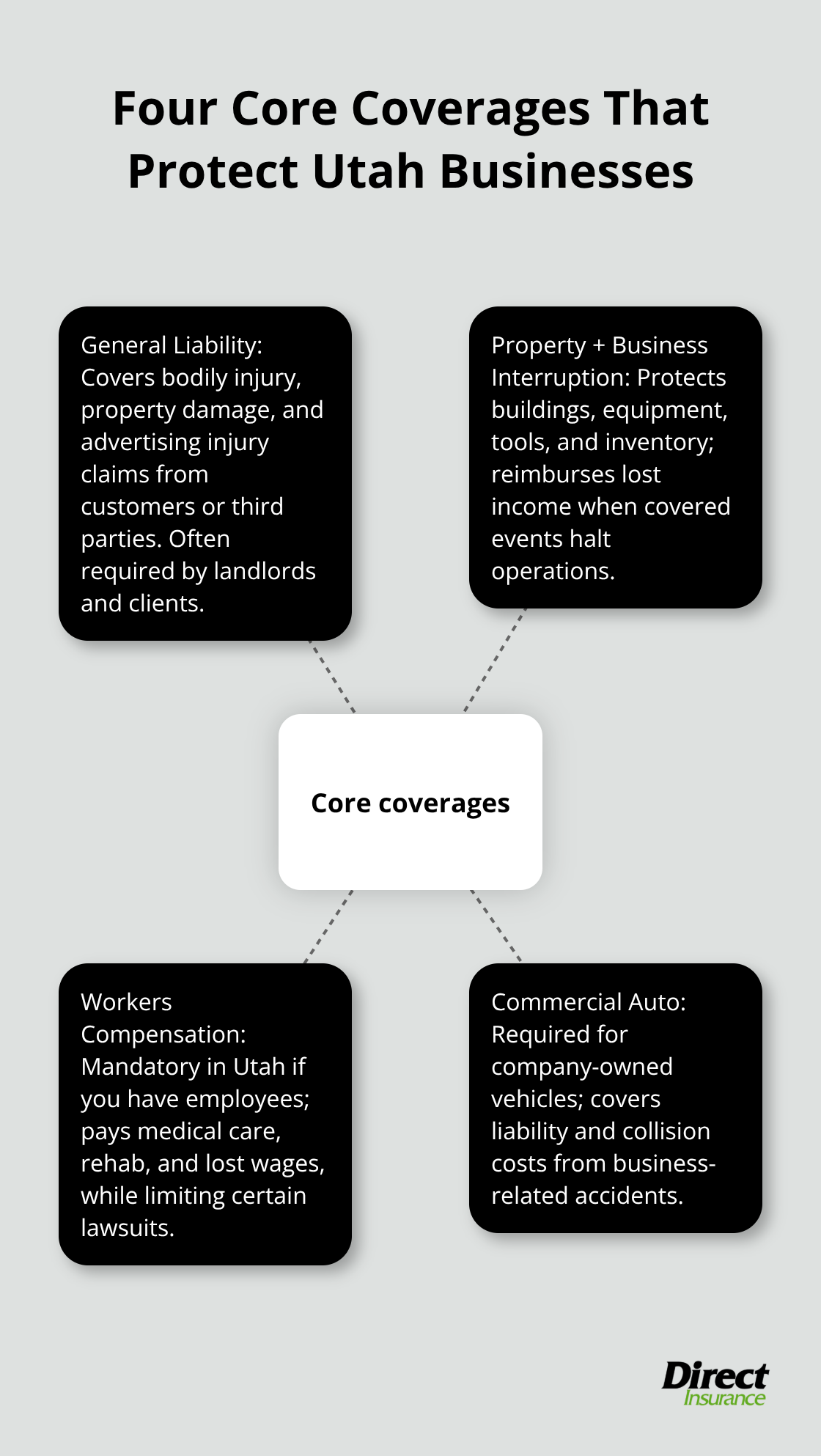
General liability insurance forms your foundation, even though Utah doesn’t legally require it. This coverage protects you when a customer gets injured on your property, your work damages their belongings, or someone claims your advertising harmed their reputation. Construction firms, retail shops, and service providers face daily exposure to these risks, and without coverage, you personally pay legal defense costs and settlements. Landlords and clients almost always demand proof of general liability before signing contracts, so skipping it actually costs you business opportunities.
Property Insurance Protects Your Physical Assets and Operations
Commercial property coverage protects buildings, machinery, tools, and inventory against fire, theft, wind, and lightning damage. Business interruption coverage, often included in these bundles, reimburses lost income when operations halt due to covered events, protecting your rent, wages, and loan payments during recovery. Utah’s expanding economy means tighter margins for most businesses, so even a two-week shutdown from fire or equipment failure can force permanent closure without this protection.
Workers Compensation Covers Employee Injuries and Protects Your Business
Workers compensation insurance is mandatory in Utah if you have employees, with no exceptions or workarounds. This coverage pays medical expenses, rehabilitation, and lost wages when employees suffer work-related injuries or illnesses. It also shields your business from certain lawsuits related to workplace injuries, which is critical protection given how quickly injury claims escalate. This mandatory coverage protects both your team and your bottom line simultaneously.
Commercial Auto Insurance Meets Utah’s Legal Requirements
Commercial auto insurance is required by Utah state law for any company-owned vehicles, protecting your business against liability and collision costs from accidents. If your team uses personal vehicles for work, verify your personal auto policy covers business use, as many standard policies exclude commercial activity. The combination of these four coverages addresses the most common ways Utah businesses face financial disaster, and bundling them typically reduces your total cost compared to purchasing each policy separately. Once you understand which coverages your business needs, the next step is finding affordable rates without sacrificing protection.
Finding the Right Price Without Cutting Coverage
Compare Quotes Across Multiple Providers
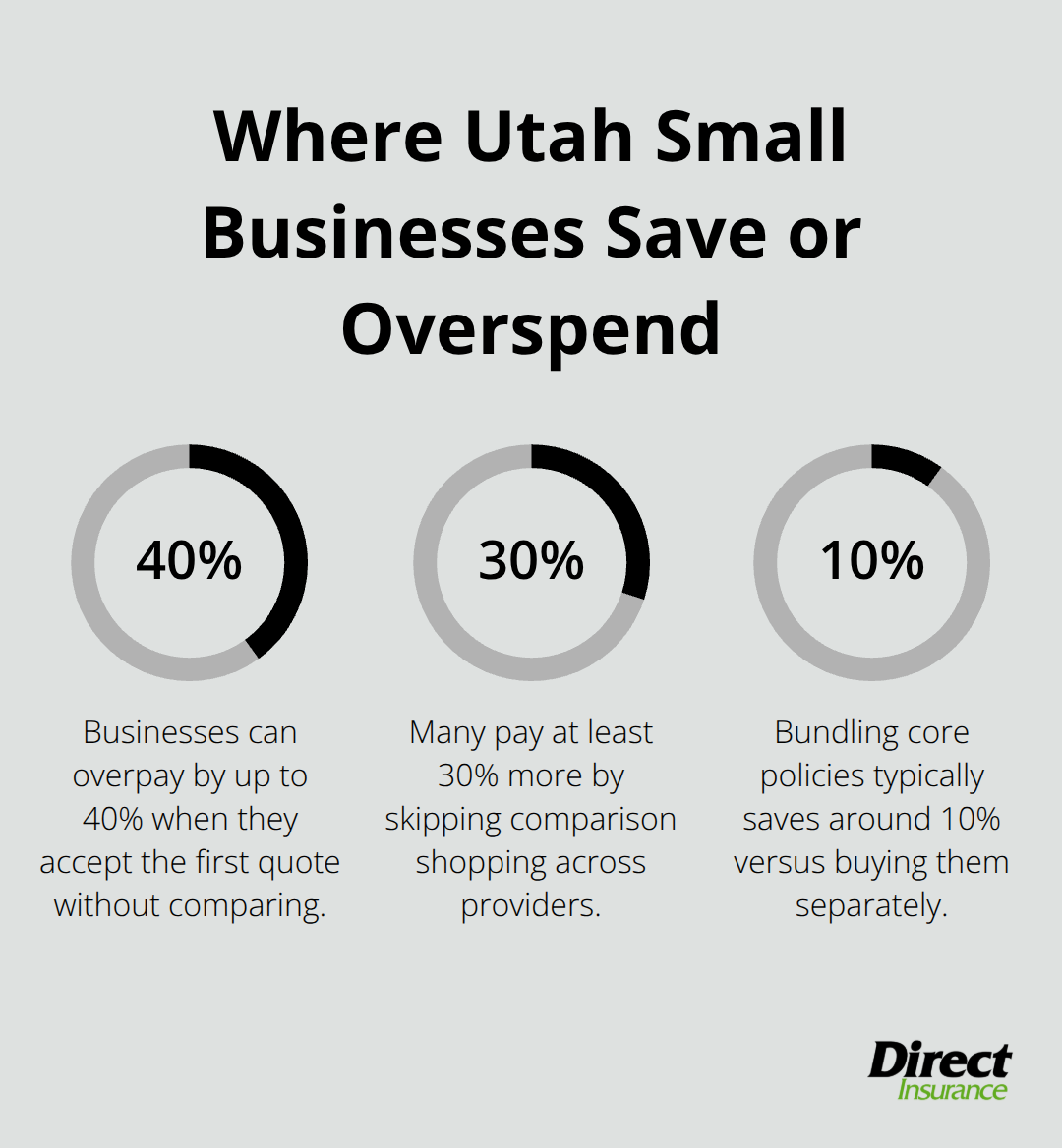
Shopping multiple insurance providers is non-negotiable if you want competitive rates, and most Utah business owners skip this step entirely. You’ll find that businesses often pay 30-40% more than necessary simply because they accepted the first quote. Request quotes from at least three providers and compare identical coverage limits across all quotes, since comparing different deductibles or policy limits makes pricing meaningless.
The Hartford averages $1,687 annually for a Business Owner’s Policy covering small Utah businesses, but your actual cost depends heavily on industry, location, number of employees, and claims history.
Bundle Policies to Lower Your Total Cost
Bundling your general liability, property, and workers compensation into a single Business Owner’s Policy typically saves 10% compared to purchasing each policy separately, according to The Hartford’s pricing data. Some providers offer additional discounts for safety measures like fire suppression systems, security cameras, or employee safety training programs, so ask what loss prevention credits apply to your specific business. Utah contractors, manufacturers, retail shops, and professional offices all face different risk profiles, meaning your quote will reflect your actual exposure rather than generic industry averages.
Review Coverage Limits When Your Business Changes
Annual policy reviews are critical because your coverage needs shift as your business grows. Many Utah small business owners lock in a policy and never revisit it, missing opportunities to adjust coverage limits downward if your asset base shrinks or upward if you expand operations. If you added equipment, hired more employees, opened a second location, or changed your business operations, your current policy likely doesn’t match your actual risk anymore.
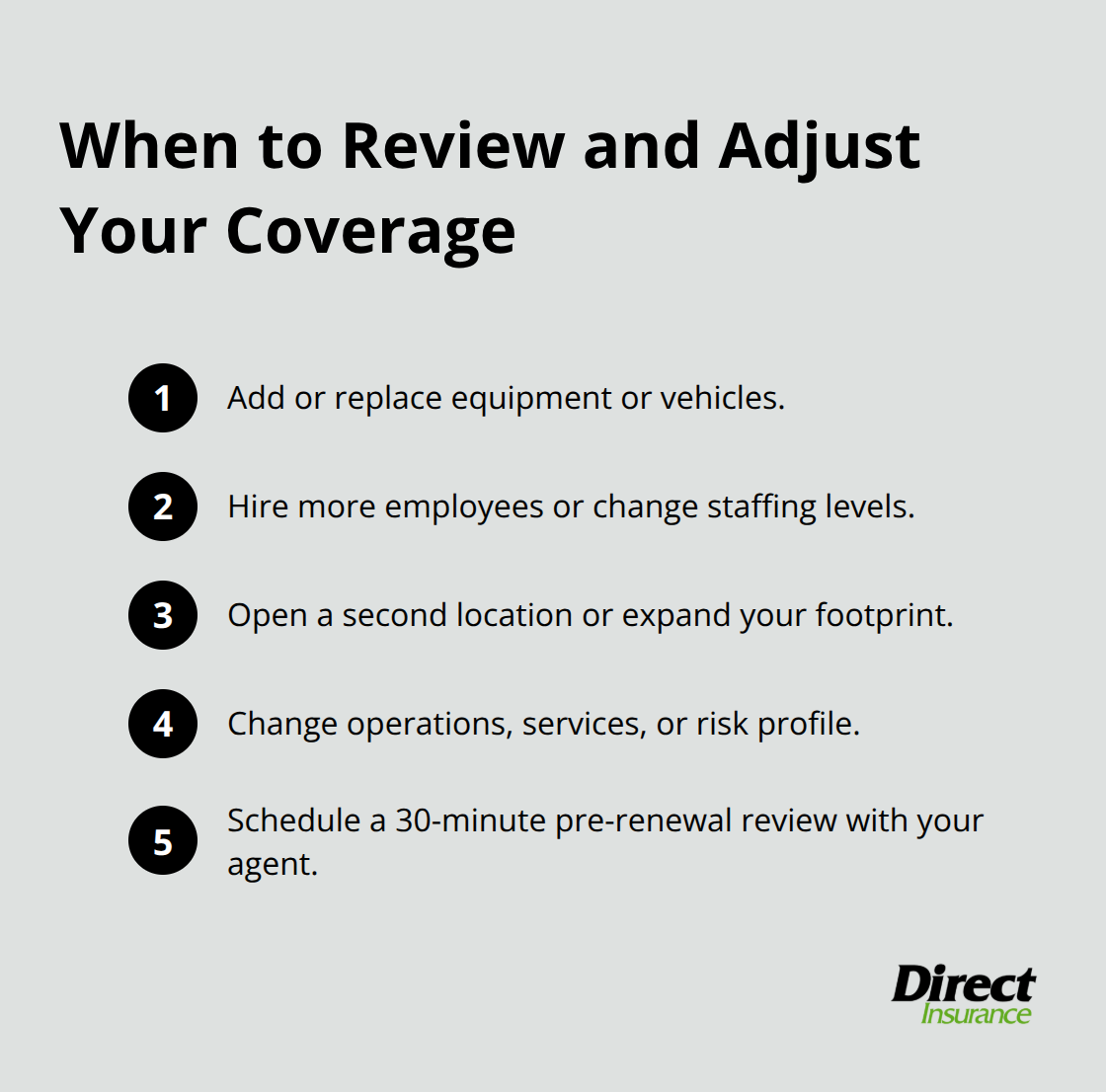
Request a policy review meeting before renewal to discuss whether your current coverage limits still make sense, and be honest about what has changed since you purchased the policy. This conversation typically takes 30 minutes and identifies whether you’re overpaying for coverage you don’t need or underinsured in critical areas.
Work with Local Agents Who Understand Utah Risks
Local independent agents in Utah understand regional risks like seasonal weather patterns and local contractor competition better than national online platforms, making them valuable partners for finding genuinely affordable rates that reflect your specific situation. An independent agency like Direct Insurance Services shops multiple top-rated insurance companies to help you receive the best possible coverage at competitive rates, with locals who understand the unique needs and risks of Utah businesses.
Final Thoughts
Protecting your Utah business starts with understanding that general liability, property, workers compensation, and commercial auto insurance form your foundation. These four policies address the most common ways Utah businesses face financial disaster, and bundling them typically saves 10% compared to purchasing separately. The real cost of being underinsured far exceeds what you’ll pay in premiums, especially when liability claims or property damage can drain your savings in weeks.
Finding affordable small business insurance in Utah requires comparing quotes across multiple providers rather than accepting the first offer. Most Utah business owners overpay by 30-40% simply because they skip this step. Your actual cost depends on your industry, location, number of employees, and claims history, so request quotes from at least three providers with identical coverage limits, then ask about loss prevention discounts for safety measures like fire suppression systems or employee training programs.
Annual policy reviews matter more than most owners realize, as your coverage needs shift when you add equipment, hire employees, or open a second location. A 30-minute conversation with your agent before renewal identifies whether you’re overpaying for unnecessary coverage or underinsured in critical areas. Contact Direct Insurance Services to discuss your specific situation and find small business insurance in Utah that matches both your needs and your budget.
Disclaimer: The information provided in this blog is for general informational purposes only and does not constitute legal, financial, or insurance advice. Coverage options, terms, and availability may vary. Please consult with a licensed professional for advice specific to your situation

