
Dwelling Coverage Tips Utah: Strengthen Your Home Insurance Portfolio
Your home is likely your biggest investment, and dwelling coverage protects the structure itself from damage. Many Utah homeowners underestimate how much coverage they actually need, leaving themselves exposed to significant financial risk.
At Direct Insurance Services, we’ve seen firsthand how the right dwelling coverage tips can make the difference between a manageable claim and a financial crisis. This guide walks you through assessing your coverage needs and optimizing your policy.
Understanding Dwelling Coverage in Utah
What Dwelling Coverage Actually Protects
Dwelling coverage pays to repair or rebuild the structure of your home if a covered peril damages it. The roof, walls, foundation, built-in appliances, and permanently attached systems like HVAC and electrical wiring all fall under this protection. Standard policies exclude flood damage, earthquakes, regular wear and tear, and damage from poor maintenance. In Utah, where wildfire risk in Utah near the Wasatch Front and southern regions is significant, standard dwelling coverage excludes wildfire unless you add it through an endorsement.
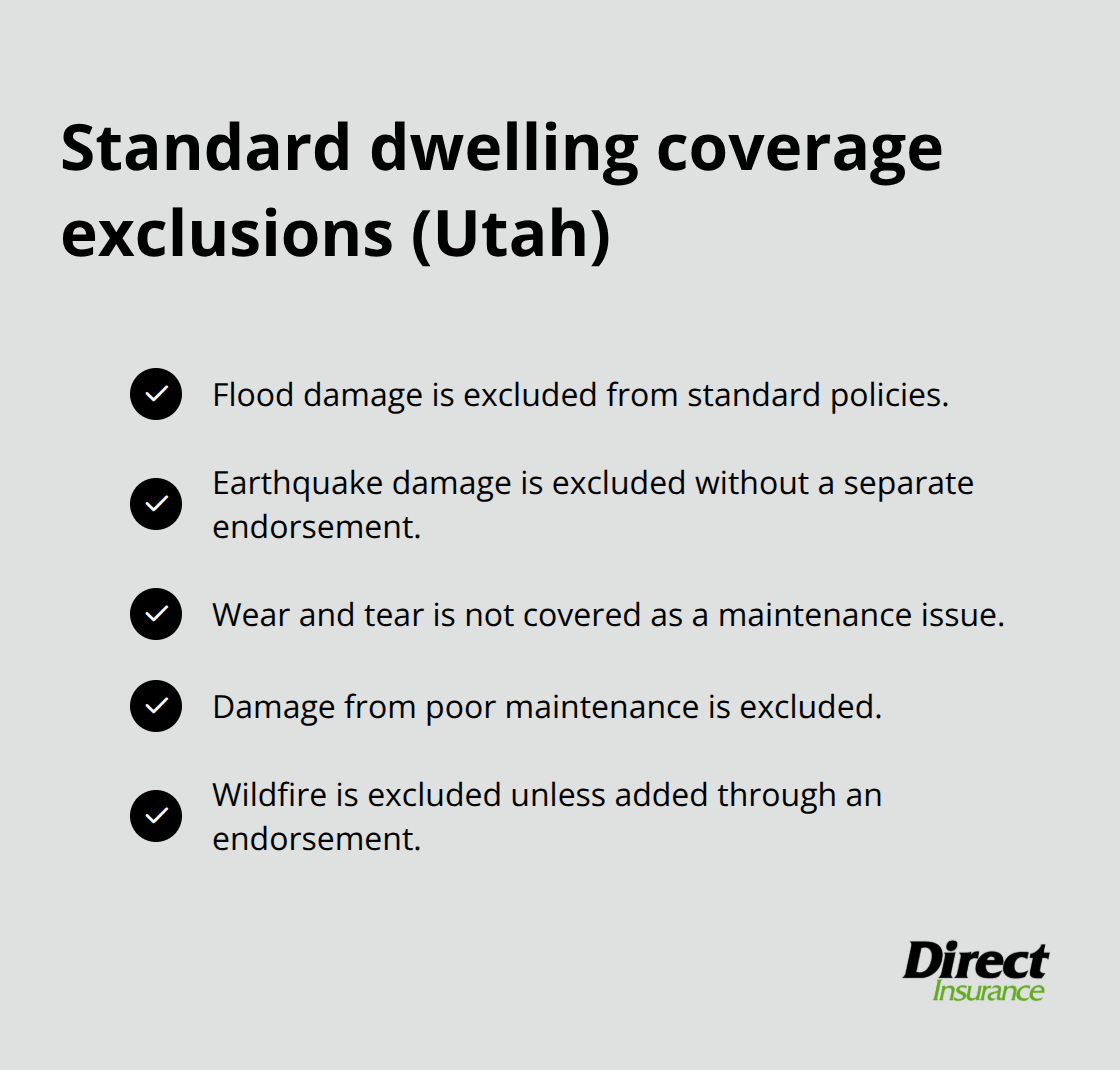
Water damage from burst pipes receives coverage, but gradual leaks or seepage do not. Utah’s freeze-thaw cycles create real pipe-burst risk, especially in older homes, so this distinction matters significantly. Dwelling coverage also does not cover your personal belongings, liability claims, or additional living expenses if your home becomes uninhabitable-though these protections exist within your overall homeowners policy.
Utah’s Natural Hazards Demand Robust Dwelling Protection
Utah homeowners face distinct risks that make adequate dwelling coverage non-negotiable. Salt Lake City averages 60 inches of snow annually, while parts of the Wasatch Range receive up to 500 inches, creating extreme roof-load exposure. Heavy snow combined with freeze-thaw cycles significantly increases the risk of roof damage and ice dam leaks, so your dwelling coverage must account for roof repair or replacement costs in high-snow zones.
Wildfire risk is substantial in many Utah counties due to dry conditions and proximity to federal lands. Wind damage from spring storms and summer monsoons can destroy roofing and siding. Flash flooding affects basements and lower levels, particularly in southern and eastern Utah during monsoon season. Your dwelling coverage limit should reflect current replacement costs, not your home’s purchase price or market value. With Utah’s median household income around $93,400 and rapid property value growth in areas like St. George, homes often cost significantly more to rebuild than what owners initially paid.
How Dwelling Coverage Stands Apart from Other Protections
Dwelling coverage protects only the structure and permanently attached components of your home. Personal property coverage, by contrast, protects your belongings inside the home-furniture, electronics, and clothing-up to a specified limit. Many Utah homeowners mistakenly assume their dwelling coverage extends to their possessions and face shock when a fire or theft claim reveals significant gaps.
Liability coverage protects you if someone is injured on your property or if you accidentally damage someone else’s property, but it does nothing for your home’s physical structure. If a guest slips on your icy driveway in winter and sues you, liability covers their medical costs and legal fees, not repairs to your home. Additional living expenses coverage pays for temporary housing, meals, and other costs if a covered loss makes your home unlivable, which is separate from dwelling coverage itself.
These distinctions prevent underinsurance and claim denials. For high-value Utah homes, working with a local agent who understands regional risks and can tailor your coverage appropriately proves far more effective than relying on generic online quotes or minimum lender requirements. Your next step involves evaluating what your home actually costs to replace-a critical assessment that shapes your entire coverage strategy.
What Your Home Actually Costs to Rebuild
Replacement Cost Is the Only Number That Matters
Replacement cost determines your dwelling coverage limit in Utah, and it almost never matches your home’s purchase price or market value. The National Association of Insurance Commissioners emphasizes that dwelling limits must reflect the estimated cost to rebuild your structure from the ground up using current materials and labor rates, not what you paid for the property five years ago or what a realtor says it’s worth today. Utah’s construction market has shifted dramatically, with St. George among the fastest-growing areas in the 2000s and the Wasatch Front continuing to see rapid property value increases that outpace inflation. Your home’s rebuild cost likely exceeds its purchase price, especially if you bought before 2020.
Many Utah homeowners set dwelling coverage equal to their mortgage balance or recent appraisal value, which guarantees underinsurance. If your home cost $450,000 to purchase but would cost $520,000 to rebuild after accounting for current material prices, labor shortages, and code upgrades required in Utah counties, a $450,000 dwelling limit leaves you $70,000 short. You pay the difference out of pocket.
How to Calculate Your True Replacement Cost
The Insurance Information Institute recommends using your insurer’s replacement-cost calculator or hiring a professional appraisal to establish an accurate baseline. Some insurers in Utah offer guaranteed replacement cost or extended replacement cost endorsements that automatically adjust your limit to cover inflation in construction costs, which directly addresses the reality that rebuild expenses rise faster than general inflation.
Actual cash value creates a financial trap. This approach subtracts depreciation from replacement cost, meaning a 15-year-old roof worth $12,000 to replace might only receive $4,000 in a claim because the insurer deems it depreciated. In Utah’s harsh climate with heavy snow loads and freeze-thaw cycles, roofs deteriorate faster than national averages suggest, making actual cash value settlements inadequate for real repairs.
Utah-Specific Factors That Inflate Rebuild Costs
Utah’s specific hazards demand that you inflate your replacement-cost estimate beyond generic calculators. Salt Lake City’s 60 inches of annual snow and the Wasatch Range’s extreme snow accumulation mean roof construction and reinforcement costs run higher than homes in moderate climates. Homes in wildfire-prone areas near the Wasatch Front or southern Utah may require fire-resistant roofing materials, which cost more than standard asphalt shingles. Basements and lower levels in flood-prone zones during monsoon season need upgraded waterproofing, sump pump systems, and foundation work that standard replacement-cost estimates often undervalue.
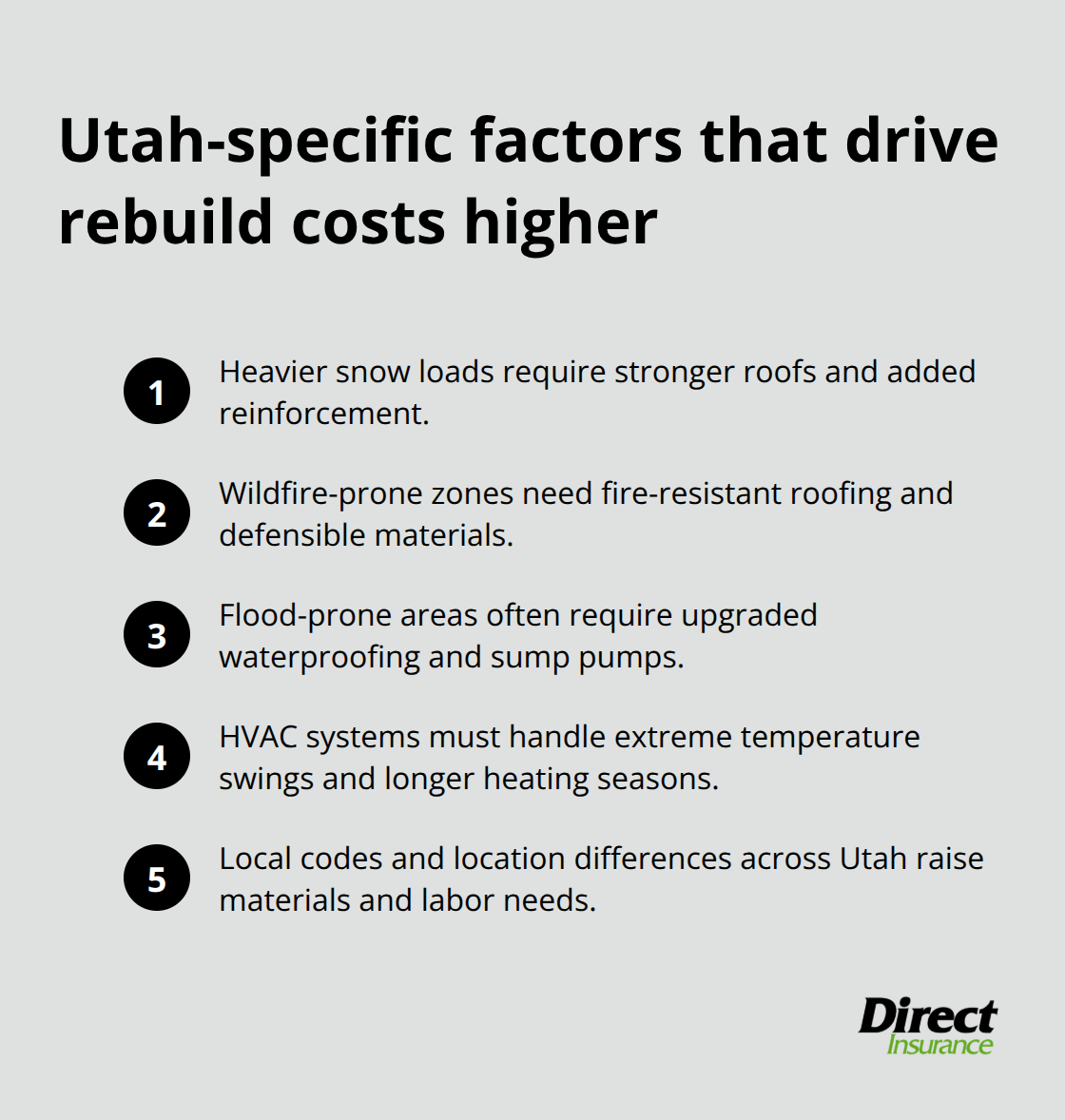
Electrical and HVAC systems in Utah homes endure brutal temperature swings, with records reaching 118°F and dropping to minus 69°F, meaning systems sized for these extremes cost more to install than in temperate regions. Winter temperature inversions create extended heating seasons that wear HVAC equipment faster. When you request a replacement-cost estimate, specify your exact location and ask the appraiser to account for Utah-specific building requirements and climate resilience upgrades. A home in Park City faces different rebuild costs than one in St. George, and a property near the Wasatch Front wildland-urban interface carries different risk factors than a suburban Salt Lake City residence.
Document Your Home’s Current Condition and Improvements
Document your home’s current condition with timestamped photos of the roof, foundation, electrical panel, HVAC system, and any recent upgrades. This documentation becomes essential if you need to dispute a low replacement-cost estimate or file a claim. The National Association of Insurance Commissioners advises maintaining a detailed home inventory with receipts and serial numbers for major systems and appliances, updated annually as you make improvements. That furnace replacement in 2019, the roof work in 2021, the electrical panel upgrade in 2023-these all increase your home’s rebuild cost and should be reflected in your dwelling coverage limit.
Keep Your Coverage Current as Utah’s Market Shifts
Schedule a policy review with your agent annually and immediately after any major renovation or system upgrade. Utah’s rapid growth means property values and construction costs shift faster than in stable markets, so waiting two or three years between reviews virtually guarantees your coverage falls behind actual rebuild requirements. Your dwelling limit must track these changes, or you face the same underinsurance trap that catches so many Utah homeowners off guard. With accurate replacement-cost figures in hand, you can now evaluate whether your current coverage strategy actually protects your investment or leaves dangerous gaps.
Shopping for Better Rates Without Sacrificing Coverage
Compare Quotes from Multiple Insurers
Getting competitive rates on dwelling coverage requires quotes from at least three carriers because rates vary dramatically between insurers for identical coverage in Utah. One insurer might charge $1,400 annually for a $520,000 dwelling limit while another charges $1,650 for the same protection-a difference of $250 per year or $2,500 over a decade. The variation stems from how each company weighs Utah-specific risks like wildfire exposure, snow load, and proximity to the Wasatch Front. An insurer comfortable with properties in Park City might price aggressively there but charge higher premiums in St. George, where growth and wildfire risk create different underwriting concerns.
Request quotes using your actual replacement-cost figure, not an estimate, because insurers calculate premiums based on the dwelling limit you choose. The Zebra allows you to compare homeowners insurance quotes side-by-side from multiple companies at once, likely saving you time and money. Ask each insurer what discounts apply to your property based on its age, condition, and location. An insurer offering 10 percent off for a monitored security system might not offer any discount for a new roof, so savings opportunities differ by company.
Evaluate Bundle Discounts Strategically
Bundling home and auto insurance with the same carrier typically generates savings between 10 and 25 percent according to the National Association of Insurance Commissioners, but only if that carrier’s base rates remain competitive. A 15 percent bundle discount on a high-base-rate policy still costs more than a standalone home policy from a carrier with lower underlying rates. Calculate the total cost of bundled and separate policies before deciding which approach saves money for your situation.
Safety features like monitored security systems, smoke detectors, or burglar alarms reduce claim frequency and often qualify for discounts. Newer roofs or electrical systems lower damage risk and may earn additional savings. Compare what each insurer rewards to identify which company offers the best incentives for your home’s specific features.
Adjust Coverage Annually to Track Rising Costs
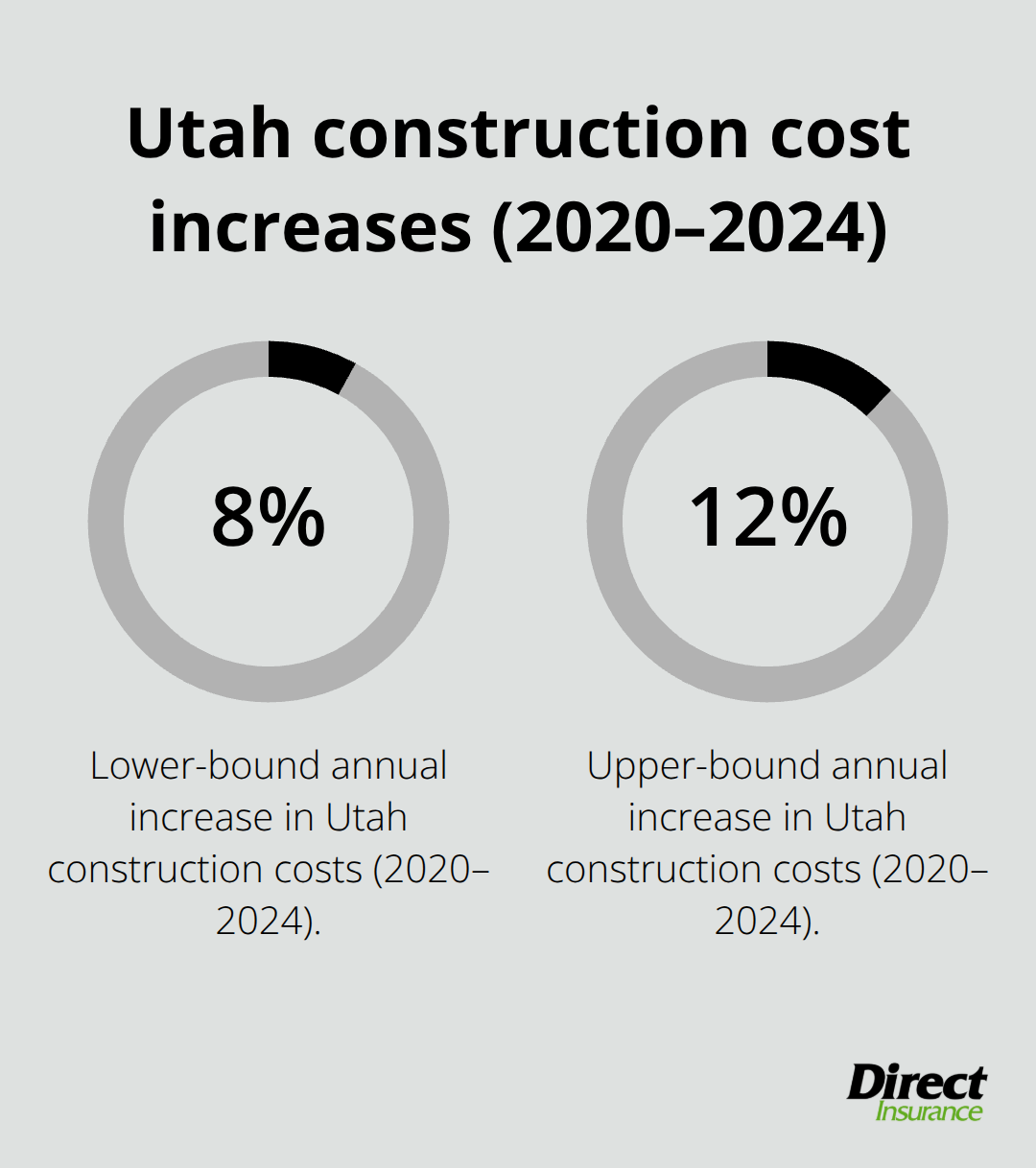
Set a calendar reminder each year on your policy renewal date to request an updated replacement-cost estimate from your agent and compare it to your current dwelling limit. Utah’s construction costs rose approximately 8 to 12 percent annually from 2020 through 2024 according to regional building data, meaning a $500,000 estimate from three years ago now requires $580,000 to $630,000 in coverage depending on material and labor inflation in your specific area.
Many policies include inflation-guard endorsements that automatically increase your dwelling limit by 3 to 4 percent each year, but that percentage often lags actual construction cost increases in Utah’s hot real estate markets. Review that endorsement annually and ask your agent if the automatic increase matches your local rebuild cost trends. Major home improvements like a new roof, upgraded electrical system, or foundation work increase your replacement cost and require immediate coverage adjustments, not waiting until annual renewal. Document the expense and completion date, then contact your agent within 30 days to update your dwelling limit.
Choose Your Deductible Based on Financial Capacity
Adjust your deductible strategically when reviewing coverage. A higher deductible reduces premiums but increases your out-of-pocket cost after a claim, so choose the deductible amount you can actually afford to pay without financial strain. Moving from a $500 deductible to $1,000 might save $200 annually, but only make that move if you have $1,000 immediately available after a loss.
Your dwelling coverage strategy succeeds only when your limits, deductibles, and endorsements align with both your home’s actual rebuild requirements and your financial capacity to handle claims. Skipping annual reviews leaves you with a gap between your coverage and your home’s actual rebuild value.
Final Thoughts
Your dwelling coverage strategy succeeds when your limits match your home’s actual replacement cost, your deductibles align with your financial capacity, and your endorsements address Utah-specific risks. Dwelling coverage tips for Utah homeowners center on three core actions: calculate replacement cost accurately using current market rates, review your policy annually to track rising construction expenses, and add endorsements for wildfire, water backup, or other regional hazards your standard policy excludes. Utah’s rapid growth, extreme weather, and diverse geography mean your coverage needs differ from homeowners in other states, so a property near the Wasatch Front faces different wildfire exposure than one in St. George.
Your dwelling limit must reflect these realities, not generic online calculators or outdated appraisals. A local Utah agent transforms your coverage from a generic policy into a tailored strategy by identifying coverage gaps you’d miss alone and knowing which insurers price aggressively in your specific location. They handle the administrative work of updating your coverage when you complete renovations or when construction costs shift, saving you time and protecting your investment.
Your next step is straightforward: contact a local agent to request an updated replacement-cost estimate and compare it to your current dwelling limit. If you haven’t reviewed your policy in over a year, schedule that review immediately, and if you’ve completed major renovations or improvements, update your coverage within 30 days. Visit Direct Insurance Services to connect with an agent who understands Utah’s specific risks and can strengthen your home insurance portfolio.
Disclaimer: The information provided in this blog is for general informational purposes only and does not constitute legal, financial, or insurance advice. Coverage options, terms, and availability may vary. Please consult with a licensed professional for advice specific to your situation

