
Utah Landlord Insurance Options: Finding Coverage That Works
Owning rental property in Utah comes with real financial exposure. Tenant injuries, property damage, and lost rental income can drain your savings fast.
At Direct Insurance Services, we’ve helped countless Utah landlords navigate their insurance options and build protection plans that actually match their properties and tenants. The right coverage makes the difference between a manageable setback and a financial crisis.
What Landlord Insurance Actually Covers
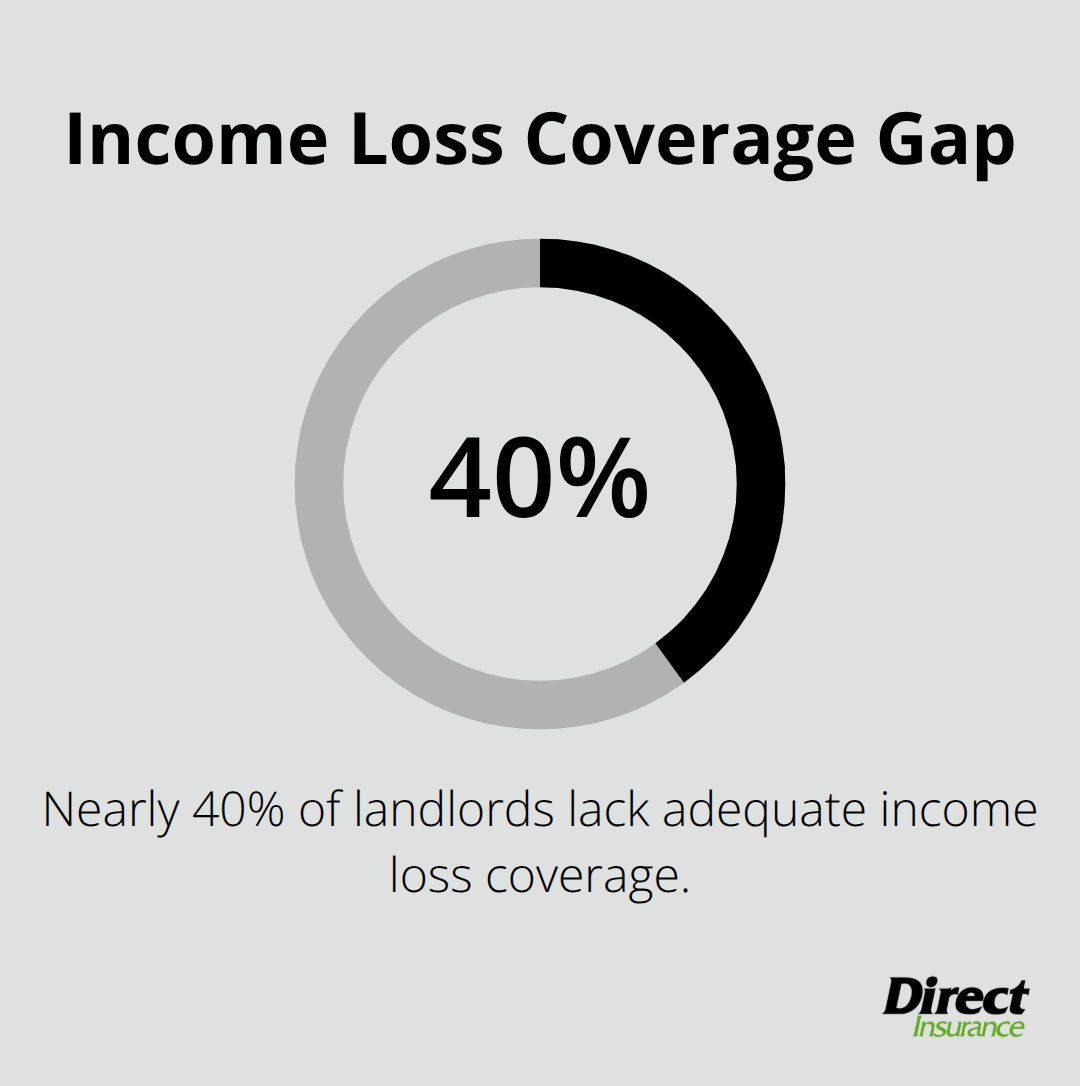
Property damage, liability claims, and income loss represent the three pillars of landlord insurance protection. Understanding exactly what each covers matters because gaps in these areas can cost you thousands. Dwelling fire insurance protects your building structure against fire, wind, hail, and theft, but it won’t cover maintenance failures or tenant-caused damage. If a tenant’s guest slips on your stairs and sues, liability coverage steps in to handle medical bills and legal costs up to your policy limits. Loss of rents coverage replaces your monthly income when a covered event makes the property uninhabitable, which matters enormously in Utah’s rental market where median rents range from $1,400 to $1,800 monthly depending on location. The National Association of Insurance Commissioners reports that nearly 40 percent of landlords lack adequate coverage for income loss, leaving them vulnerable when tenants can’t occupy the property.
Why Standard Homeowners Policies Fall Short
Your personal homeowners policy won’t cover rental properties. Insurance companies specifically exclude rental income and liability from guest injuries at rental units. If you rent out even one unit in a multi-family building, your homeowners policy becomes invalid the moment you receive rent payment. This gap forces landlords to purchase separate landlord policies, which cost between $800 and $1,500 annually depending on property value and location in Utah.
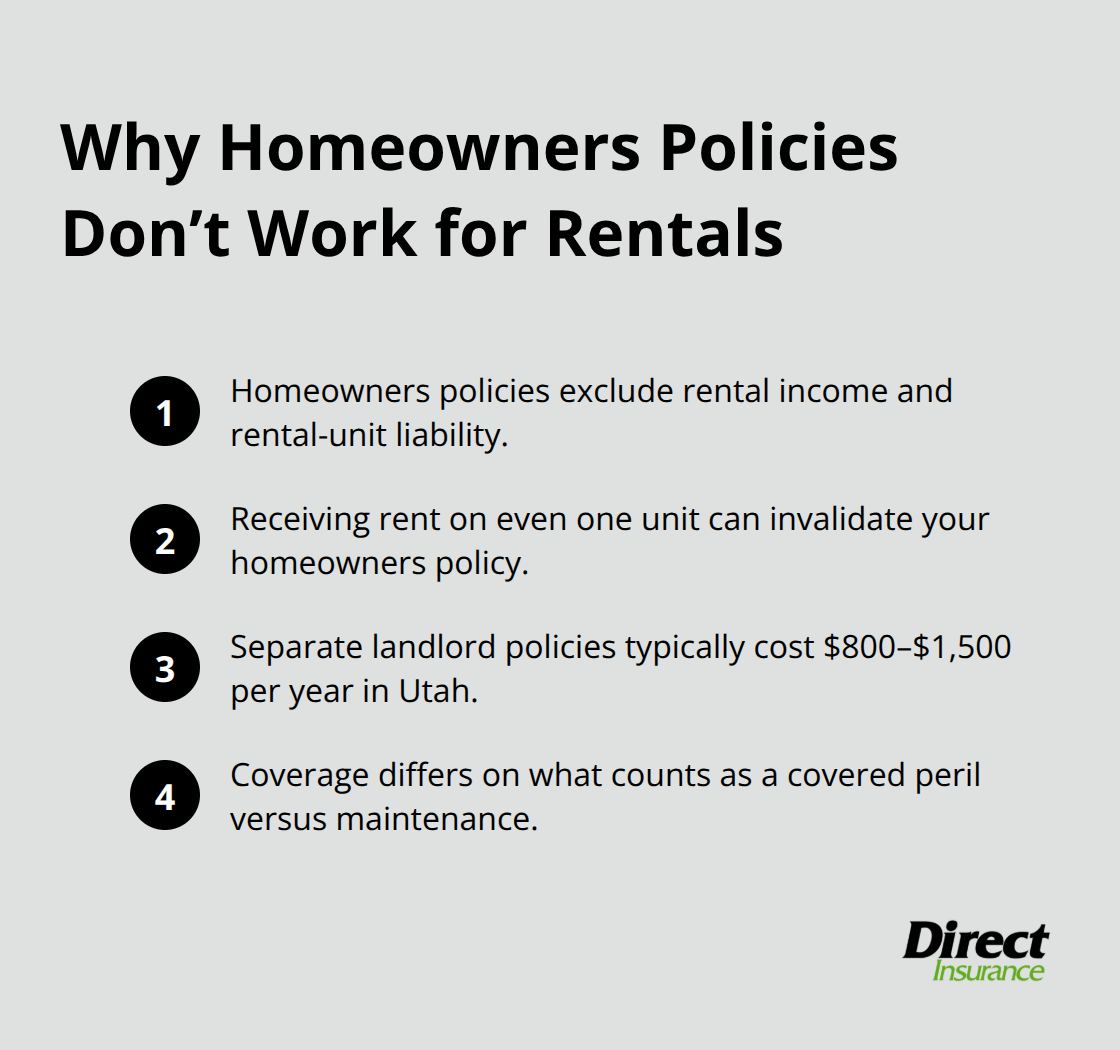
Policies also vary significantly on what they consider a covered peril versus maintenance responsibility, so a roof leak from poor maintenance stays your obligation while a sudden hail-caused leak gets covered.
Structuring Coverage Limits That Match Your Property
Most Utah landlords underestimate their replacement costs. Your dwelling coverage should match what it actually costs to rebuild your structure today, not what you paid for the property five years ago. Construction costs in Utah have risen approximately 7 to 9 percent annually over the past three years according to the Associated General Contractors of America. Liability limits typically start at $300,000, but try $500,000 to $1,000,000 for multi-unit properties or properties in high-density areas. Loss of rents coverage should equal at least three to six months of your rental income so you can cover your mortgage, taxes, and maintenance costs while the property sits vacant after a covered loss.
Identifying Your Specific Risk Profile
Utah landlords face different exposure levels based on property type and tenant composition. A single-family home with long-term tenants carries less risk than a multi-unit complex with frequent turnover. Your location within Utah also matters significantly-properties in Salt Lake City face different weather patterns and liability risks than those in rural areas. Once you understand your specific risk profile, you can select coverage limits that protect your actual exposure without overpaying for unnecessary protection. This assessment becomes the foundation for the next critical decision: choosing the right deductible levels and additional endorsements that fill gaps in standard policies.
Choosing the Right Coverage for Your Utah Rental Property
How Location Shapes Your Insurance Needs
Location determines your insurance needs far more than most landlords acknowledge. A property in Salt Lake City’s downtown corridor faces different weather exposure and liability risks than a house in Cache Valley or southern Utah’s rural areas. Salt Lake City averages 60 inches of snow annually, creating roof damage and water intrusion risks that directly affect your premium and coverage requirements. Properties near highways or in densely populated neighborhoods carry higher liability exposure from guest injuries, which justifies higher liability limits. Rural properties might face wildfire risk depending on proximity to forested areas-an exposure that standard policies often exclude or heavily restrict.
Your property’s exact address and surrounding environment determine which perils matter most and which coverage limits you genuinely need. Landlords who accurately map their specific location’s weather patterns, traffic density, and neighborhood characteristics end up with policies that actually protect them rather than policies built around generic assumptions. Spending 30 minutes with a local agent reviewing your property’s specific location-based risks prevents expensive gaps later.
Understanding How Tenant Profile Affects Your Costs
Tenant turnover and occupancy type directly impact your insurance cost and available coverage options. A single-family rental with stable, long-term tenants qualifies for lower premiums because insurers view this as lower risk than a multi-unit building with frequent tenant changes. Properties occupied by college students or seasonal tenants face higher damage claims statistically, which increases your premium by 15 to 25 percent depending on the insurer.
Properties rented to multiple unrelated individuals typically cost more to insure because they carry elevated risk for accidental damage and liability claims. Your deductible choice matters tremendously here-landlords with reliable tenants can comfortably handle $2,500 or $5,000 deductibles and pocket the premium savings, while properties with high turnover benefit from lower $1,000 deductibles despite higher annual costs. Loss of rents coverage becomes non-negotiable if you depend on rental income to cover your mortgage, and your deductible selection there should reflect how quickly you can absorb income loss without financial strain.
Matching Deductibles to Your Financial Situation
Most Utah landlords underestimate how their tenant profile affects both pricing and the specific endorsements they need to add protection for tenant-caused damage or negligence. Your deductible represents the amount you pay out of pocket before insurance kicks in, and this choice should align with your cash reserves and risk tolerance. Higher deductibles lower your annual premium but require you to cover more costs when a claim occurs. Lower deductibles cost more annually but reduce your immediate financial burden when damage happens. The right deductible balances your monthly budget constraints against your ability to handle unexpected expenses without jeopardizing your property’s maintenance or your personal finances.
What Your Landlord Policy Actually Leaves Uncovered
Standard landlord policies contain hard exclusions that catch most Utah landlords off guard when they file claims. Weather-related damage tops the list of surprises-hail damage to your roof receives coverage, but gradual water damage from poor maintenance does not. If snow accumulation causes your roof to collapse, most policies cover that loss. If snow repeatedly melts and refreezes, creating ice dams that leak into walls, that becomes your responsibility as a property owner who failed to maintain adequate drainage. Utah’s dry climate creates another gap: wildfire damage remains excluded or heavily restricted in many standard policies, particularly for properties within high-risk zones. The Insurance Information Institute reports that wildfire claims have increased 144 percent nationally over the past decade, yet coverage remains limited in high-risk zones.
Maintenance Failures and Gradual Damage
Maintenance failures represent the biggest gap in landlord coverage, and insurance companies draw a strict line between sudden damage and gradual deterioration. A pipe bursts suddenly from freezing temperatures-covered. A pipe leaks slowly for months because you ignored maintenance-not covered. This distinction matters enormously in Utah’s freeze-thaw cycles, where temperature swings between 30 and 50 degrees Fahrenheit create repeated stress on plumbing systems. Most landlords discover this gap only after water damage spreads through multiple units, at which point the claim denial arrives too late to prevent losses.
Tenant-Caused Damage and Negligence
Tenant-caused damage or negligence creates the third major coverage hole that catches landlords completely unprepared. Your standard policy will not cover damage your tenant deliberately or carelessly inflicts on the property, whether that means punching holes in walls, breaking windows, or damaging appliances through misuse. The distinction between normal wear-and-tear and tenant negligence matters legally, but your standard policy sidesteps the entire question by excluding tenant damage outright. Properties with frequent tenant turnover face the highest exposure here, since higher occupant turnover correlates with increased damage claims.
Addressing Coverage Gaps with Specific Endorsements
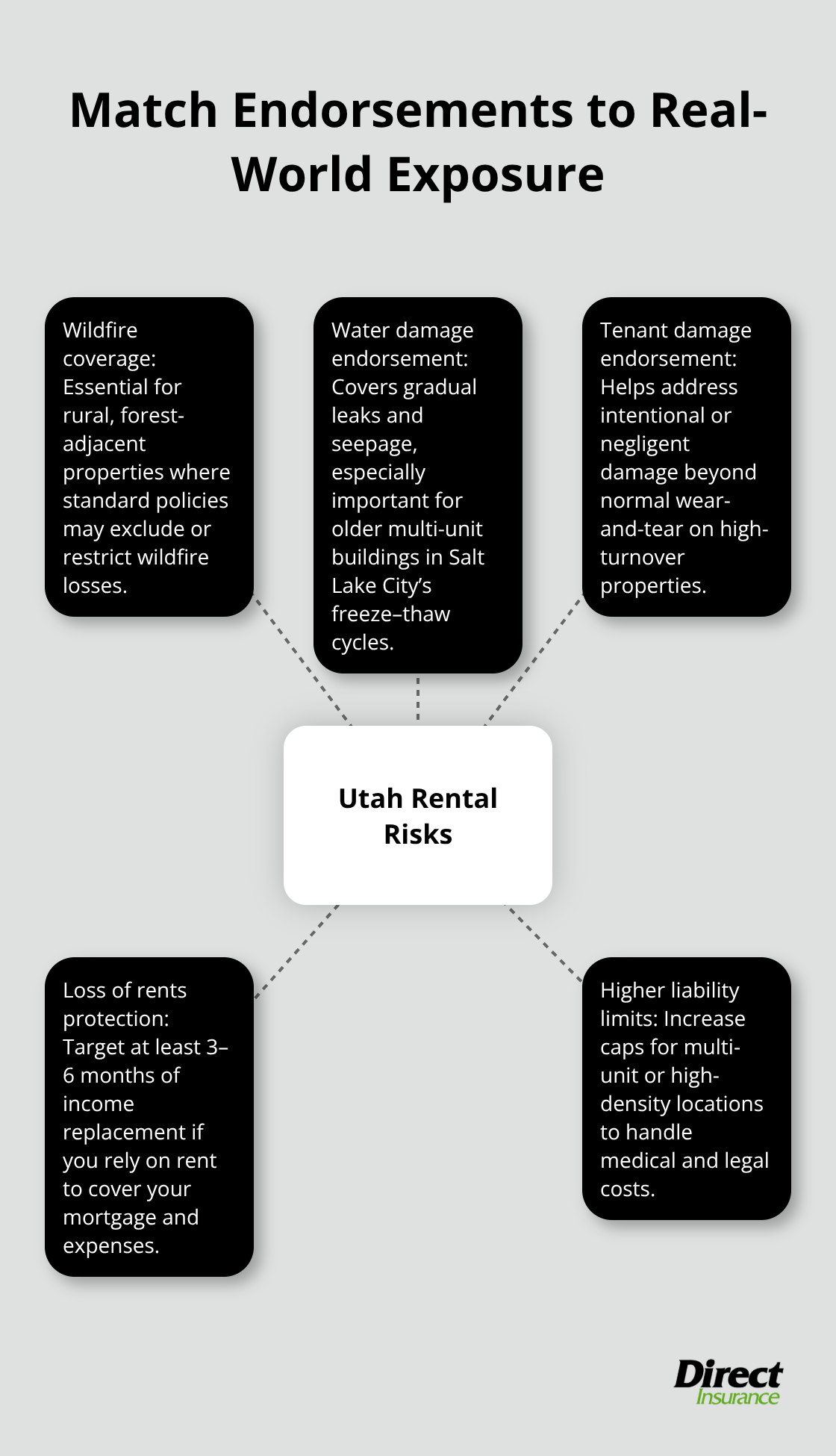
Addressing these gaps requires specific endorsements and riders that most landlords never add to their base policies. Replacement cost endorsements for tenant damage typically cost $200 to $400 annually and cover intentional or negligent destruction beyond normal wear-and-tear, though you still pay your deductible. Water damage endorsements specifically cover gradual leaks and seepage, protecting against the slow deterioration that catches properties in Utah’s freeze-thaw cycles. Wildfire exclusion removal costs more in high-risk areas-sometimes 25 to 40 percent premium increases-but becomes non-negotiable if your property sits near forested zones.
Matching Endorsements to Your Property’s Actual Exposure
A rural property near forests needs wildfire coverage; an older multi-unit building in Salt Lake City needs water damage protection; a property with frequent tenant turnover needs tenant damage coverage. Mapping your actual exposure against standard policy exclusions takes an hour of focused review, yet most landlords skip this step entirely and discover gaps only after filing a claim. The locals at Direct Insurance Services understand Utah’s specific weather patterns and rental market conditions, which helps identify which endorsements matter most for your individual property rather than adding blanket coverage that inflates costs unnecessarily.
Final Thoughts
Protecting your Utah rental property requires matching your coverage to three core needs: dwelling protection for your structure, liability coverage for guest and tenant injuries, and loss of rents income protection. Most landlords start with inadequate limits or miss critical endorsements that address Utah’s specific weather patterns and tenant-related risks. The gaps we covered-maintenance exclusions, weather-related damage restrictions, and tenant negligence-represent real financial exposure that arrives when claims happen.
Your Utah landlord insurance options expand significantly once you understand your property’s specific risk profile. Location matters enormously in Utah’s varied climate zones, tenant composition directly affects your premium and available coverage, and deductible selection should reflect your actual cash reserves rather than just chasing the lowest annual cost. Adding targeted endorsements for water damage, tenant damage, or wildfire exposure costs far less than absorbing losses that fall outside standard policy language.
We at Direct Insurance Services have served Utah landlords since 1973, and our team shops multiple top-rated insurance companies to find coverage that actually matches your property and budget. Visit Direct Insurance Services to discuss your Utah landlord insurance options with someone who knows this market inside and out. The right coverage plan takes a few hours to arrange and prevents financial disasters that could cost you tens of thousands.
Disclaimer: The information provided in this blog is for general informational purposes only and does not constitute legal, financial, or insurance advice. Coverage options, terms, and availability may vary. Please consult with a licensed professional for advice specific to your situation

