Landlord Insurance Policy Utah: A Practical Guide
Owning rental property in Utah comes with real financial exposure. Property damage, tenant injuries, and lost rent can quickly drain your savings if you’re not protected.
A landlord insurance policy in Utah is designed to cover these specific risks-something standard homeowners insurance simply won’t do. We at Direct Insurance Services help property owners understand what they actually need to protect their investments.
What Landlord Insurance Covers in Utah
Your rental property faces risks that homeowners insurance ignores completely. Landlord insurance protects against property damage to the building structure, appliances, and fixtures you own, but not tenant belongings. If a pipe bursts and floods your duplex, or a roof collapses under heavy snow, landlord insurance covers the repair costs. Liability protection is equally important because tenants or visitors injured on your property can sue you for medical bills and lost wages. Utah sees significant winter weather damage, and property damage claims spike during freeze-thaw cycles when pipes fail.
Property Damage and Liability Protection
Your liability coverage typically starts at $300,000 and can go higher depending on your property value and tenant occupancy. This protection matters because a single injury lawsuit can exceed $100,000 easily, and without adequate coverage, your personal assets become vulnerable. A tenant who slips on ice in your parking lot or suffers a fall inside the unit can hold you financially responsible for their injuries. Your policy shields you from these claims up to your coverage limit, protecting both your property and your personal wealth.
Loss of Rent Coverage
Loss of rent coverage pays your mortgage, property taxes, and maintenance costs when tenants cannot occupy the property due to covered damage. If a fire makes the unit uninhabitable for three months while repairs happen, this coverage keeps your income steady. Most Utah landlords underestimate how quickly expenses pile up during vacancy, and many policies cover between 12 to 24 months of lost rent depending on your chosen limits. This coverage prevents you from depleting savings while waiting for reconstruction. Without it, you absorb the full financial hit while still owing the bank each month.
Water Damage and Weather-Related Protections
Utah’s climate creates specific coverage needs that standard policies sometimes exclude. Water damage from burst pipes, ice dams, and foundation cracks happens regularly in Utah winters, yet some basic policies limit or exclude this coverage entirely. Ask your agent specifically whether your policy covers water damage from weather events, because exclusions vary significantly between insurers. Hail damage to roofs occurs frequently in Utah’s spring and early summer, and you need confirmation that your policy covers replacement costs at full value, not depreciated amounts.
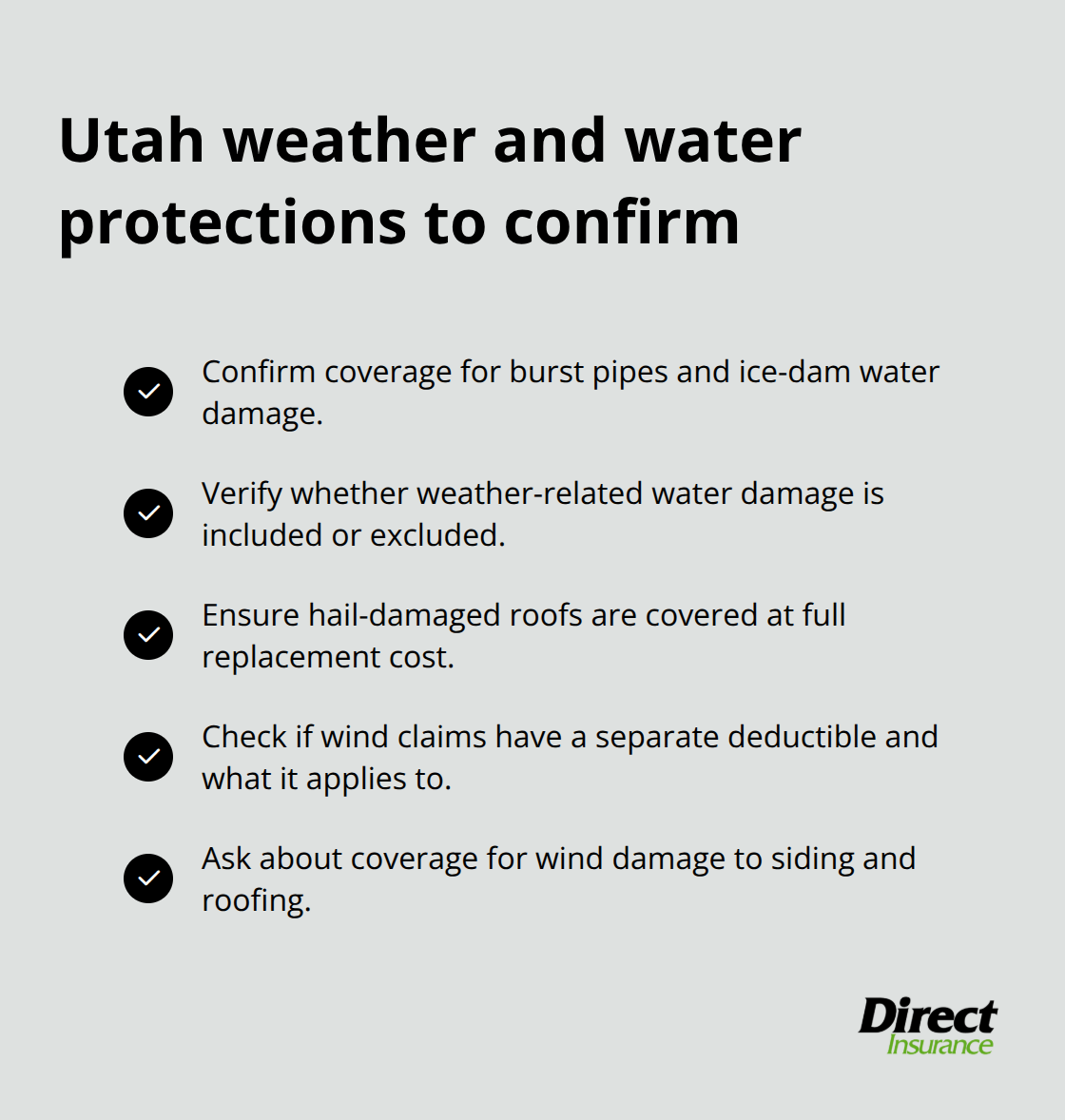
Wind damage to siding and roofing also requires explicit coverage confirmation since many policies have separate deductibles for wind-related claims.
Understanding what your policy actually covers prevents costly surprises when damage strikes your property. The next step involves selecting the right coverage limits and comparing options across multiple insurers to match your specific rental situation.
How to Choose the Right Landlord Insurance Policy
Calculate Your Property’s True Replacement Cost
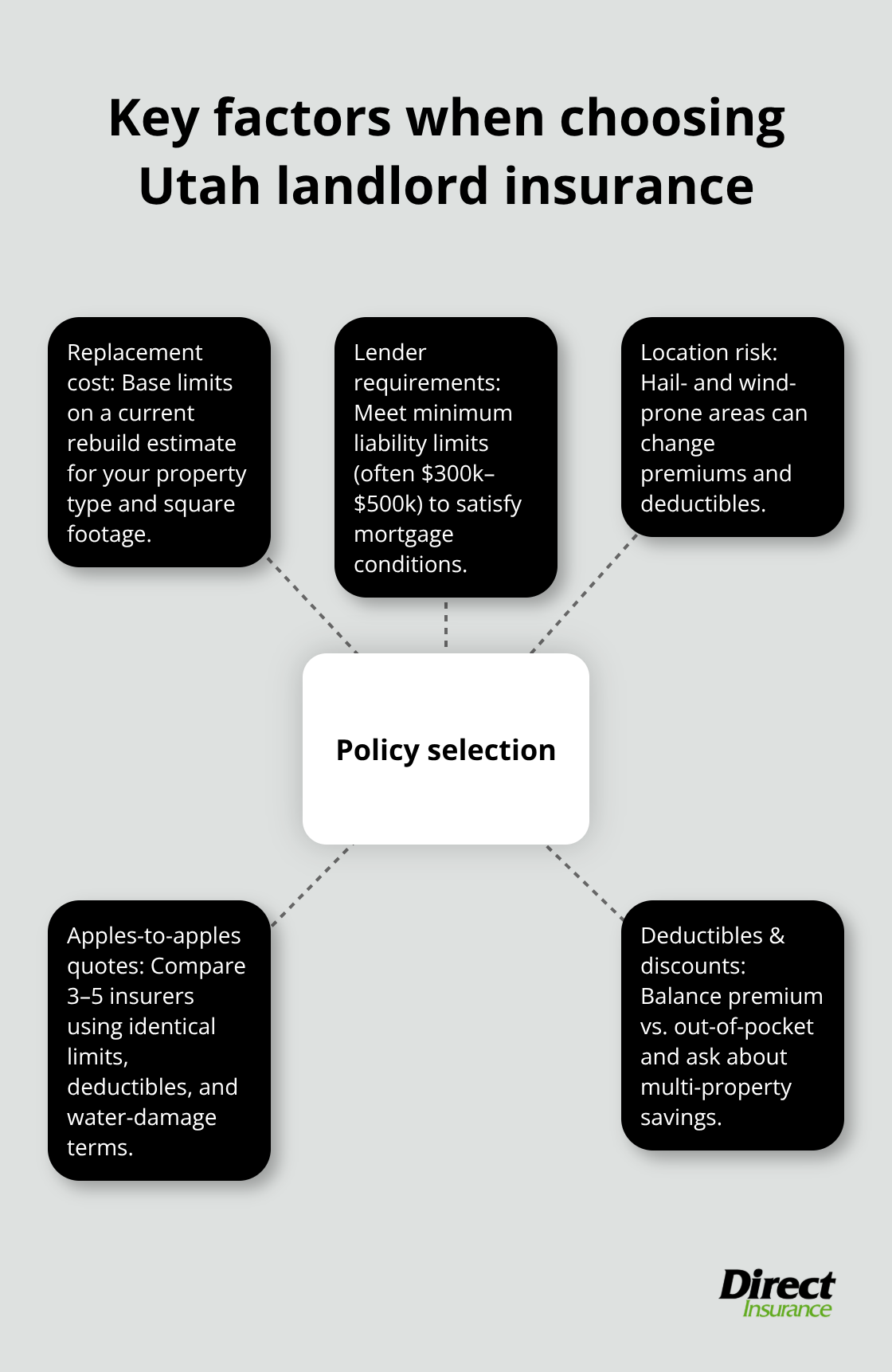
Start with your property’s actual replacement cost, not its market value. A duplex worth $400,000 on the market might cost $550,000 to rebuild from scratch when you factor in labor, materials, and current Utah construction costs. Insurance companies use replacement cost estimates to set appropriate coverage limits, and underestimating this figure leaves you severely exposed. Contact local contractors in your area and request a rebuild estimate specifically for your property type and square footage.
This document becomes your baseline for determining coverage limits.
Understand Your Lender’s Requirements
Pull your mortgage paperwork because most lenders require minimum liability coverage of $300,000 to $500,000 on rental properties. Your lender won’t allow you to close on a rental property without adequate protection, so this requirement shapes your minimum coverage floor. These minimums exist because lenders protect their financial interest in your property, and they’ve seen too many landlords face catastrophic losses from inadequate coverage.
Account for Your Property’s Location Within Utah
Your property’s location within Utah matters significantly for pricing and available coverage. Properties in areas prone to hail, like parts of Weber and Davis counties, face different risk profiles than properties in Salt Lake County’s urban core. Insurers adjust premiums based on these regional weather patterns, so comparing quotes from multiple companies reveals how each one assesses your specific location’s risk.
Compare Policies Across Multiple Insurers
Comparing actual policies across three to five insurers takes time but prevents overpaying by 20 to 40 percent. Request quotes with identical coverage limits and deductibles so you’re comparing apples to apples, not different protection levels. Pay close attention to how each insurer handles water damage exclusions since this varies dramatically between companies and directly impacts your premium. Ask each insurer whether they use actual cash value or replacement cost for water damage claims, because replacement cost coverage costs more upfront but saves thousands when pipes burst.
Review Deductible Structures and Multi-Property Discounts
Review the deductible structure carefully because some policies offer separate deductibles for weather-related claims versus other damage types. A $1,000 standard deductible combined with a $2,500 wind or hail deductible means you’ll pay $2,500 out of pocket for spring hail damage but only $1,000 for fire damage. Lower deductibles reduce your out-of-pocket costs during claims but increase your monthly premium by 15 to 25 percent.
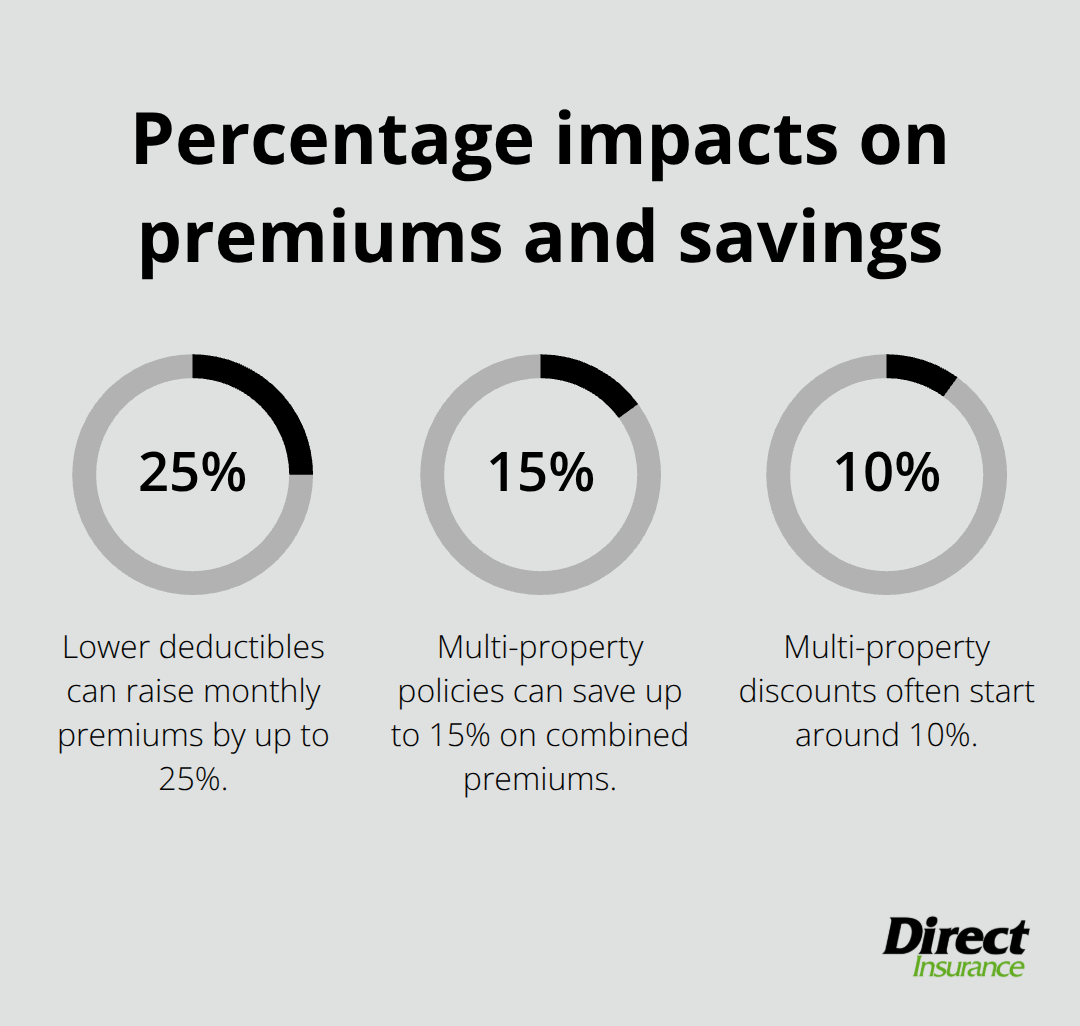
Utah landlords who own multiple properties should ask about multi-property discounts, which typically save 10 to 15 percent on combined policies. Once you’ve narrowed your options based on coverage and cost, the next step involves identifying the mistakes that trip up most landlords during the selection process.
Common Mistakes Landlords Make When Insuring Rental Properties
Most Utah landlords make predictable mistakes that cost thousands in unprotected losses or wasted premium dollars. Understanding these errors helps you avoid the same financial traps that trip up property owners across the state.
Underestimating Replacement Costs
The first major error involves guessing at replacement costs instead of calculating them properly. You cannot use your property’s market value as your replacement cost because these numbers diverge dramatically in Utah’s current construction market. A rental property appraised at $450,000 might require $600,000 to rebuild when you account for labor shortages, material inflation, and Utah’s specific building codes. Insurance companies won’t reimburse you beyond your stated coverage limit, so underestimating replacement costs leaves you absorbing the difference yourself.
Get three written estimates from local Utah contractors who specialize in residential reconstruction, then add 10 to 15 percent for contingencies and unforeseen issues. This approach gives you a defensible number that reflects actual rebuilding expenses rather than what similar homes sell for in your neighborhood.
Confusing Landlord Insurance with Standard Homeowners Coverage
The second critical mistake involves assuming landlord insurance works like standard homeowners coverage, which it absolutely does not. Homeowners policies explicitly exclude rental income protection, liability from tenant injuries, and damage caused by tenant negligence. A tenant who accidentally starts a kitchen fire causing $80,000 in damage will not be covered under your homeowners policy if you rent the property, and your homeowners insurer may actually deny the claim and cancel your policy for misrepresenting the property’s use.
Utah landlords who carry homeowners insurance on rental properties face this gap only when filing a claim, at which point the damage is already done. Switching to a proper landlord policy protects you from this coverage mismatch and ensures your rental income stays protected.
Neglecting Adequate Liability Protection
Liability protection stands as the third overlooked element that exposes landlords to devastating financial consequences. A guest who slips on ice in your stairwell and suffers a broken hip requiring surgery and physical therapy can easily generate $150,000 in medical bills and lost wages. Without adequate liability coverage, your personal assets including savings, vehicles, and future income become targets for judgment collection.
Many landlords carry only $100,000 in liability coverage when they own multiple properties, which leaves them severely underprotected against realistic injury scenarios. Increasing your liability limit from $300,000 to $500,000 typically costs $50 to $100 annually but protects you against claims that would otherwise bankrupt your rental business. This modest premium increase provides substantial protection for your personal wealth and long-term financial security.
Final Thoughts
Protecting your Utah rental property requires action, not hope. A landlord insurance policy in Utah covers the specific risks that standard homeowners policies ignore, and selecting the right coverage prevents financial devastation when damage strikes. Your replacement cost calculation, liability limits, and loss of rent protection form the foundation of solid risk management for rental properties.
The mistakes outlined earlier cost landlords thousands annually through underestimated replacement costs, dangerous coverage gaps, and inadequate liability protection. Getting a landlord insurance quote takes less than an hour and provides clarity on your actual protection costs. Contact multiple insurers with identical coverage specifications so you can compare premiums accurately, and request quotes that include your specific property location, replacement cost estimate, and desired liability limits.
Working with a local agency matters because Utah’s weather patterns, construction costs, and rental market create unique insurance needs that national companies often misunderstand. Direct Insurance Services has served Utah property owners since 1973 and understands the specific risks facing landlords across the state, shopping multiple top-rated insurance companies to find you the best coverage at competitive rates. Your rental property investment deserves protection that matches your actual exposure, and the time you invest now in selecting proper coverage prevents far greater financial losses later.
Disclaimer: The information provided in this blog is for general informational purposes only and does not constitute legal, financial, or insurance advice. Coverage options, terms, and availability may vary. Please consult with a licensed professional for advice specific to your situation

