
Utah Teen Driver Discounts: Lower Car Insurance Costs
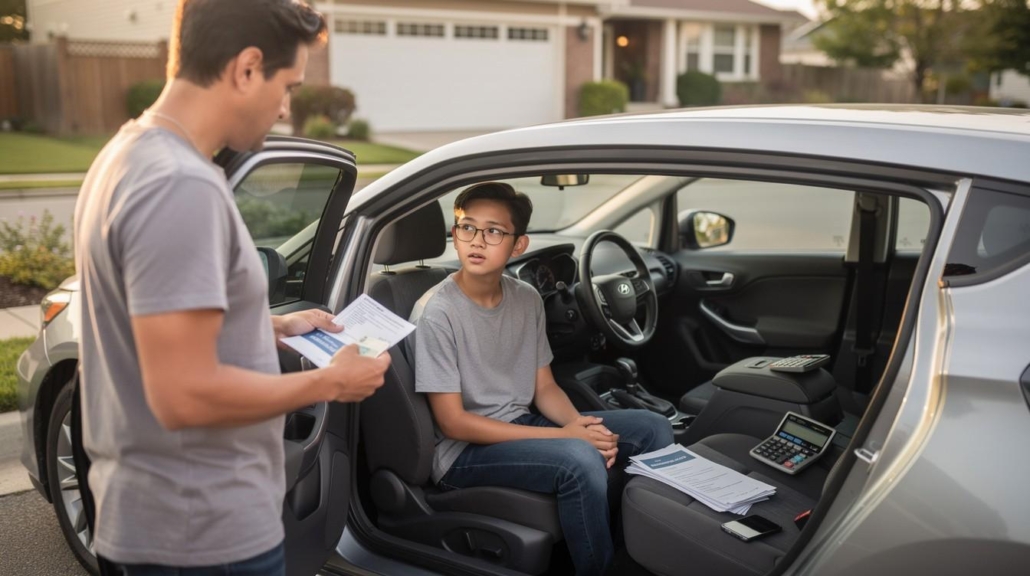
Teen drivers in Utah face some of the highest insurance premiums in the country. The good news is that Utah teen driver discounts can cut those costs significantly if you know where to look.
At Direct Insurance Services, we’ve helped countless families find real savings through discounts most parents don’t even know exist. This guide shows you exactly how to qualify and what you can save.
What Qualifies You for Teen Driver Discounts in Utah
Understanding Utah’s GDL Structure and Insurance Impact
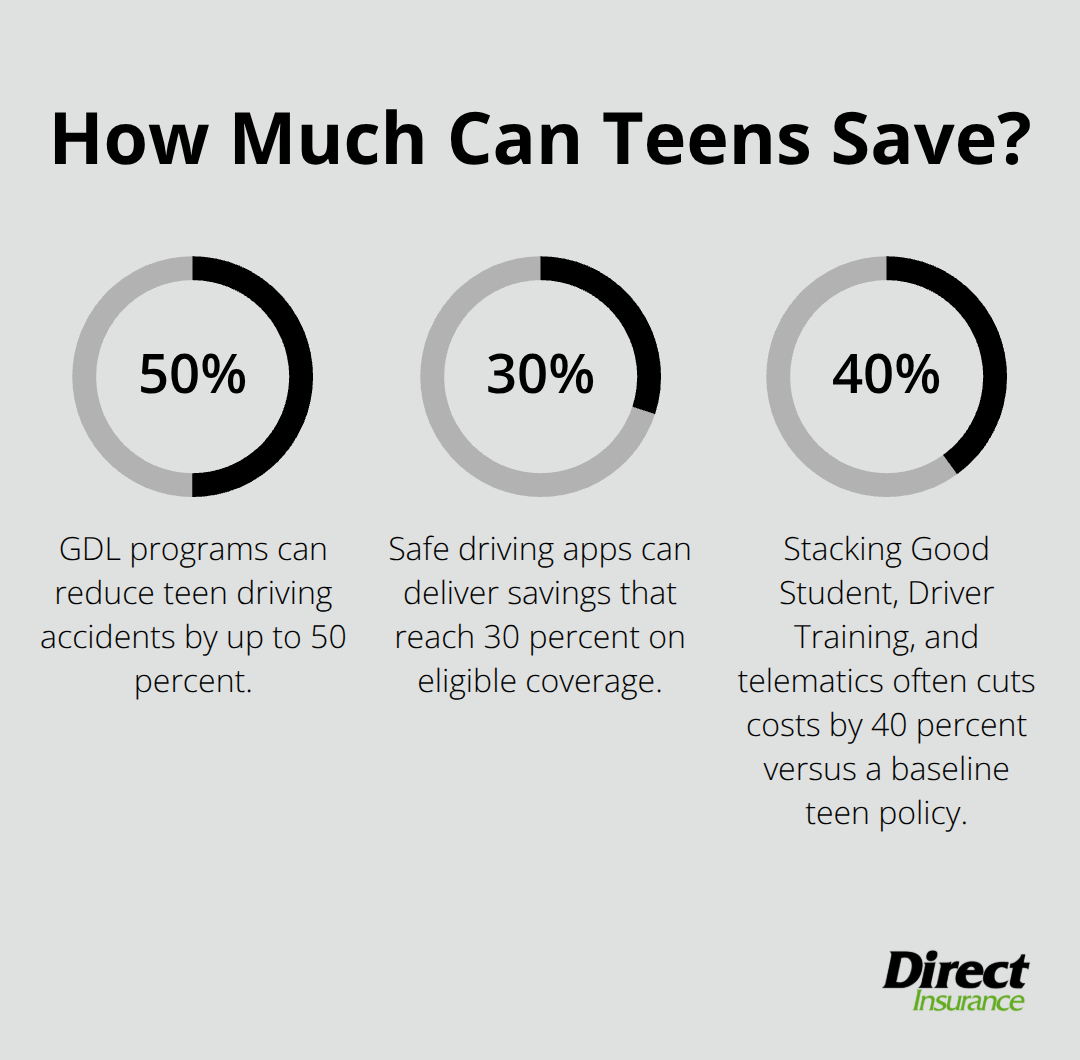
Utah insurance carriers evaluate teen drivers on specific criteria, and understanding these thresholds unlocks real savings. Most carriers require that your teen hold a valid Utah driver license, though some discounts apply earlier if your teen completes an approved driver education course before getting licensed. The Graduated Driver License program in Utah-which all states follow according to the Governors Highway Safety Association-creates a three-stage structure: a learner’s permit, an intermediate license with restrictions on nighttime driving and passengers, and a full license. This structure matters to insurers because research from the National Highway Traffic Safety Administration shows that GDL programs reduce teen driving accidents by up to 50 percent. When you add your teen to a policy in Southern Utah, the household premium increases by 50 to 100 percent, or roughly $90 to $200 per month, depending on which vehicle your teen drives and what coverage you carry.
The Vehicle Assignment Strategy
The vehicle your teen is listed as the primary driver on drives the rate more than any other factor. If your household has a high-value truck and a cheaper car, intentionally assigning your teen to the lower-value vehicle meaningfully reduces their impact on your premium. This single decision often matters more than any discount you’ll qualify for, so discuss vehicle assignment with your insurance agent before your teen gets licensed.
Three Main Discount Categories
Discounts in Utah fall into three main categories: academic achievement, driver training, and safe driving behavior. The Good Student Discount requires a 3.0 GPA, ranking in the top 20 percent of your teen’s class, or Dean’s List or Honor Roll status, and this discount reduces premiums significantly and often lasts until your teen turns 25. A Driver Training Discount applies when all teen vehicle operators under 21 complete an approved Utah driver education course-this is one of the easiest wins because most teens complete it anyway.
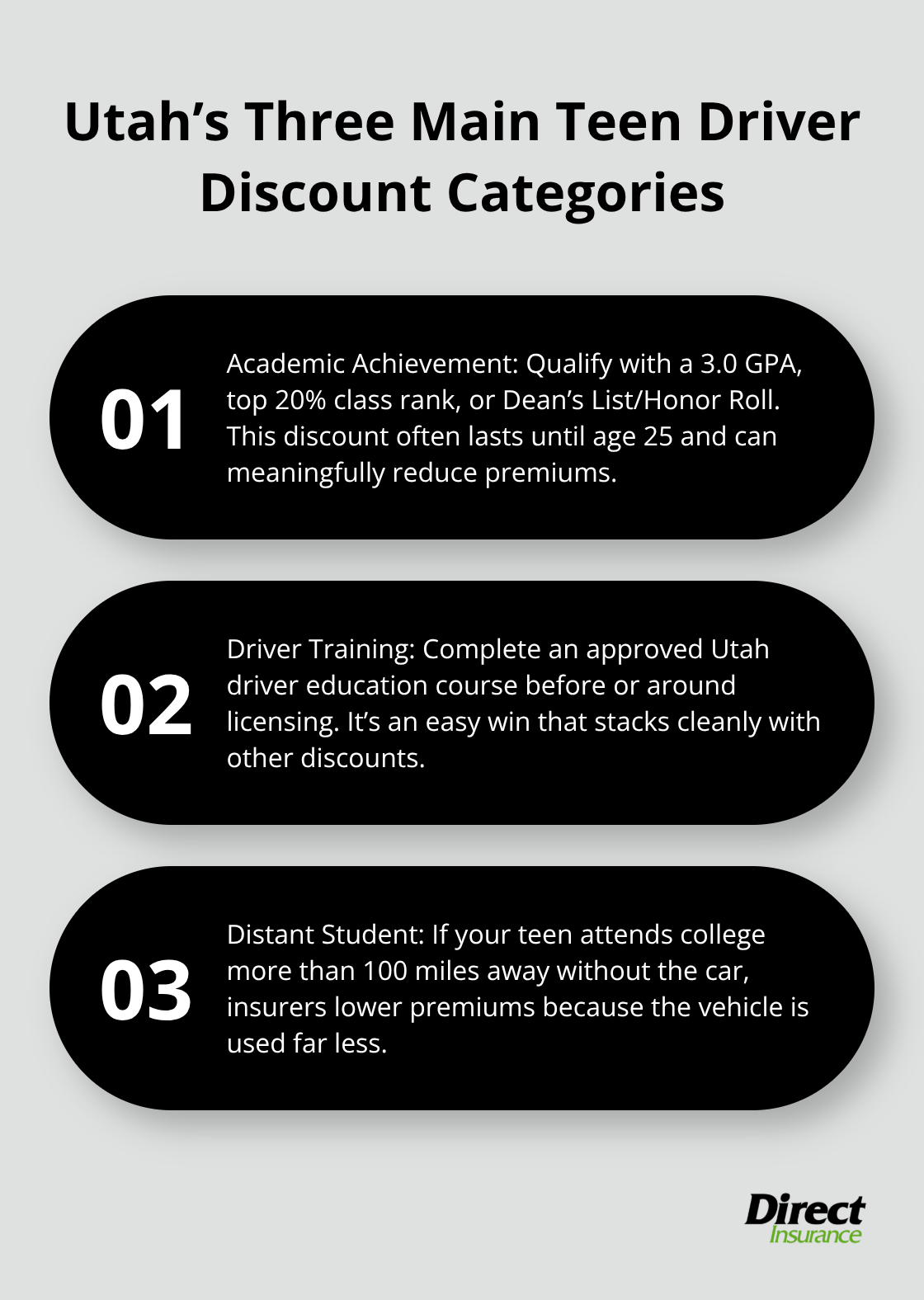
The Distant Student Discount applies if your teen attends college more than 100 miles away and doesn’t bring the car home regularly, which drops the premium substantially since the vehicle sits unused most of the year.
Safe Driving Programs and Rate Shopping
Telematics programs like Progressive Snapshot, Safeco RightTrack, and Nationwide SmartRide track safe driving behavior and reward teens who avoid hard braking, speeding, and nighttime driving with measurable savings. Re-shopping your policy across multiple carriers every year for the first three to five years after your teen gets licensed yields real results because carrier appetite for young drivers shifts constantly, and what costs $1,800 with one company might cost $1,400 with another. This comparison process reveals which carriers value the specific discounts your teen qualifies for most heavily.
Ways to Maximize Your Teen Driver Discount
The Good Student Discount: Your Easiest Win
The Good Student Discount remains the easiest discount to claim and delivers real money back. A 3.0 GPA, top 20 percent class ranking, or Dean’s List status qualifies your teen, and this discount typically reduces the teen’s portion of the premium meaningfully and lasts until age 25. The catch is that you must actively report your teen’s academic standing to your carrier-they won’t find it on their own. Request an updated transcript when your teen achieves the qualifying GPA, then contact your agent immediately to add the discount. Many families miss this because they assume the carrier will notice; they won’t.
If your teen is homeschooled, you can still qualify by providing evidence of achievement from national standardized tests taken within the past 12 months and demonstrating ranking in the upper 20 percent. This opens the door for homeschool families who might otherwise assume they lack eligibility.
Driver Training Courses: Free Money You Already Earn
Driver training courses approved by Utah deliver another straightforward discount. Your teen likely completes this course before getting licensed anyway, so the discount is essentially free money. Once your teen finishes the course, submit the completion certificate to your insurance agent and request the Driver Training Discount. This stacks cleanly with the Good Student Discount-there’s no limit to how many discounts you can combine, so pursuing both makes financial sense.
Safe Driving Monitoring Programs: Behavioral Leverage That Works
Safe driving monitoring programs separate responsible teens from reckless ones in your carrier’s eyes, and this is where the real behavioral leverage lives. Progressive Snapshot, Safeco RightTrack, and Nationwide SmartRide track acceleration, braking patterns, nighttime driving, and speed, then reward careful drivers with savings that can reach 30 percent on eligible coverage. These programs work because they measure actual driving rather than assuming risk based on age.
Install the app on your teen’s phone, let it monitor for 30 to 60 days, then watch the discounts apply at renewal. The data is transparent-your teen sees their own driving score and can watch it improve, which creates accountability without nagging. If your teen gets a ticket or causes an accident, the premium will spike at the next renewal regardless of discounts, so the real value of these programs is teaching safe habits now rather than paying for reckless ones later.
Stacking Discounts and Shopping Annually
The combination of Good Student Discount plus Driver Training Discount plus a safe driving app often cuts the teen’s insurance cost by 40 to 50 percent compared to a baseline teen policy. Re-shopping annually across multiple carriers amplifies this further because different insurers weight these discounts differently-one carrier might value the telematics data heavily while another prioritizes academic achievement, so comparing quotes reveals which company values your specific teen’s profile most. This comparison process matters most during the first three to five years after your teen gets licensed, when carrier appetite for young drivers shifts constantly and rate differences between companies can exceed $400 per year.
Now that you understand how to stack discounts and maximize savings through your teen’s behavior and academic record, the next step involves looking beyond discounts alone. Bundling policies, selecting the right vehicle, and adjusting coverage levels offer additional levers that often deliver even larger savings than discounts themselves.
Beyond Discounts: The Bigger Savings Moves
Bundling Policies Delivers Substantial Household Savings
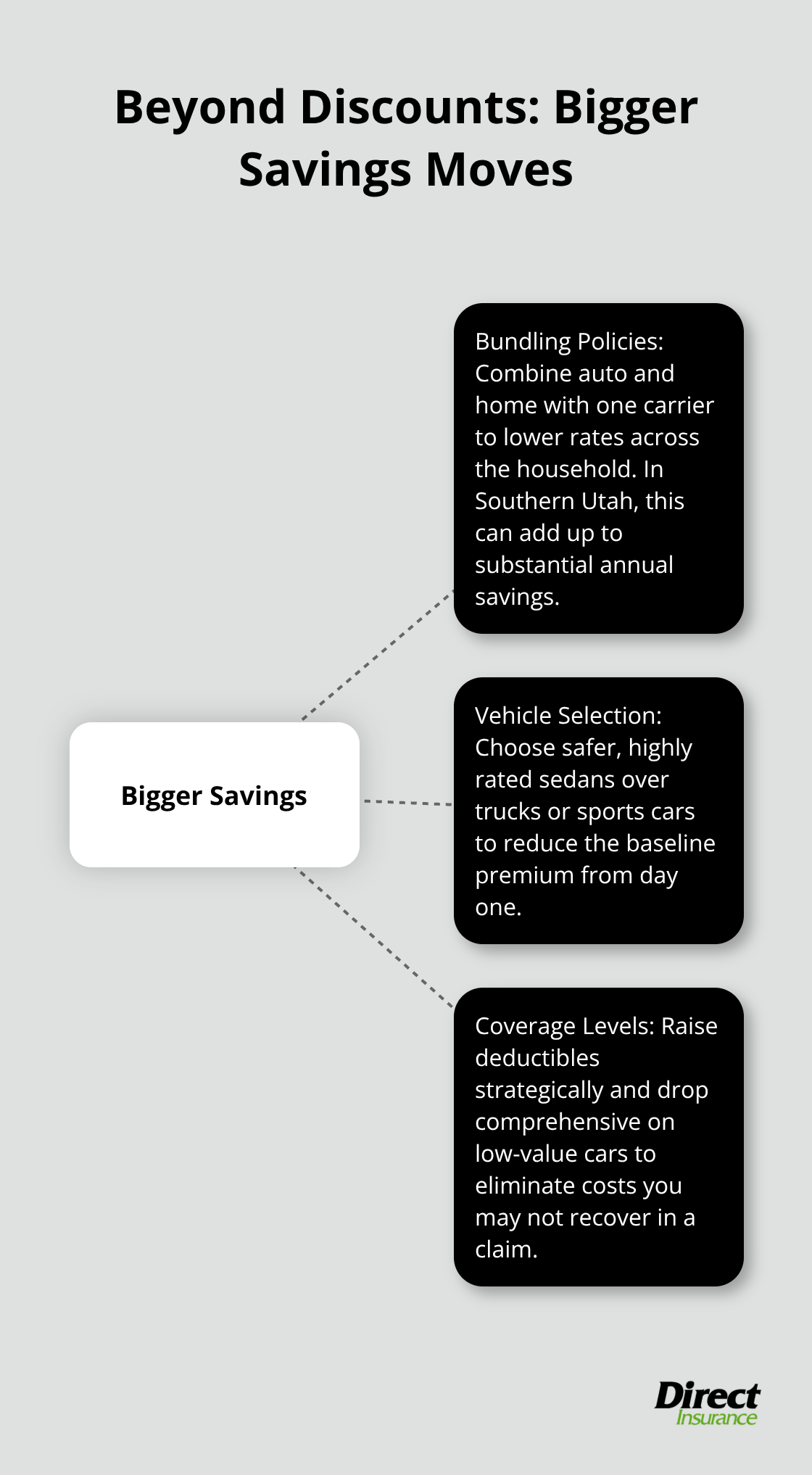
Bundling your home and auto policies with a single carrier cuts costs that individual discounts cannot match. When you combine auto and home insurance, carriers reward loyalty by offering lower rates across all bundled policies, so a household that insures both a home and two vehicles saves far more than a household that shops auto and home separately. In Southern Utah, where home values and vehicle costs create substantial premiums, this bundling effect matters considerably. Before you commit to a carrier for your teen’s insurance, request a full household quote that includes home and renters coverage-the bundled price often reveals savings you’d miss by shopping auto alone. If you’ve been with your current homeowners carrier for years without re-shopping, switching both auto and home to a carrier offering aggressive bundling discounts can cut your total household insurance cost by hundreds annually.
Vehicle Selection Sets Your Baseline Premium
The vehicle your teen drives matters more than any discount because the car itself determines the baseline premium. Safer vehicles with higher crash test ratings cost less to insure than performance cars or older vehicles with poor safety records, so purchasing a sedan with top-tier safety ratings from the Insurance Institute for Highway Safety instead of a truck or sports car reduces your teen’s portion of the premium meaningfully from day one. If you’re shopping for a vehicle specifically for your teen, prioritize safety ratings and built-in features like automatic emergency braking over age or style. The Insurance Institute for Highway Safety provides vehicle safety ratings and features to help you choose safer cars for teens.
Adjusting Coverage Levels Eliminates Unnecessary Costs
Once you’ve selected the vehicle, adjusting your coverage strategy delivers the final lever for savings. If you carry comprehensive and collision coverage on a car worth less than $5,000, the deductible and coverage limits determine whether you’re overpaying. Increasing your collision deductible from $500 to $1,000 lowers your premium immediately, and removing comprehensive coverage entirely on a low-value vehicle eliminates costs you may never recover through claims. Discuss these choices with a local agent who understands Utah’s specific liability environment and your household’s risk tolerance-don’t default to standard coverage levels just because they’re offered.
Final Thoughts
Utah teen driver discounts deliver real savings when you combine multiple strategies rather than relying on any single discount alone. The Good Student Discount, Driver Training Discount, and safe driving monitoring programs stack together to cut costs by 40 to 50 percent, but vehicle selection, bundling policies, and coverage adjustments often deliver even larger savings. Request quotes from multiple carriers before your teen gets licensed, since different insurers weight Utah teen driver discounts differently and comparing quotes across three to five companies reveals which carrier values your specific situation most heavily.
A local agent who understands Utah’s specific insurance landscape, local rate variations between Cedar City and Salt Lake City, and how different carriers treat young drivers can guide you toward the right vehicle assignment, coverage levels, and discount combinations for your household. Request a full household quote that includes bundling your home and auto policies, since this single move often saves more than any discount. Have your teen’s Good Student Discount documentation ready when you call for quotes so carriers can factor it in immediately.
At Direct Insurance Services, our team serves Utah families and understands the unique needs of insuring teen drivers across the state. We shop multiple top-rated insurance companies to find you the best coverage at competitive rates, and we handle the comparison work so you don’t have to. Contact Direct Insurance Services to request a free rate review and see exactly how much you can save on your teen’s insurance.
Disclaimer: The information provided in this blog is for general informational purposes only and does not constitute legal, financial, or insurance advice. Coverage options, terms, and availability may vary. Please consult with a licensed professional for advice specific to your situation

