

Vacation Rental Insurance Utah: Safeguard Your Short-Term Property
Owning a vacation rental in Utah comes with real financial exposure. Guest injuries, property damage, and unexpected closures can drain your income fast.
At Direct Insurance Services, we’ve seen too many property owners operate without proper protection. Vacation rental insurance in Utah isn’t optional-it’s the difference between a profitable investment and a financial disaster.
Why Your Vacation Rental Needs Protection Now
Utah’s vacation rental market generated over 400 million dollars in revenue in 2024, and property owners collect substantial income from guests staying in their homes. Standard homeowners insurance explicitly excludes rental activity, which means the moment you accept payment from a guest, your coverage vanishes. A water damage incident at a Park City property can cost six weeks of lost rental income exceeding 10,000 dollars, according to real claims data. Without dedicated vacation rental insurance, you remain personally liable for every dollar of that loss. Salt Lake City requires proof of commercial general liability coverage to obtain a rental license, and Park City mandates GL coverage for all rental properties. These aren’t suggestions from insurance companies-they’re legal requirements that city governments enforce.
Standard policies leave you exposed
Your homeowners policy will not protect you once rental income enters the picture. The moment a guest pays to stay at your property, your standard coverage terminates. This gap creates catastrophic financial risk because you lose protection for property damage, guest injuries, and lost income simultaneously. Many property owners discover this reality only after a claim is denied, leaving them to cover thousands of dollars out of pocket.
Guest injuries create unlimited liability exposure
A guest slips on wet tile and fractures their hip. Another guest’s child falls from a deck railing. A visitor suffers an allergic reaction to bed bug bites. These scenarios occur regularly in vacation rentals, and standard homeowners policies will not cover them because they exclude commercial activity. Commercial general liability coverage starting at 1 million dollars per occurrence protects you from medical bills, legal fees, and settlement costs that guests might pursue. Utah’s Short-Term Rental Act requires minimum liability coverage of $500,000 to $1 million, but the actual cost of defending a serious injury lawsuit far exceeds those minimums. Platform coverage from Airbnb or VRBO appears helpful, but these protections are secondary, often insufficient, and exclude property damage entirely. You cannot rely on guest deposits or your personal savings to cover a liability judgment.
Property damage and theft drain income immediately
Vacation rentals experience higher rates of theft, vandalism, and guest-caused damage than long-term rentals because turnover remains constant and guests are unfamiliar with the property. A broken hot tub, damaged furniture, or stolen electronics means lost rental income while you repair or replace items. Replacement cost coverage ensures you receive funds to restore items to their current market value, not depreciated amounts. Extended vacancy periods during off-season months create additional risks-frozen pipes, water leaks, and break-ins occur more frequently in unoccupied properties. Winter freezes in Park City and summer wildfire exposure in southern Utah create seasonal vulnerabilities that standard homeowners policies don’t adequately cover. You need protection that covers building damage, personal property at replacement cost, and the lost income that follows.
Income interruption protection matters most
Lost rental income represents your largest financial exposure after a covered loss. A fire, water damage, or guest injury can force you to close your property for weeks or months while repairs occur. Business interruption coverage pays your actual lost bookings revenue up to your chosen limit, with no time restrictions on how long the property remains closed. This protection separates property owners who recover quickly from those who face financial hardship. Without it, you absorb the full cost of repairs plus the income you would have earned during closure.
The right insurance policy addresses all three exposure areas-property damage, guest liability, and lost income-simultaneously. Choosing coverage that aligns with your actual property usage and Utah’s regulatory requirements protects both your investment and your personal finances.
What Coverage Types Actually Protect Your Utah Vacation Rental
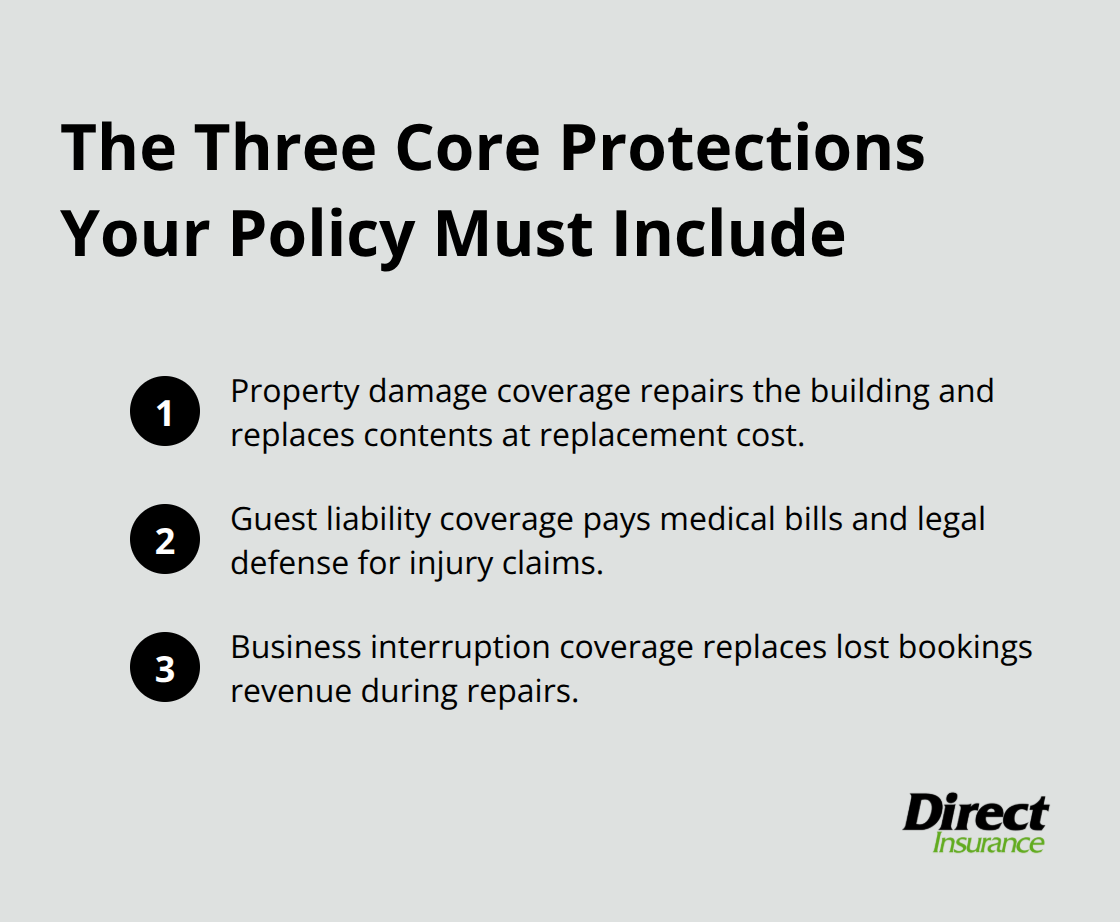
Utah vacation rental insurance splits into three distinct protection areas, each addressing a different financial threat to your property. Property damage and theft coverage rebuilds your physical assets when guests cause damage or break-ins occur during turnover periods. Guest liability coverage protects you from medical bills and legal costs when someone gets hurt on your property, which happens frequently in vacation rentals with pools, hot tubs, and deck railings. Income interruption coverage replaces your lost rental revenue when damage forces you to close the property for repairs. These three components work together, but many property owners mistakenly assume one covers the other. They don’t. A standard commercial general liability policy might cover a guest’s injury claim but won’t replace your lost bookings revenue while repairs happen. Replacement cost property coverage restores your furnishings and structure to current market value, not depreciated amounts, which matters tremendously when you’re replacing a damaged hot tub or stolen electronics during peak season.
Building and contents protection stops gaps that standard policies create
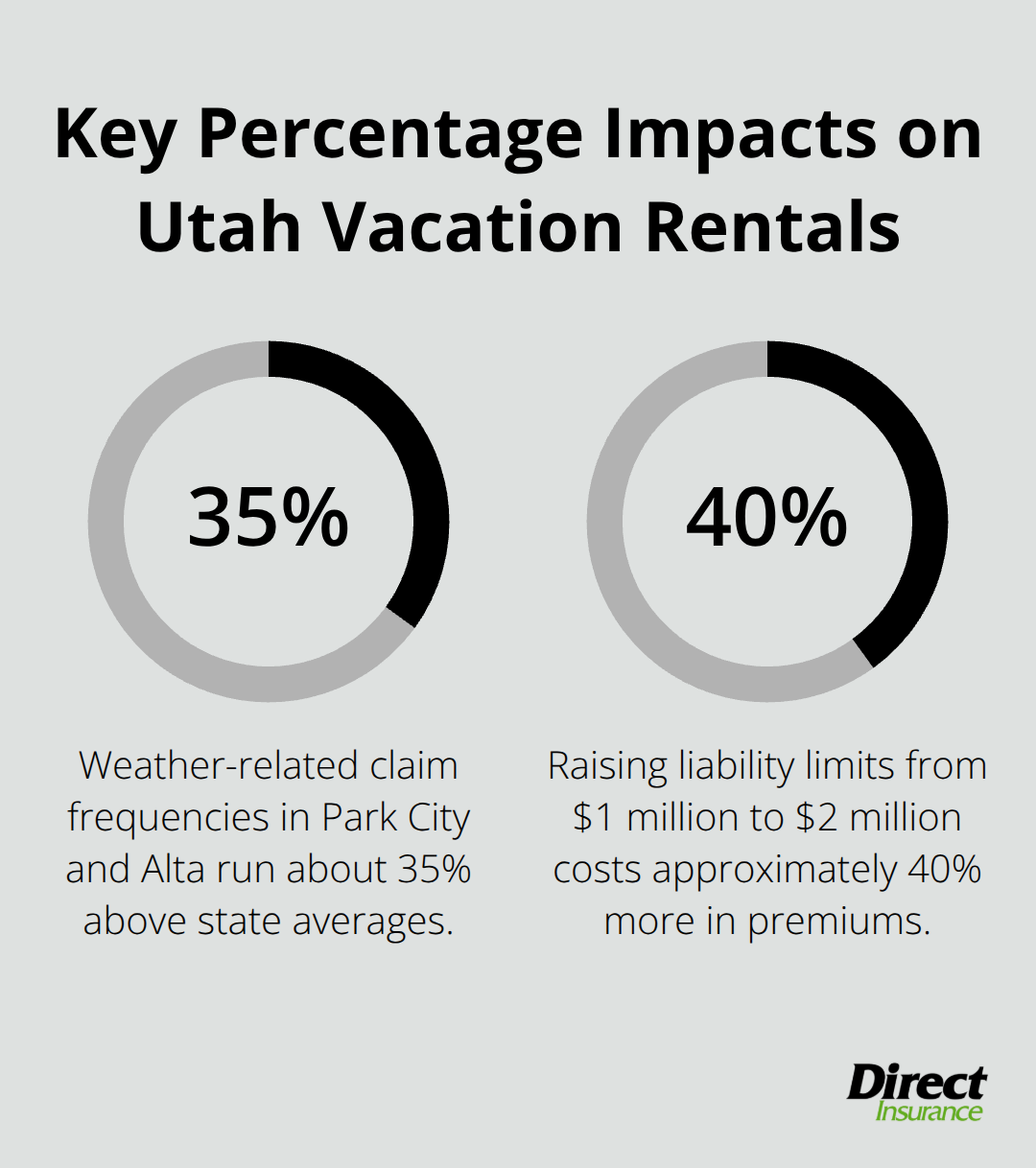
Your vacation rental property requires replacement cost coverage for the building itself plus all furnishings, electronics, and decorative items inside. Utah vacation rental policies cover this at new-for-old valuation, meaning you receive enough to replace items at today’s prices rather than what you paid years ago. A property in Park City with a damaged deck, broken furniture, and stolen kitchen appliances needs immediate replacement to resume bookings. Actual cash value coverage would pay depreciated amounts, leaving you short thousands of dollars. Extended vacancy periods create additional exposure through frozen pipes in winter months and water leaks that go undetected for days. The Utah Department of Insurance reports higher weather-related claim frequencies in Park City and Alta, around 35 percent above state averages. Your coverage must include back-up sewer protection and debris removal costs, which add up quickly during larger losses. Guest-caused damage represents a significant claim category that standard homeowners policies exclude entirely because they treat rental activity as commercial business. Specialized vacation rental policies cover this directly. Some policies offer optional bed bug and flea protection that covers both extermination costs and lost revenue from canceled bookings when infestations occur, which happens more often in high-turnover properties than most owners expect.
Liability coverage protects you from guest injury claims
Commercial general liability coverage starting at 1 million dollars per occurrence is your baseline protection against guest injuries and the legal costs that follow. Salt Lake City requires this coverage to issue rental licenses, and Park City mandates it for all rental properties regardless of license status. A guest who slips on wet flooring, falls from a railing, or suffers a serious injury can pursue you personally for medical bills, lost wages, and pain-and-suffering damages that easily exceed $100,000. Your homeowners policy will not cover this because it excludes commercial activity. Platform coverage from Airbnb or VRBO is secondary insurance that only activates after your primary policy pays, and according to NAIC warnings, these protections contain significant exclusions. Airbnb’s $1 million liability protection specifically excludes property damage entirely, leaving you exposed if a guest’s injury claim includes damage to your furnishings or structure. Liquor liability coverage is essential if you provide alcohol to guests or if guests consume alcohol on your property, as many standard policies exclude alcohol-related incidents. Amenities liability protects you when guests use pools, hot tubs, bikes, kayaks, or other recreational equipment you provide, with coverage extending to both on-premises and off-premises activities. Pet liability with no breed restrictions covers dog bites and other animal-related injuries, which occur regularly in vacation rentals that allow pets. A guest bitten by a dog or injured by another guest’s pet can sue for substantial damages, and breed-based exclusions common in homeowners policies won’t apply to your specialized rental coverage.
Business interruption coverage replaces your actual lost income
Income interruption or business revenue protection coverage pays your actual lost bookings revenue with no time limit on how long the property remains closed. This matters more than property damage coverage because the financial impact extends far beyond repair costs. A water damage incident that closes your property for six weeks means losing six weeks of rental income while still paying mortgage, property taxes, and utilities. Real claims data shows six weeks of lost revenue at a Park City property can exceed $10,000, which is why this coverage is non-negotiable. Your policy should cover lost bookings from canceled reservations if damage occurs before guest arrivals, plus ongoing revenue loss while repairs continue. Some policies include optional squatter protection that covers legal costs and lost revenue if a guest refuses to leave after their booking ends, addressing an exposure that grows as vacation rental markets become more crowded. The coverage limit you choose determines your maximum recovery, and this should align with your actual monthly rental income. A property generating $3,000 per month needs at least $12,000 to $15,000 in business interruption coverage to protect against a three to four-week closure. Without this protection, you absorb the full financial hit of closures, repairs, and lost income simultaneously.
Choosing the right combination of coverages
The three protection areas work together to create a complete safety net for your investment. Property coverage alone leaves you exposed to liability claims, while liability coverage alone won’t replace your lost income during repairs. You need all three components working in tandem to address the full range of risks that vacation rentals face. Your next step involves assessing your specific property value, rental income, and risk exposure to determine the coverage limits that actually protect your situation rather than leaving gaps that could cost you thousands of dollars.
How to Choose the Right Vacation Rental Insurance Policy
Calculate your actual replacement cost and coverage needs
Selecting vacation rental insurance requires matching coverage amounts to your actual financial exposure, not accepting whatever an insurer recommends without verification. Start by obtaining a current replacement cost estimate for your building, furnishings, electronics, and decorative items at today’s prices. A Park City property with a deck, hot tub, and high-end kitchen can easily exceed $500,000 in replacement value, while a Salt Lake City property might range $250,000 to $400,000 depending on size and finishes.
Your policy’s dwelling limit must cover this full replacement cost without sub-limits on theft, vandalism, or water damage. Actual cash value policies pay depreciated amounts and leave you short thousands of dollars when you need to replace items during peak season. Next, calculate your average monthly rental income by reviewing your booking history from the past year. A property generating $4,000 per month needs business interruption coverage of at least $16,000 to $20,000 to protect against a four to five-week closure. Many owners underestimate this number and purchase insufficient coverage, then face financial hardship when a claim forces closure during peak season.
Assess your liability exposure based on property features
Your liability risk depends on property features and guest volume. Properties with pools, hot tubs, alcohol service, or pet policies carry higher liability risk than basic bedroom rentals. High-turnover properties renting more than 180 days annually need higher liability limits than seasonal properties. Utah’s legal requirements mandate $500,000 to $1 million in commercial general liability coverage, but Salt Lake City requires $1 million for rental licenses, and Park City mandates GL coverage for all rental properties regardless of amount.
Compare premiums and coverage across multiple carriers
Comparing coverage across multiple insurers reveals dramatic differences in both price and protection quality. Premiums for Utah vacation rentals vary significantly based on location and property characteristics: luxury Park City properties can exceed $2,500 annually, while Salt Lake City typically ranges $800 to $1,500.
Properties in flood-prone or wildfire-prone areas face 25 to 35 percent higher base premiums due to increased risk exposure.
Guest volume heavily influences pricing, with properties renting more than 180 days annually pushing toward commercial rates, and high turnover increasing premiums by 15 to 25 percent versus occasional rentals. Increasing your liability limit from $1 million to $2 million costs approximately 40 percent more, so you need to balance actual risk with reasonable costs rather than automatically selecting the highest available limit. Deductible selection also impacts your annual premium, with higher deductibles reducing costs but requiring you to pay more out of pocket when a claim occurs.
Identify risk-mitigation features that lower your costs
Risk-mitigation features reduce premiums significantly and improve your claims experience. Security systems, smoke detectors, and enhanced safety features reduce premiums by 10 to 20 percent. Professional management oversight yields additional discounts, and guest screening procedures can further reduce rates.
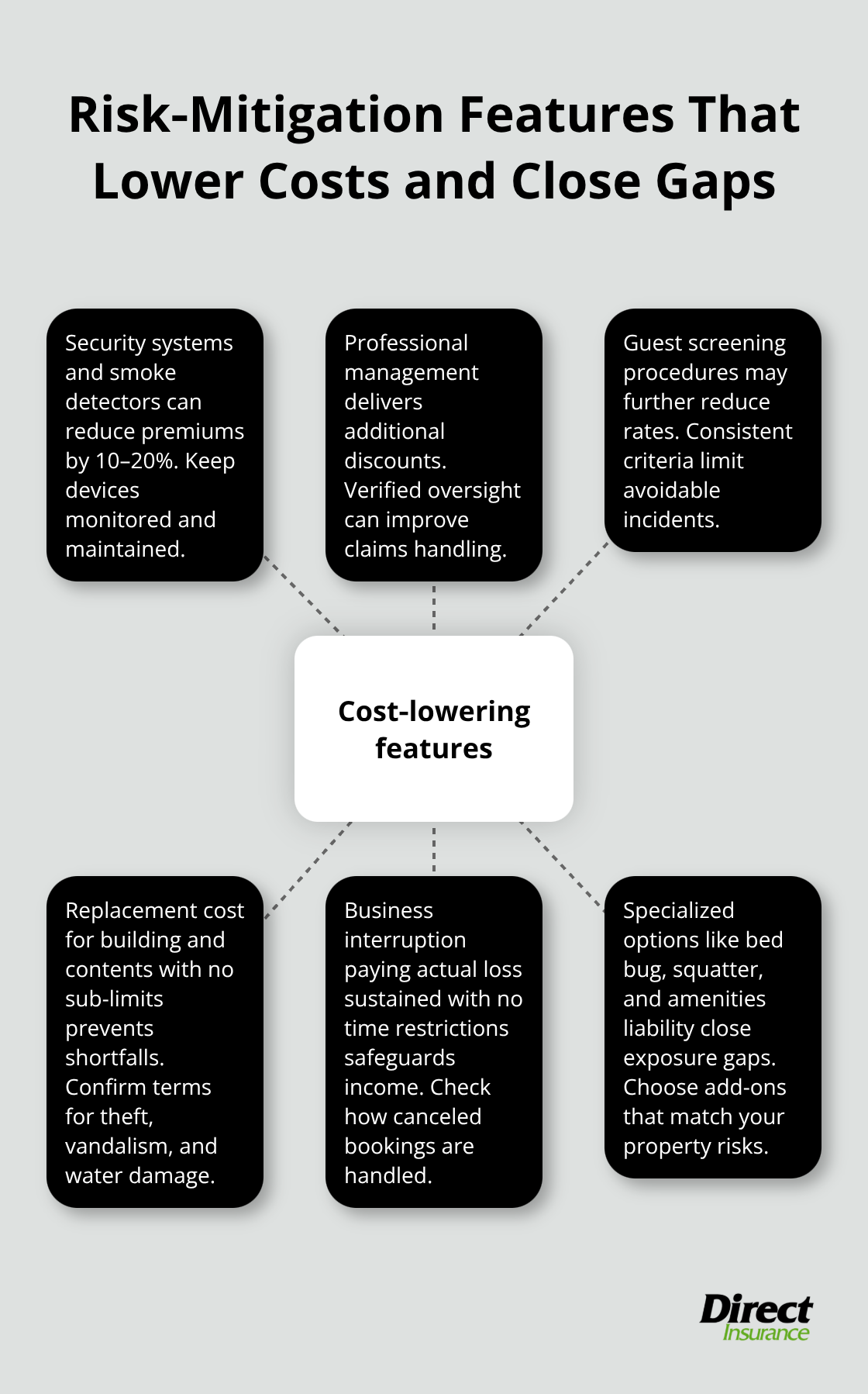
When comparing policies, verify that replacement cost coverage applies to both building and contents with no sub-limits, that business interruption coverage pays actual loss sustained with no time restrictions, and that specialized coverages address bed bug protection, squatter protection, and amenities liability if your property includes these risks.
Shop multiple carriers to secure competitive rates
Obtain quotes from multiple carriers rather than accepting the first offer, as premium differences often exceed $500 annually for identical coverage. Direct Insurance Services shops multiple top-rated carriers to secure competitive rates and coverage that actually protects your situation rather than leaving gaps that could cost you thousands of dollars when a claim occurs.
Final Thoughts
Vacation rental insurance in Utah protects your investment from three financial threats that standard homeowners policies ignore: property damage, guest liability, and lost income. Without specialized coverage, a single water damage incident or guest injury claim costs you tens of thousands of dollars out of pocket. Utah’s vacation rental market generated over 400 million dollars in revenue in 2024, and property owners who operate without proper protection face catastrophic exposure.
Calculate your replacement cost for building and contents, determine your average monthly rental income, and assess your liability risk based on property features like pools or hot tubs. Then obtain quotes from multiple carriers to compare coverage options and premiums, because differences often exceed 500 dollars annually for identical protection. Risk-mitigation features like security systems and professional management reduce your costs by 10 to 20 percent, so verify these discounts when comparing policies.
Working with a local agent matters because they understand Utah’s specific regulatory requirements and seasonal risks that affect your coverage needs (Salt Lake City requires 1 million dollars in commercial general liability coverage for rental licenses, and Park City mandates GL coverage for all rental properties). Contact Direct Insurance Services today to discuss your vacation rental insurance needs and receive a personalized quote that protects your investment.
Disclaimer: The information provided in this blog is for general informational purposes only and does not constitute legal, financial, or insurance advice. Coverage options, terms, and availability may vary. Please consult with a licensed professional for advice specific to your situation

