
Short Term Rental Insurance: Protect Your Property And Guests
Short term rental insurance isn’t optional-it’s a financial necessity. Standard homeowners policies leave you exposed to significant liability and property damage claims that could wipe out your rental income.
At Direct Insurance Services, we’ve seen hosts lose thousands because they didn’t understand their coverage gaps. This guide walks you through the protection you actually need.
Why Your Standard Homeowners Policy Won’t Protect Your Rental
Your standard homeowners policy actively works against you the moment a paying guest crosses your threshold. Insurance companies view short-term rentals as commercial activity, and most homeowners policies exclude coverage for rental operations. If an insurer discovers you’re hosting on Airbnb or VRBO without disclosure, they won’t just deny your claim-they’ll cancel your entire policy and refuse to renew it. This isn’t theoretical risk; it’s the reality hosts face when damage occurs and the insurance company reviews your booking history.
Property Damage Claims Cost Far More Than You Expect
Water damage from a guest’s negligence costs between $20,000 and $50,000 when it affects multiple floors, according to industry data on rental property claims. A single guest-caused kitchen fire can easily exceed $100,000 in repairs and replacement costs. Standard homeowners policies don’t cover intentional damage or theft by guests, which means a guest who punches a hole in the wall, steals electronics, or causes deliberate damage leaves you paying out of pocket.
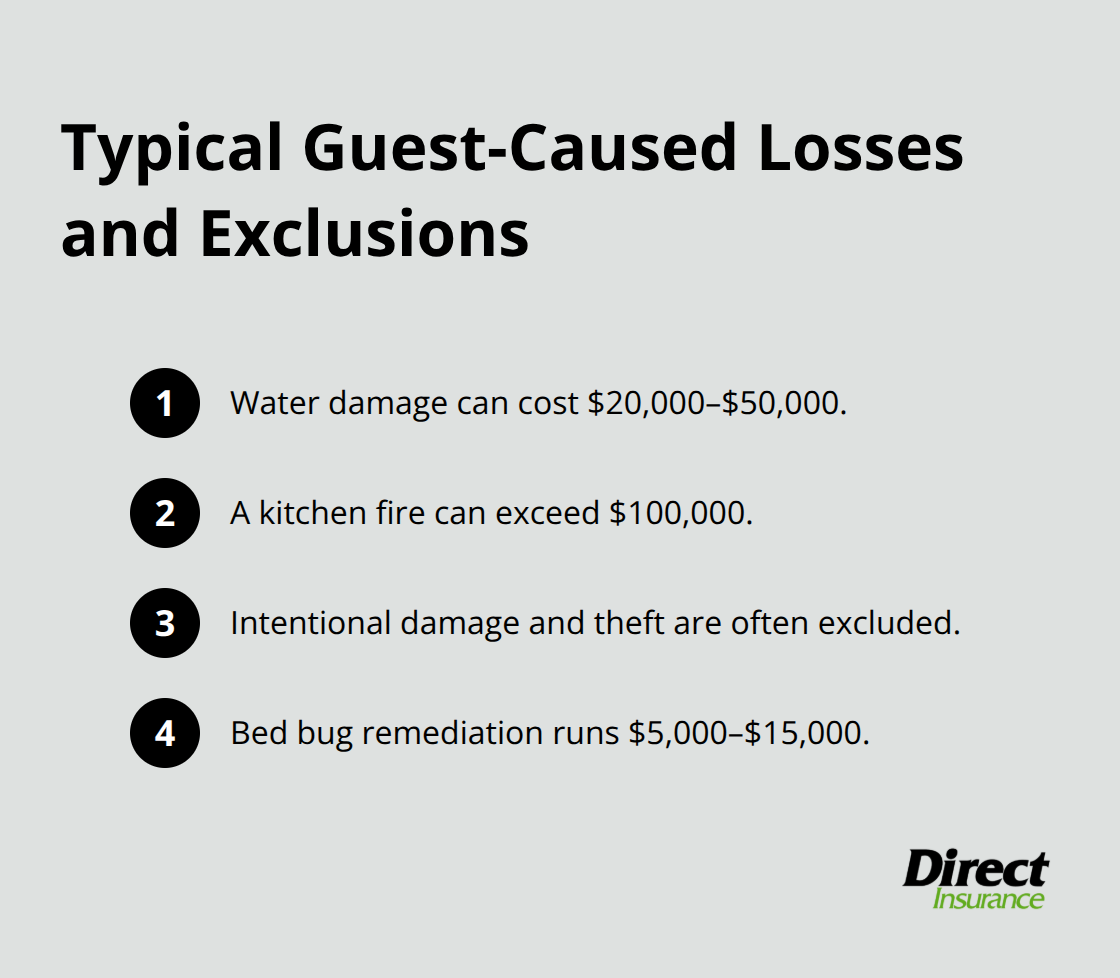
You also face uninsured losses from pest infestations like bed bugs, which cost $5,000 to $15,000 to remediate and typically appear in your policy’s exclusions list. One bad guest incident wipes out months or years of rental income.
Guest Injuries Expose You to Six-Figure Lawsuits
A guest who slips on your wet kitchen floor and breaks their leg will likely sue you, not your insurance company. Their medical bills, lost wages, and pain-and-suffering claims reach six figures depending on the severity. Your homeowners liability coverage-if it even applies to rental activity, which it usually doesn’t-maxes out at $100,000 to $300,000 in most policies. A serious injury claim exceeds these limits instantly. The guest’s attorney pursues your personal assets beyond your policy limits if you lack adequate commercial general liability protection. Many hosts don’t realize they’re personally liable for guest injuries until a lawsuit arrives, at which point their homeowners insurer denies the claim based on the commercial rental exclusion.
What You Actually Need for Protection
Specialized short-term rental insurance includes commercial general liability with $1 million per-occurrence limits, which is the minimum protection you need for guest injury scenarios. This coverage addresses the gaps that standard homeowners policies create. The right policy protects both your property and your personal assets from the financial devastation that one serious incident can cause. Understanding these three risk categories-property damage, guest injuries, and liability exposure-shows you exactly why your current homeowners policy fails you as a rental host. The next section breaks down the specific coverage types that actually protect your investment and your guests.
Types of Coverage for Short Term Rentals
Commercial General Liability Protects You from Guest Injuries
Commercial general liability covers guest injuries and third-party claims, protecting you when someone gets hurt on your property or sues you for damage they claim you caused. Most hosts underestimate this exposure until a guest’s attorney demands $500,000 for a slip-and-fall injury. You need a minimum of $1 million per-occurrence limits here, though $2 million is standard for serious hosts managing multiple properties. This layer shields your personal assets when liability claims exceed your homeowners policy limits.
Property Damage Coverage Handles Guest-Caused Destruction
Property damage coverage protects your rental structure and guest belongings from theft, vandalism, fire, and water damage caused by guests. This is where your $20,000 to $50,000 water damage scenarios get paid for instead of coming out of your pocket. The policy activates whether guests cause damage accidentally or intentionally, covering repair and replacement costs that would otherwise drain your rental income. Without this protection, a single water event or fire can eliminate years of profit.
Guest Liability and Intentional Damage Coverage Fills Critical Gaps
Guest liability and medical payments coverage specifically addresses intentional damage and theft by guests, which standard policies explicitly exclude. This covers the guest who punches walls, steals electronics, or damages furniture during their stay. Without this layer, you pay remediation costs for bed bug infestations, broken appliances, and stolen items entirely on your own. This coverage type separates adequate protection from inadequate protection for rental hosts.
Endorsements vs. Standalone Policies: Which Path Fits Your Operation
The critical distinction most hosts miss is that endorsements and standalone policies offer different protection levels. Endorsements cost $200 to $600 annually and work best if you rent fewer than 180 days per year and still use the property as your primary residence. Standalone short-term rental policies are necessary if you rent year-round, own the property purely as an investment, or want maximum protection regardless of occupancy patterns.
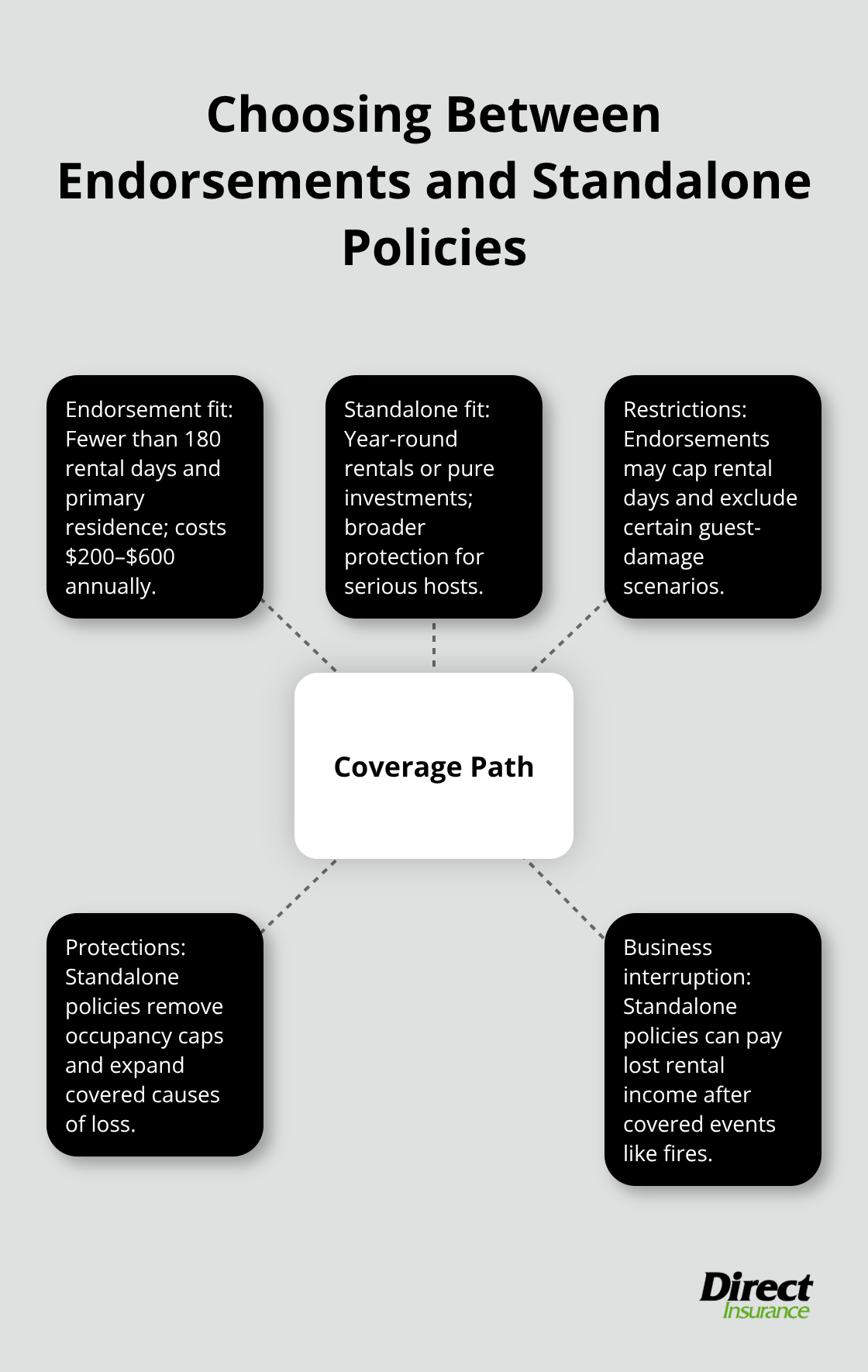
Endorsements add quickly to existing homeowners coverage but cap your rental days and may exclude certain guest-damage scenarios. Standalone policies cost more but eliminate operational restrictions and provide broader coverage for business interruption, meaning you receive payment for lost rental income if the property becomes uninhabitable after a covered event like a fire.
Ask These Three Questions Before You Commit to Any Policy
When you evaluate any policy, ask your agent three specific questions: Does this cover intentional damage and theft by guests, or just accidental damage? Does coverage remain active when the property sits vacant between bookings? How are eviction costs and guest-overstay scenarios handled? These questions expose which policies actually protect your rental operation versus which ones leave gaps you’ll discover too late. Your answers determine whether you have genuine protection or expensive coverage that fails when you need it most. The next section walks you through how to compare these options and select the right policy for your specific rental situation.
How to Choose the Right Short Term Rental Insurance
Determine Your Rental Pattern First
Start with your property’s exact rental pattern and occupancy rate, because this single factor determines whether you need an endorsement or a standalone policy. If you rent fewer than 180 days annually and still occupy the property as your primary residence, an endorsement to your existing homeowners policy costs $200 to $600 per year and extends coverage for short-term rental activity. However, if you rent year-round, own multiple properties, or plan to convert the property entirely to rental use, a standalone short-term rental policy becomes mandatory. The distinction matters financially: endorsements cap your rental days and often exclude business interruption coverage, while standalone policies eliminate occupancy restrictions and protect your lost income if the property becomes uninhabitable after a fire or other covered event.
Calculate your annual rental days honestly. Many hosts underestimate their occupancy and discover mid-season that their endorsement no longer covers them because they’ve exceeded 180 days.
Request Written Quotes and Compare Specific Numbers
Request written quotes from at least three providers and compare the specific numbers, not just the premiums. Ask each insurer for their per-occurrence limits on commercial general liability, their annual aggregate limits, and their deductible structure. Most hosts need a minimum of $1 million liability coverage, but if you own a property with high-value amenities (like a pool or expensive furnishings), you’ll want $2 million limits.
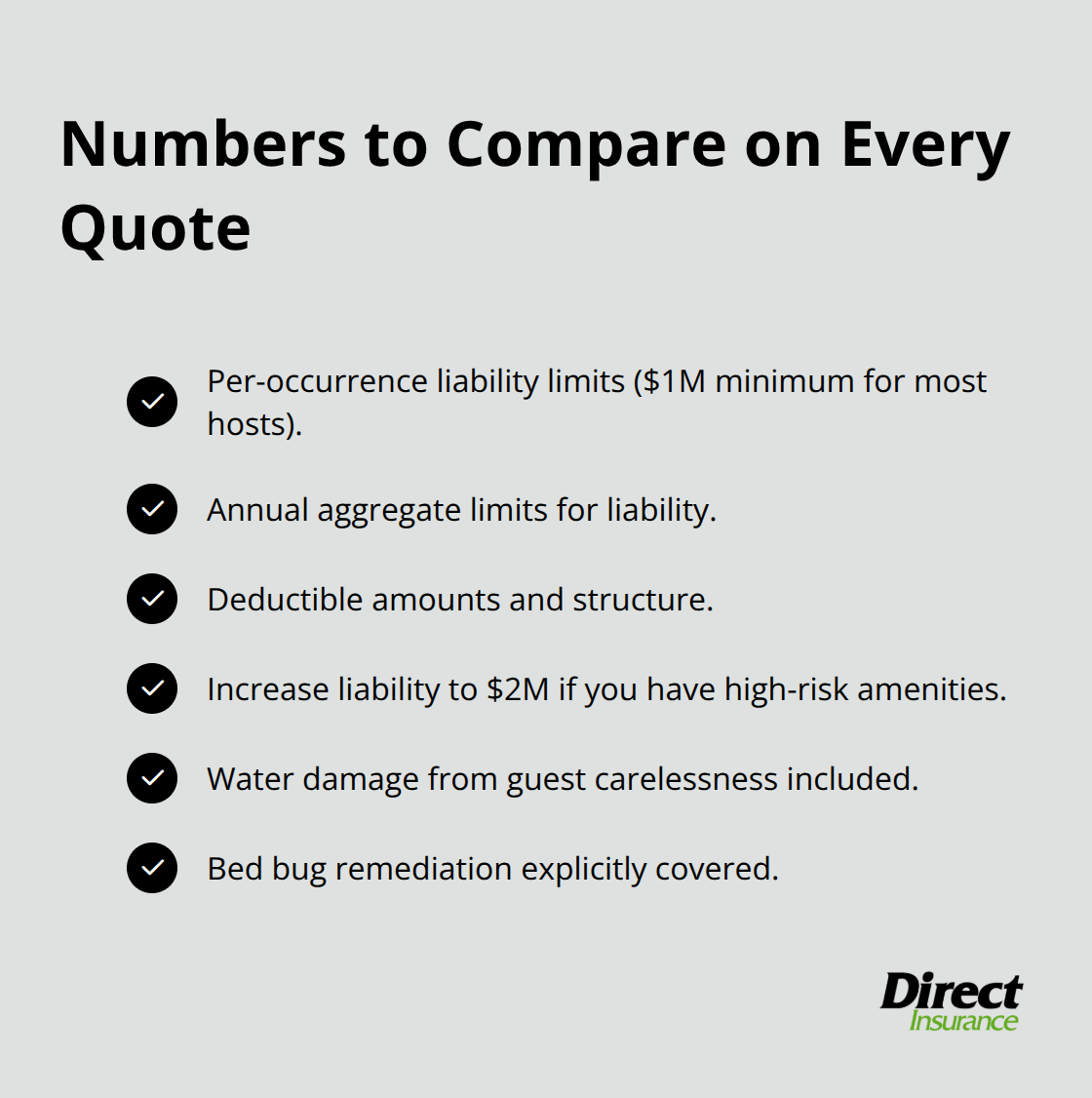
Water damage remediation costs between $20,000 and $50,000 according to industry claims data, so verify that your property damage coverage includes water damage from guest carelessness and that bed bug remediation coverage appears explicitly in the policy rather than being excluded.
Examine Policy Documents for Three Critical Clauses
Request the actual policy documents from each provider and search for three specific clauses. First, the intentional damage exclusion should not exist in quality STR policies. Second, the vacancy exclusion should allow coverage to remain active between guest stays. Third, the eviction scenario language should address guest overstays without leaving you exposed.
Many hosts choose policies based on price alone and later discover that their $15-per-month cheaper option excludes the exact damage scenarios they needed protection for. Policy documents reveal what marketing language hides.
Conclusion
Short-term rental insurance protects your property, your guests, and your financial future in ways that standard homeowners policies simply cannot. The three coverage types we outlined-commercial general liability, property damage protection, and guest damage coverage-form the foundation of genuine protection for rental hosts. Without these layers, a single water damage incident, guest injury lawsuit, or theft claim eliminates years of rental income and exposes your personal assets to liability judgments that exceed six figures.
Calculate your annual rental days to determine whether an endorsement or standalone policy fits your operation, then request written quotes from multiple providers and compare the specific numbers on liability limits, deductibles, and coverage exclusions rather than focusing solely on premium costs. The cheapest policy often excludes the exact scenarios that cause financial devastation for hosts. Examine policy documents for intentional damage coverage, vacancy protection, and eviction scenario language because these details separate adequate protection from inadequate coverage.
We at Direct Insurance Services understand that rental hosts need short-term rental insurance solutions tailored to their specific operation, not generic policies designed for homeowners. Contact Direct Insurance Services today to discuss your coverage needs and receive personalized quotes that actually protect your investment.
Disclaimer: The information provided in this blog is for general informational purposes only and does not constitute legal, financial, or insurance advice. Coverage options, terms, and availability may vary. Please consult with a licensed professional for advice specific to your situation

