
Motorcycle Insurance Quotes Utah: Compare The Best Rates
Motorcycle insurance rates in Utah swing wildly depending on where you ride, your experience level, and what coverage you actually need. We at Direct Insurance Services know that finding the right motorcycle insurance quotes in Utah means understanding what drives your premium up or down.
Getting accurate quotes takes more than a quick online search. This guide walks you through everything from gathering the right information to spotting the mistakes that cost riders thousands in wasted coverage or inadequate protection.
What Pushes Motorcycle Insurance Premiums Higher in Utah
Your motorcycle insurance rate in Utah isn’t random. Insurance companies calculate premiums based on specific factors they measure and track. Your age matters significantly-a 19-year-old rider pays roughly three times more than a 40-year-old for the same coverage, according to industry data. Your riding experience counts just as much. A rider with less than two years of motorcycle experience typically faces 20-30% higher premiums than someone with five years or more. Your driving record determines whether you’re a risk or a safe bet.
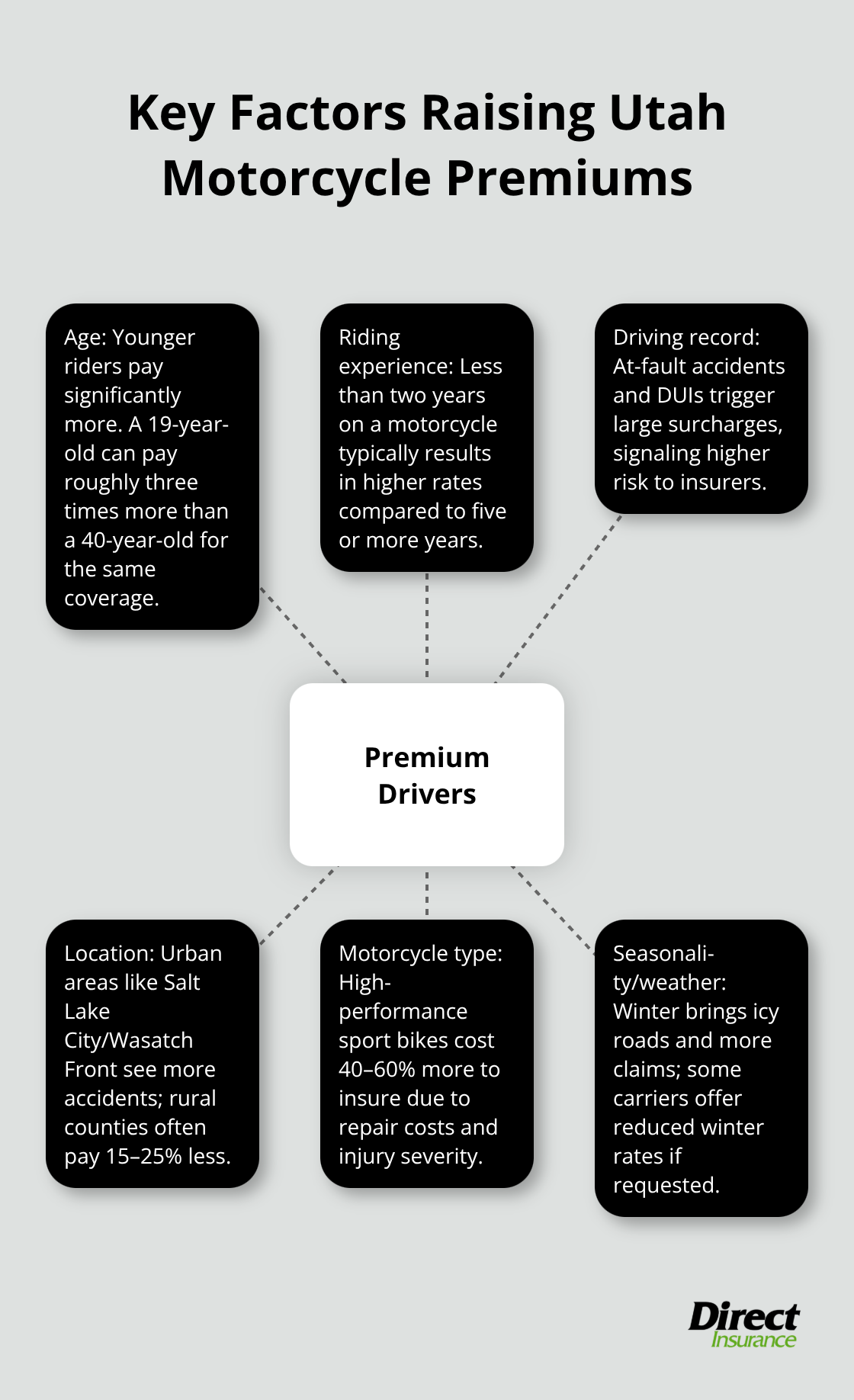
A single at-fault accident increases your rate by 25-40%, while a DUI conviction spikes your premium by 100% or more.
How Utah’s Riding Conditions Affect Your Cost
Utah’s winter weather from November through March creates icy roads, reduced visibility, and hazardous conditions that correlate with higher claim frequencies. Riders in Salt Lake City and the Wasatch Front pay more than those in rural areas simply because urban traffic creates more accident opportunities. Riders in Cache County or Washington County typically pay 15-25% less than Salt Lake County riders for identical coverage.
Your motorcycle type also influences cost. A high-performance sport bike costs 40-60% more to insure than a cruiser or standard bike because repair costs and injury severity tend to be higher for faster machines. The seasonal nature of Utah riding also affects annual rates. Many insurers offer reduced rates during winter months when fewer riders are on the road, though you need to ask about this discount specifically.
Your Riding Record Shapes Everything
A clean riding record is worth money. If you’ve had zero accidents or traffic violations in the past three years, you qualify for a safe rider discount that typically reduces your rate by 10-15%. One speeding ticket costs you roughly 10% more annually. Two violations within three years increase your rate by 30% or more.
Insurance companies also consider your motorcycle safety course completion. Finishing a Motorcycle Safety Foundation course in Utah reduces your premium by 5-20% with most carriers. This is one of the few discounts you can earn immediately and keep for years. When you shop for quotes, you’ll want to mention any safety training you’ve completed-it’s a concrete way to lower what you pay.
Getting Accurate Quotes Requires the Right Information
Before you compare rates across multiple insurers, you need to gather specific details about your motorcycle and riding habits. Your Vehicle Identification Number (VIN), annual mileage, and primary use (commuting versus recreational riding) all factor into the quote. Insurers also ask whether you store your bike in a garage, on the street, or in a secured facility-theft risk directly impacts your premium. The more accurate information you provide upfront, the more reliable your quotes become, and the easier it is to spot which carrier offers the best value for your actual situation.
How to Get Accurate Motorcycle Insurance Quotes
Gather the Right Information Before You Shop
Collecting the right details before you contact insurers separates riders who receive accurate quotes from those who waste time with inflated or misleading numbers. Start with your motorcycle’s Vehicle Identification Number, which tells insurers the exact model, engine size, and year you’re insuring. You’ll also need your annual mileage estimate-be honest here because underreporting creates problems when you file a claim.
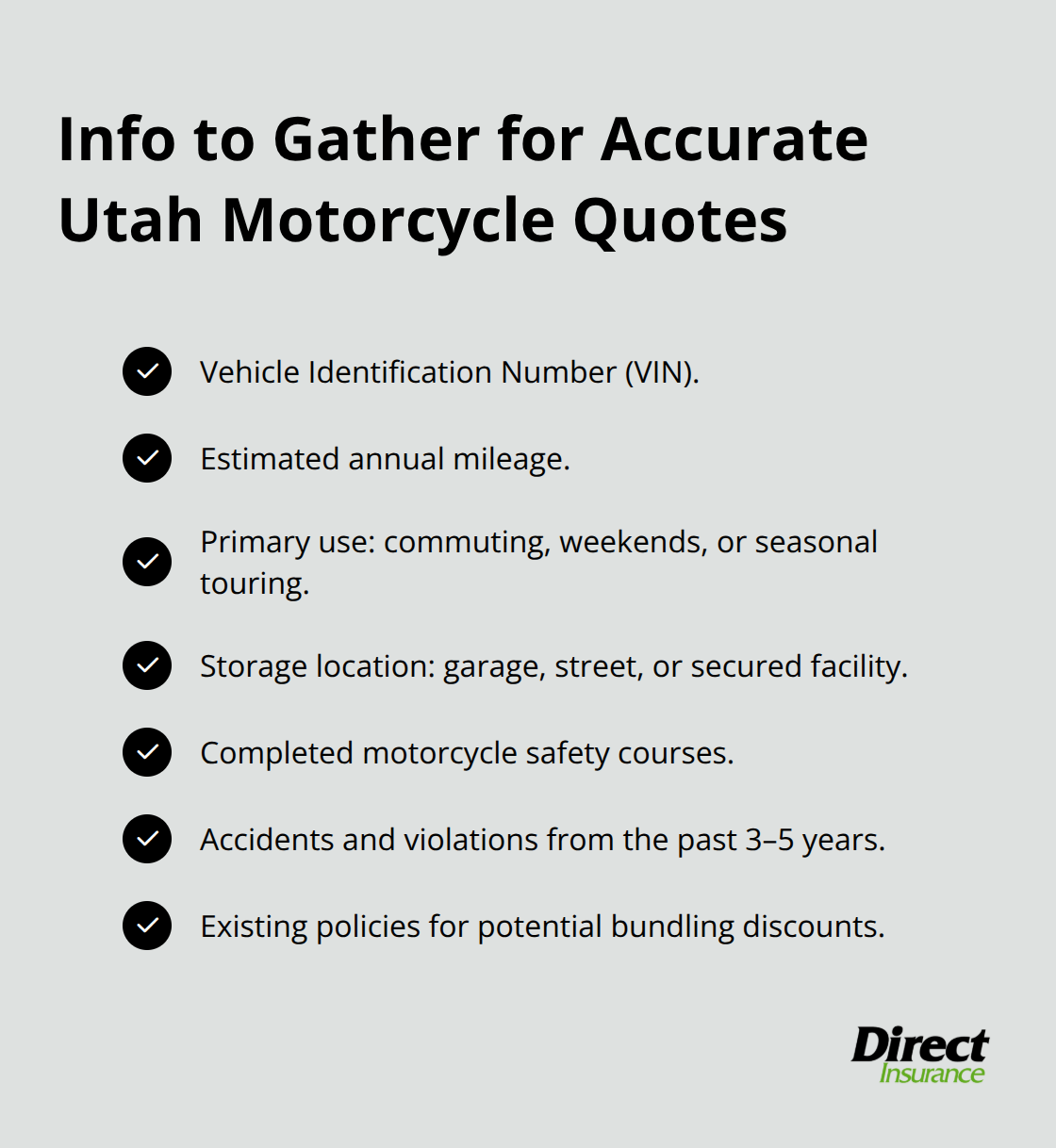
Insurers want to know if you commute daily, ride weekends only, or use your bike for seasonal touring.
Your storage situation matters tremendously. A bike locked in a garage costs less to insure than one sitting on the street, since theft risk drops significantly. Garaging your motorcycle can reduce your premium by 10-20% depending on the carrier. Gather information about any safety courses you’ve completed, accidents or violations from the past three to five years, and whether you own multiple vehicles that could qualify for bundling discounts.
Prepare Your Riding History and Personal Details
Insurance companies need accurate information about your experience and background. Have your driver’s license ready along with details about any accidents or traffic violations from the past three to five years. If you’ve completed a motorcycle safety course, document that information-it qualifies you for discounts with most carriers. Your age and years of riding experience matter significantly, so have those figures ready when you call for quotes.
Having this data organized before you contact insurers means quotes reflect your actual situation instead of generic assumptions. You’ll spend less time on the phone and receive more accurate pricing that you can actually compare across carriers.
Compare Multiple Carriers to Find Real Savings
Shopping multiple carriers reveals how differently insurers price motorcycle coverage in Utah, and the differences are substantial. Contact at least three to five major insurers because rates for identical riders can vary by 30-50% between companies. Some carriers heavily weight your age and experience, while others focus more on your bike type or storage location.
When comparing quotes, ignore the premium alone and focus on what coverage you’re actually receiving. A lower price on liability-only coverage isn’t better than a higher quote that includes comprehensive and collision protection with a reasonable deductible.
Choose Your Deductible Strategically
Understanding deductibles matters more than most riders realize. Choosing a $500 deductible instead of $250 typically saves 15-25% on your annual premium, but only if you can comfortably pay that amount out of pocket when needed. Higher deductibles make sense for experienced riders with clean records who rarely file claims, while newer riders should stick with lower deductibles to avoid financial strain after an accident.
The deductible you select directly impacts both your monthly payment and your financial exposure. This decision requires honest assessment of your emergency savings and riding habits. Once you’ve narrowed your options based on price and coverage, you’ll want to understand what happens when you actually need to file a claim-which brings us to the common mistakes riders make that cost them thousands in inadequate protection or wasted money.
Common Mistakes When Buying Motorcycle Insurance
Underinsuring Your Liability and Physical Damage Coverage
Most riders in Utah buy too little coverage to save money upfront, and this mistake costs thousands when accidents happen. Utah’s minimum liability requirement is 25/50/15, meaning $30,000 per person and $65,000 for two or more persons in bodily injury liability, plus $25,000 property damage. That sounds adequate until you hit a car with three passengers and medical bills exceed $100,000. You’re personally liable for the difference, which can mean wage garnishment or asset seizure.
Increasing your liability limits to 100/300/25 typically costs only $15-25 more monthly but protects your assets if something goes wrong. Comprehensive and collision coverage get skipped too, especially by riders who own older bikes. A 2015 motorcycle worth $8,000 gets hit by an uninsured driver, and suddenly you’re out $8,000 with no recourse if you only carried liability. Even on a bike worth $5,000-7,000, carrying comprehensive and collision with a $500 deductible makes financial sense in Utah where uninsured motorist claims spike during winter months.
Missing Seasonal Discounts and Bundle Opportunities
Seasonal discounts and bundling represent the largest money left on the table by Utah riders. If you own a car, home, or renters insurance, bundling your motorcycle policy with existing coverage saves 10-25% on your total premiums according to major carriers’ discount structures.
The number 100% seems to be not appropriate for this chart. Please use a different chart type. Most riders never ask about this option.
Winter riding in Utah drops significantly from November through March, yet few insurers automatically reduce your rate during low-risk months unless you request it. Some carriers offer 15-30% discounts for seasonal riders who park their bikes during winter, but you must contact them to activate this option. A single phone call to your insurance agent uncovers discounts that could save hundreds annually.
Skipping Annual Policy Reviews
Your situation changes every year, and your insurance should reflect those changes. A rider who completed a safety course this year, moved to a safer neighborhood, or added a second vehicle qualifies for new discounts that won’t appear on renewal paperwork. Insurance companies won’t volunteer this information.
Contact your agent or carrier annually to discuss rate changes and available discounts. This prevents you from overpaying for coverage you no longer need or underpaying for protection gaps that developed. A quick conversation each year keeps your policy aligned with your actual risk profile and financial situation.
Final Thoughts
Finding competitive motorcycle insurance quotes in Utah requires three concrete actions: you gather accurate information about your bike and riding habits, you compare rates across multiple carriers, and you review your policy annually for new discounts. The difference between a rider paying $800 annually and one paying $1,200 for identical coverage often stems from these simple steps rather than luck or timing. Local agents matter more than most riders realize because they understand Utah’s specific riding conditions, seasonal weather patterns, and the unique risks that affect your premiums.
Contact Direct Insurance Services to discuss your motorcycle insurance needs and receive quotes tailored to your situation. Bring the information you’ve gathered about your bike, riding history, and storage situation, and be honest about your annual mileage and primary use. Ask specifically about seasonal discounts, bundling opportunities with any existing auto or home policies, and safety course discounts that apply to your profile.
Your situation changes every year, and new discounts emerge while rates shift across carriers. A conversation with an agent who understands Utah’s roads and insurance market takes 20 minutes and typically saves hundreds annually on motorcycle insurance quotes in Utah. Don’t let another renewal cycle pass without reviewing your coverage and exploring what competitive rates you actually qualify for.
Disclaimer: The information provided in this blog is for general informational purposes only and does not constitute legal, financial, or insurance advice. Coverage options, terms, and availability may vary. Please consult with a licensed professional for advice specific to your situation

