
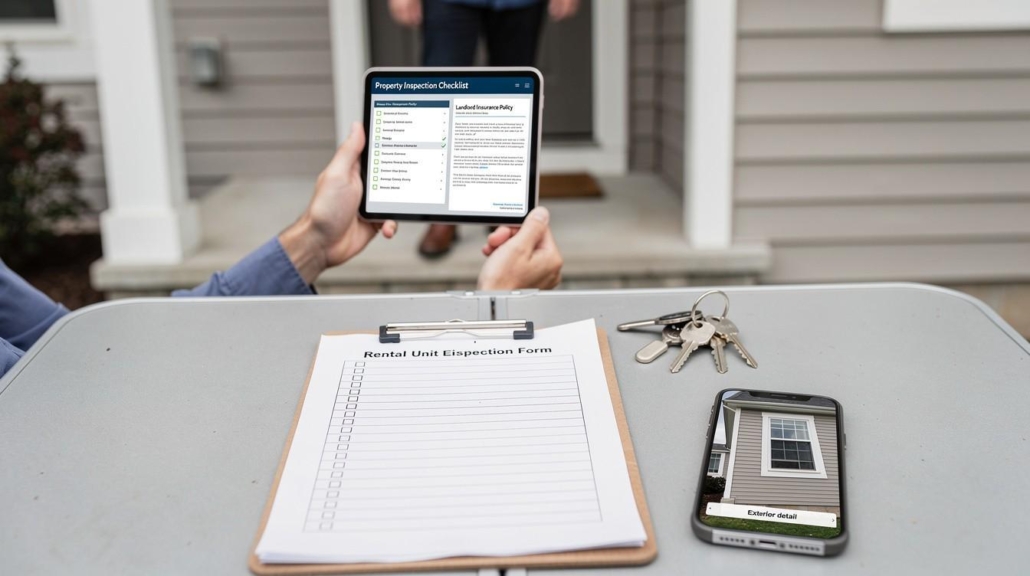
Rental Property Risk Utah: Mitigating Losses for Landlords
Owning rental property in Utah comes with real financial exposure. Tenant disputes, property damage, and liability claims can drain your profits fast.
At Direct Insurance Services, we help landlords protect their investments with practical strategies that go beyond basic coverage. This guide walks you through the specific rental property risks Utah landlords face and how to handle them.
What Threats Cost Utah Landlords Real Money
Property Damage Hits Hard in Utah’s Climate
Water damage from burst pipes costs an average of $5,000 to $7,000 per incident. Utah’s freeze-thaw cycles make this particularly common in winter months, and many landlords face multiple incidents across their portfolios. Hail damage affects roughly one percent of properties annually across the state, with repair costs frequently exceeding $10,000. Wildfire risk has intensified significantly in recent years-Utah experienced major fires in 2020 and 2021 that destroyed residential areas and forced evacuations. If your rental sits near forested areas or in communities with limited water infrastructure, this risk demands serious attention in your insurance strategy.
Tenant Issues Create Unexpected Financial Bleeding
The average eviction costs $3,500 to $5,000 when you factor in legal fees, lost rent during the process, and property repairs after departure. A single problematic tenant can generate $15,000 to $25,000 in total losses across these categories. Liability claims from tenant injuries on your property average $20,000 to $30,000 in legal defense costs alone, regardless of whether you ultimately face a judgment. Utah courts have increasingly ruled in favor of tenants regarding habitability standards and maintenance issues, making property condition documentation absolutely essential.
Liability Claims Expose Your Bottom Line
Slip-and-fall incidents, injuries from inadequate railings, or mold-related health claims represent genuine financial exposure that most landlords underestimate. One serious tenant injury can bankrupt a small portfolio if you lack proper coverage. Property condition problems compound this risk significantly-Utah landlords who ignore maintenance issues face both higher insurance premiums and increased likelihood of successful tenant claims. Documentation gaps leave you vulnerable because you cannot prove you addressed safety concerns when disputes arise.
These financial threats make the right insurance coverage and risk management strategy non-negotiable for Utah rental property owners. The specific coverage you need depends on your property type, location, and tenant profile.
Building Proper Coverage for Utah Rentals
Why Standard Homeowners Insurance Falls Short
Standard homeowners insurance won’t protect your rental property investment. These policies exclude rental income loss, liability from tenant occupancy, and damage caused by tenants themselves. You need landlord insurance specifically designed for investment properties, which covers the financial realities of property ownership rather than occupancy. Landlord policies typically include dwelling coverage for the structure, loss of rent protection if tenants stop paying or you must evict them, and liability coverage for injuries occurring on your property.
Setting Coverage Limits That Match Reality
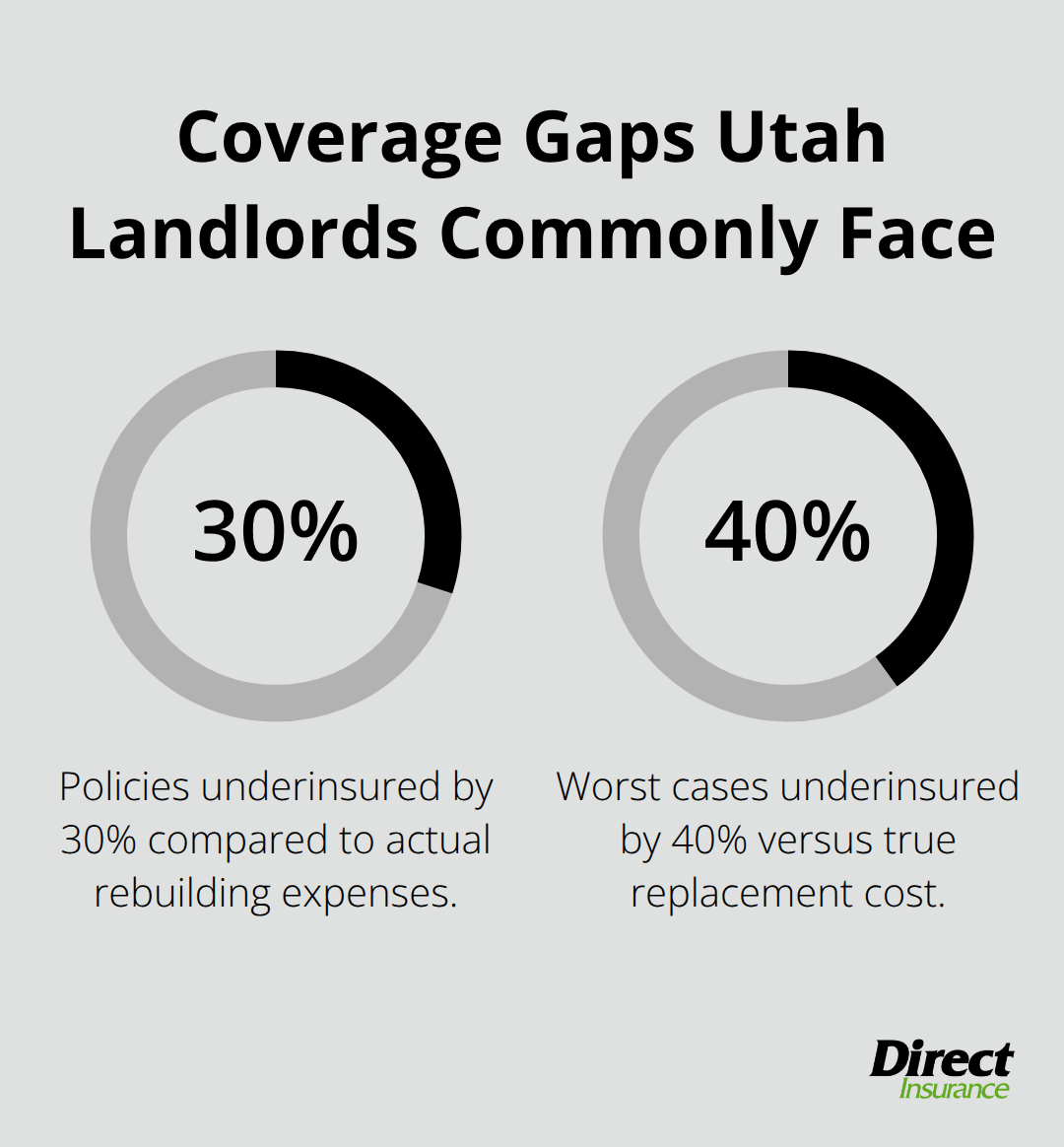
The coverage limits you select matter significantly-Utah landlords commonly underestimate their exposure and purchase policies with replacement cost values 30 to 40 percent below actual rebuilding expenses. Water damage coverage requires particular attention given Utah’s climate patterns; many basic landlord policies cap water damage at $5,000 when actual pipe burst repairs regularly exceed $7,000.
You should also verify whether your policy covers loss of rent during eviction proceedings, since the average eviction process takes 45 to 90 days in Utah courts. Some insurers exclude certain high-risk properties, particularly older buildings or those in wildfire zones, so location assessment happens before policy selection rather than after.
Assessing Your Specific Property Risks
Evaluating your specific risks requires honest analysis of your property type, tenant profile, and location rather than copying another landlord’s coverage. A single-family home in Salt Lake City faces different exposures than a multi-unit building in a rural area near forested land. Walk through your property and document existing safety features, maintenance condition, and potential liability hazards-gaps in railings, inadequate lighting in common areas, or deferred maintenance increase both your actual risk and your insurance costs. Properties within five miles of wildfire-prone areas need robust coverage for structure damage and loss of rent during evacuation orders. Tenant screening quality directly impacts your risk profile; landlords who conduct thorough background checks and verify income experience significantly fewer costly disputes than those who rush the process.
Finding the Right Coverage Through Professional Guidance
An independent insurance agent who understands Utah’s specific rental market can shop multiple carriers to find coverage that matches your actual exposures at rates that reflect your risk management efforts. An agent familiar with local court precedents and tenant law identifies coverage gaps that online platforms miss entirely. This professional assessment becomes your foundation for the risk management strategies that extend well beyond insurance alone.
How to Stop Problem Tenants Before They Cost You Thousands
Screen Tenants Thoroughly Before Signing Leases
Tenant screening separates landlords who lose money from those who protect their investments. A single bad tenant decision cascades into eviction costs, property damage, and liability exposure that insurance alone cannot solve. Landlords who avoid these disasters conduct thorough background checks before signing any lease.
A criminal background check costs $20 to $50 per applicant and takes two business days to complete through services like Checkr or Sterling Talent Solutions. Verify income by requesting recent pay stubs and contacting employers directly rather than accepting tenant claims at face value. Utah landlords who skip income verification experience default rates three times higher than those who confirm tenants earn at least three times the monthly rent.
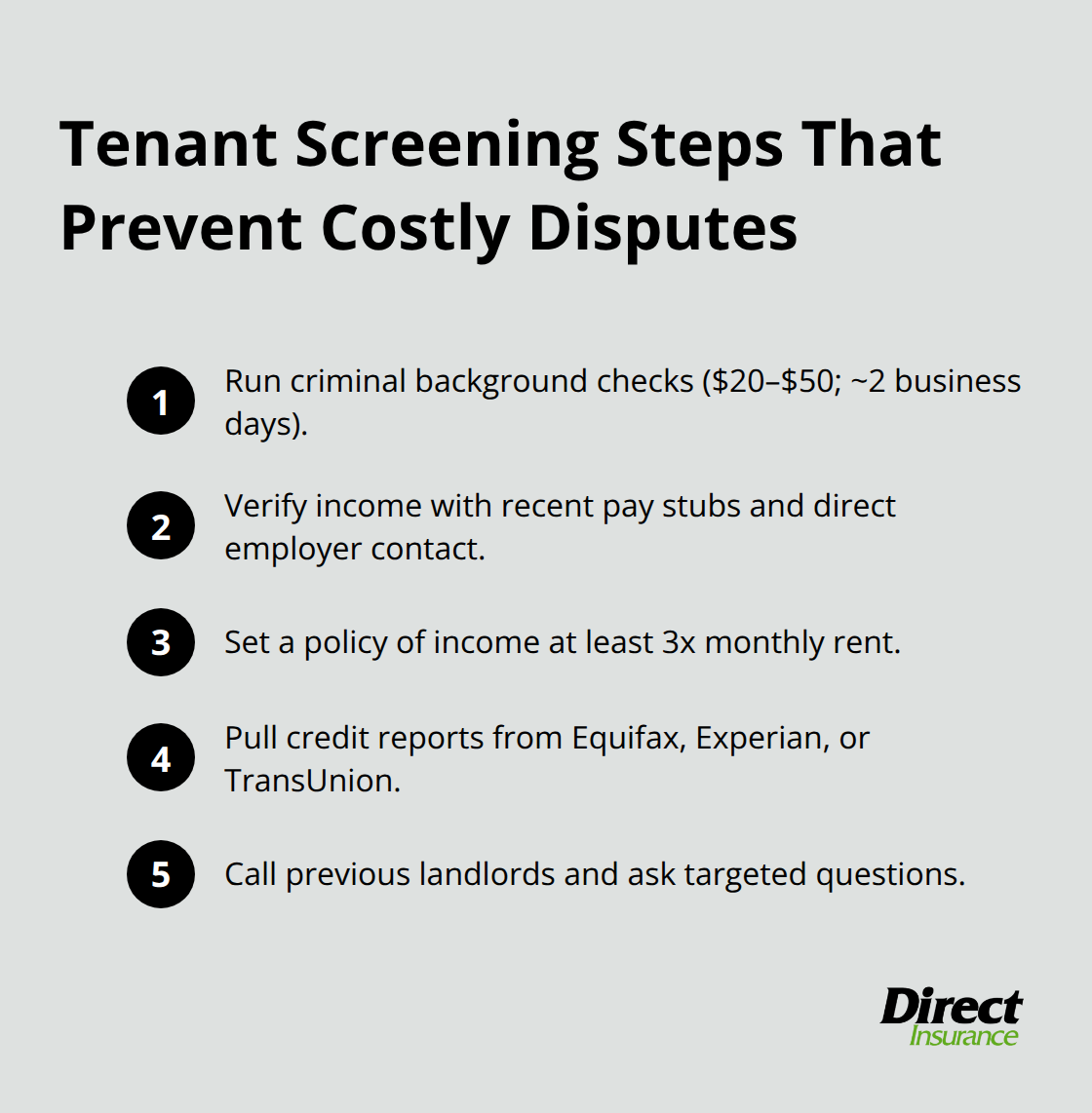
Run credit reports through Equifax, Experian, or TransUnion to identify patterns of late payments or evictions. Landlords who check credit scores below 600 face significantly higher eviction rates; if you accept lower credit scores, charge higher deposits to offset this risk. Contact previous landlords and ask specific questions about payment history, property condition at move-out, and any disputes. Previous landlord feedback predicts future tenant behavior more accurately than credit scores alone because it reveals actual rental conduct rather than general financial patterns.
Apply Consistent Standards Across All Applicants
Document every screening step in writing and maintain consistent criteria across all applicants to protect yourself legally. Utah courts scrutinize discriminatory screening practices, so apply identical standards to every prospect. This consistency becomes your legal shield if disputes arise later.
Create Detailed Move-In Documentation
Property maintenance and documentation form your second line of defense against tenant disputes and liability claims. Create detailed move-in inspection reports with photos, video walkthroughs, and written descriptions of the property condition before tenants occupy it. Have tenants sign these reports within three days of move-in to prevent later claims that damage existed when they arrived.
Conduct walk-throughs every six months and photograph existing conditions, damage, and safety hazards. Most Utah landlords document problems only after disputes arise, leaving no evidence of pre-existing conditions when tenants claim you failed maintenance obligations.
Maintain Records That Prove Your Diligence
Maintain a maintenance log that records every repair request, work completed, and dates of completion. Utah courts require landlords to address habitability issues within a reasonable timeframe; your maintenance records prove you responded promptly. Address safety hazards immediately rather than waiting for tenant complaints. Slip hazards, broken railings, inadequate lighting, and roof leaks create liability exposure that grows more expensive the longer you delay repairs.
Photograph repairs after completion to demonstrate you resolved issues. Schedule professional inspections annually and document findings. Many Utah landlords discover serious problems during tenant turnover that could have been identified and fixed cheaply through regular inspections. Keep receipts for all maintenance and repairs as evidence of your investment in property condition. This documentation becomes invaluable if disputes escalate to court proceedings.
Final Thoughts
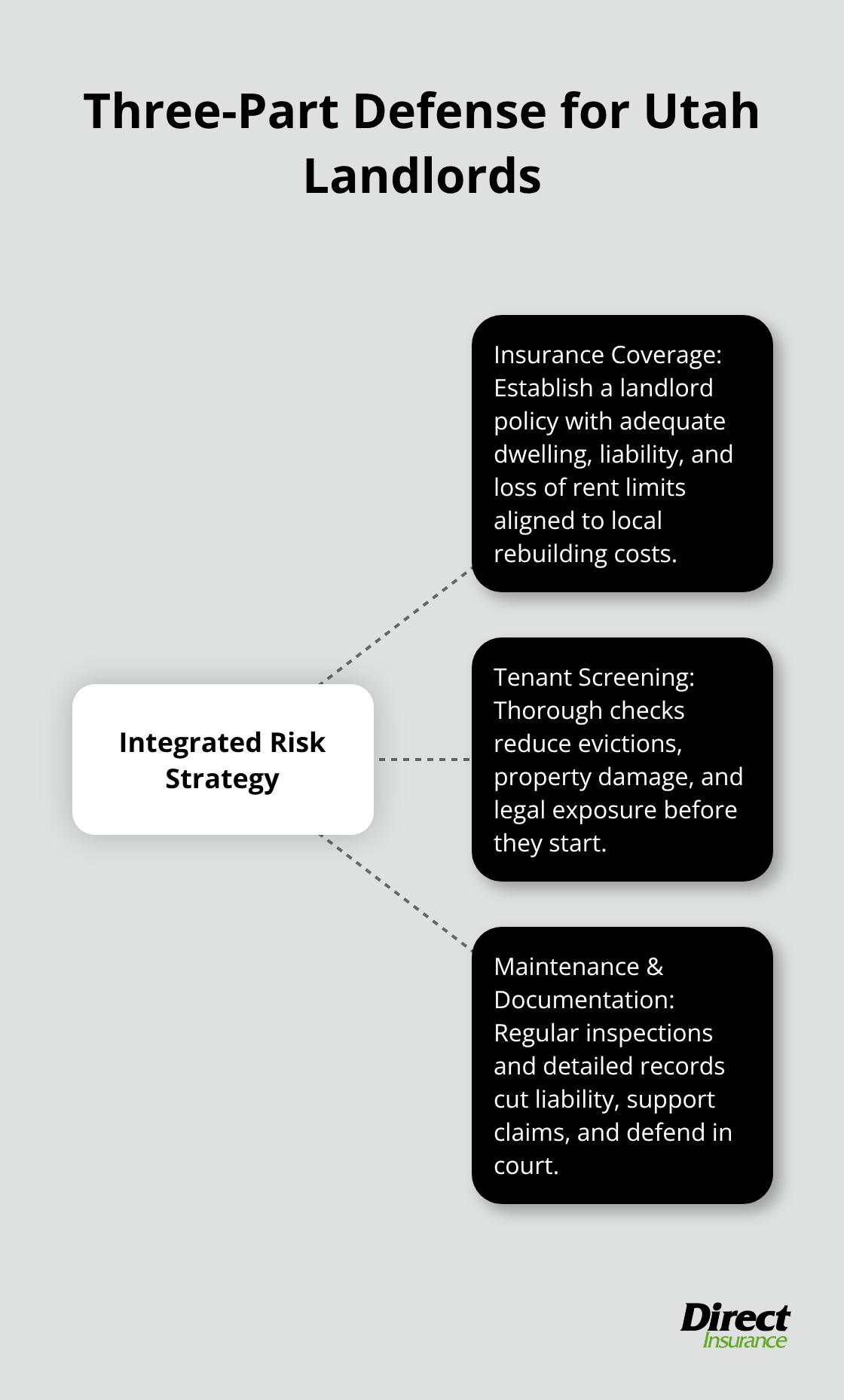
Protecting your rental property investment in Utah requires three interconnected strategies that work together. Insurance coverage forms your financial foundation, but it only works when paired with rigorous tenant screening and meticulous property maintenance. Landlords who rely on insurance alone while neglecting tenant vetting or documentation consistently lose more money than those who implement all three approaches simultaneously.
The specific rental property risk Utah landlords face demands local expertise and attention to detail. Water damage from freeze-thaw cycles, wildfire exposure in certain areas, and Utah’s tenant-friendly court precedents create exposures that generic insurance advice misses entirely. Your coverage limits must reflect actual rebuilding costs in your market, not national averages, and your maintenance documentation must prove you addressed problems promptly when disputes arise.
Contact Direct Insurance Services to review your current coverage and assess whether your limits and exclusions align with your actual exposure. We’ll evaluate your property type, location, and tenant profile to identify gaps in your protection and shop multiple top-rated insurance companies to find coverage matching your actual exposures. Implement the tenant screening and documentation practices outlined in this guide alongside proper insurance protection to create the comprehensive defense that separates successful landlords from those who face preventable financial losses.
Disclaimer: The information provided in this blog is for general informational purposes only and does not constitute legal, financial, or insurance advice. Coverage options, terms, and availability may vary. Please consult with a licensed professional for advice specific to your situation

